Read More
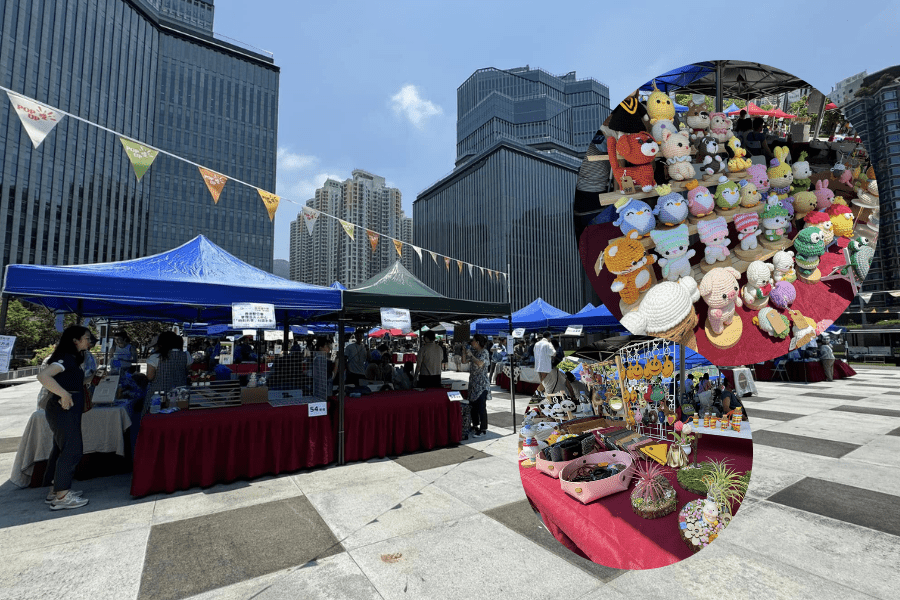
In collaboration with over 10 local groups and social welfare organizations, a community bazaar at Kai Tak Station Square took place on Sunday, featuring more than 50 stalls from 18 districts showcasing a diverse array of crafts and everyday goods.
ADVERTISEMENT
SCROLL TO CONTINUE WITH CONTENT
A celebration of grassroots creativity
Filled with unique crafts and everyday treasures created by residents and women from grassroots families, visitors can purchase items ranging from crochet crafts and fabric art to leather goods, potted plants, eco-friendly products, and various food and household goods at affordable prices.
The event also featured a photo exhibition and a storytelling exhibition by the stall owners, showcasing the dreams of grassroots families and allowing citizens to gain insight into the market's development and the personal stories behind the vendors.
Yiu, a representative of the Supporting Grassroots’ Bazaar Alliance, expressed hopes for the government to allocate more land for social welfare organizations to host additional community bazaars, offering more entrepreneurial opportunities for grassroots residents and women amid the city's shifting economy.
A call for government support
Yiu emphasized that the community bazaar could help grassroots citizens earn extra income through handmade products, alleviating financial burdens during economic changes.
Despite the Environment and Ecology Bureau proposing to trial the provision of bazaar sites in June 2023, Yiu noted that details have yet to be announced.
Following the event, Yiu hoped that the government would implement the provision of bazaar sites, improve the application process, and address public needs in the upcoming Policy Address.
Value beyond income
Maggie, a stall owner selling handmade fabric hair accessories, shared that her inspiration came from the inconvenience patients face when wearing metal accessories during X-rays.
As a caregiver to her elderly grandmother, Maggie revealed she utilizes her spare time to create the accessories, describing the process as a brief escape from her high-pressure life.
Although unable to work full-time, Maggie sells her handmade items at the market to supplement her family’s income, expressing satisfaction in creating and selling accessories that bring joy.
Another stall owner, Penny, shared that she never imagined her hobby could turn into income, adding that the market provides her with an entrepreneurial platform that allows her to establish a social role.
Li, a resident of Choi Hung, expressed support for the bazaar, noting that the bags sold there were handmade by local seniors and were "beautiful and thoughtfully made."