Read More
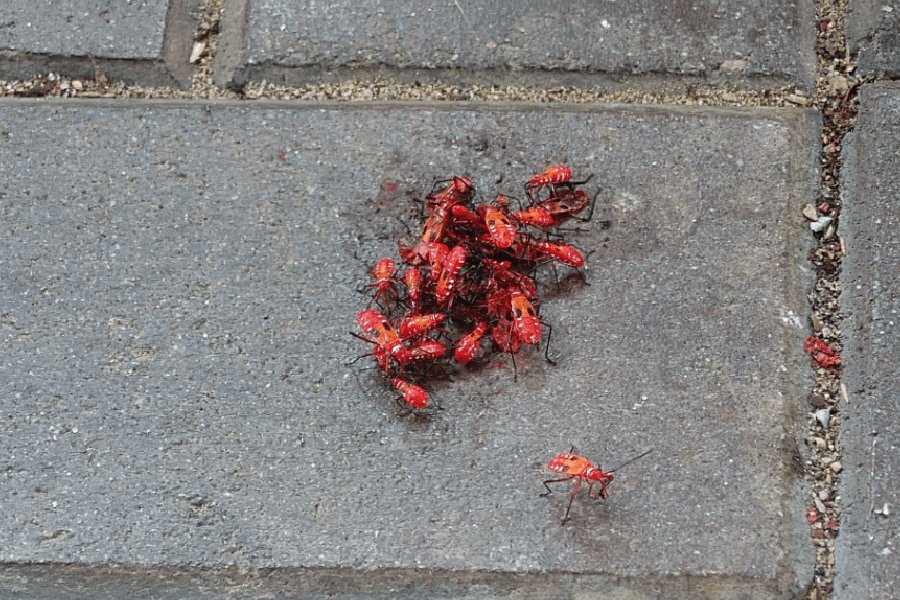
A Hong Kong netizen recently encountered a swarm of bright red insects in Sha Tin after work, sparking concerns among residents.
ADVERTISEMENT
SCROLL TO CONTINUE WITH CONTENT
After photographing the strange bugs and researching them, she discovered they were Dysdercus cingulatus—commonly known as cotton stainer bugs or red fire bugs—a pest species whose secretions can cause severe allergic reactions.
The woman shared her findings on Threads, warning others to stay alert. Reports quickly emerged from residents in Sha Tin, Tai Wai, Yuen Long, and Tin Shui Wai, who confirmed sightings of the insects in their neighborhoods.
"They bite—a child was once sent to ICU"
The original poster explained that she first noticed the bugs near the Hong Kong Red Cross Blood Donation Centre in Sha Tin, describing clusters of dozens scattered across the road. Upon researching, she learned that these insects—also called red cotton bugs or scarlet stainer bugs—are agricultural pests.
She was shocked to discover that a child in Hong Kong had previously been bitten and suffered a severe allergic reaction, requiring intensive care. She noted that while the bugs are just beginning to appear now, July to August marks their peak breeding season, meaning encounters could become more frequent in the coming weeks.
Hotspots: Tin Shui Wai resident reports "endless swarms"
Other netizens shared similar encounters across different districts. A Tai Wai resident mentioned spotting the bright red insects and instinctively avoiding contact due to their warning coloration.
In Sha Tin, another individual reported seeing them near a secondary school in Wo Che, while a Yuen Long local admitted they had seen the bugs before but were unaware of their potential danger.
The most alarming account came from a Tin Shui Wai resident who filmed an unsettling scene near Hung Shui Kiu, where the ground was covered in countless swarms. They described an almost cyclical infestation—when people stepped on the bugs, more would gather around the crushed remains, creating an endless proliferation across sidewalks and roads.
Why are they appearing now?
The bugs primarily feed on cotton from kapok trees, meaning areas with these trees are more likely to experience infestations. Authorities have taken measures in the past to control their spread, with the Leisure and Cultural Services Department previously spraying insecticides in affected regions. However, their seasonal emergence suggests that residents should remain vigilant, especially in areas with abundant kapok trees.
What to do if you encounter them
The Food and Environmental Hygiene Department has clarified that while red fire bugs are primarily considered agricultural pests, there is no substantial evidence that they pose a major public health risk.
However, their secretions can trigger severe allergic reactions in sensitive individuals, particularly those with existing skin conditions or compromised immune systems.
Experts advise against squashing the bugs, as doing so may release irritants that could cause skin reactions. Instead, if one crawls on a person, the safest method is to gently guide it onto a piece of paper or a leaf rather than swatting it. If exposed to their secretions, immediate washing with water is recommended, and medical attention should be sought if any allergic symptoms develop.
With temperatures expected to rise in the coming weeks, experts warn that these bugs will likely become even more active. Residents—particularly those in affected districts—are urged to stay cautious, especially in areas where kapok trees are present.