Read More







Morning Recap - June 12, 2026
6 hours ago





Mother and daughter die in successive falls from same Tai Koo Shing block
11-06-2026 00:05 HKT

100 y/o biologist David Attenborough shares 4 longevity habits
07-06-2026 12:00 HKT


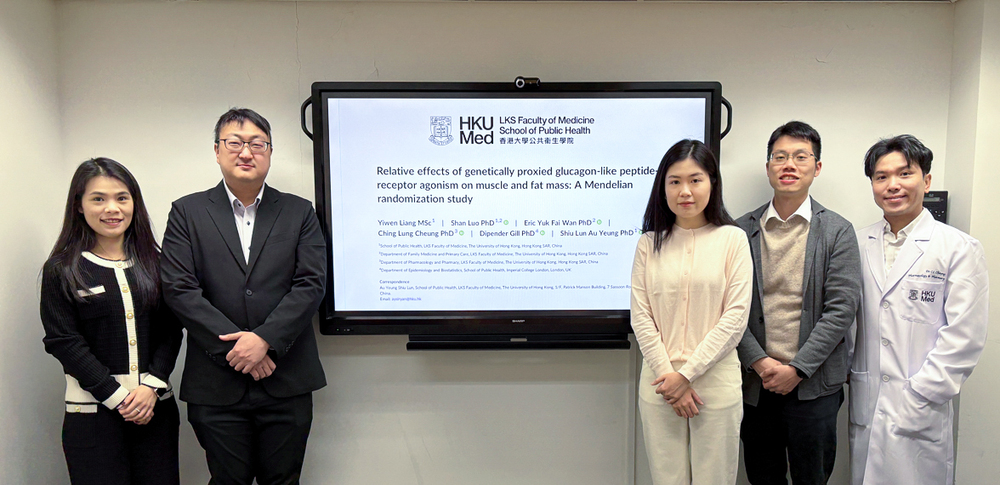
Researchers from the University of Hong Kong’s medical school have discovered through genetic research that the diabetes drug GLP-1 helps people lose weight mainly by decreasing fat rather than muscle.
GLP-1 receptor agonists are medications for type 2 diabetes and obesity that mimic the GLP-1 hormone in the human body.
They work by inhibiting glucagon secretion, delaying gastric emptying, and suppressing appetite, which helps regulate blood sugar levels and promote weight loss.
However, concerns have been raised in recent years over whether these medications reduce weight mainly via muscle mass loss, which could lead to physical frailty or sarcopenia.
Led by assistant professor Ryan Au Yeung Shiu-lun from the School of Public Health of HKUMed and Clinical Research Fellow Dipender Gill from the Department of Epidemiology and Biostatistics at the School of Public Health of Imperial College, the HKUMed research team used genetic data from over 800,000 European participants across various genome-wide association studies.
In the study, researchers identified a specific genetic variant, rs877446, linked to a lower body mass index, producing effects similar to those of GLP-1.
They analyzed how this variant influenced various forms of lean mass, including appendicular lean mass, total fat-free mass, and trunk fat-free mass.
Also, they assessed several body fat metrics: total fat mass, trunk fat mass, trunk fat percentage, body fat percentage, and waist-to-hip ratio.
They found that participants with genetic makeup mimicking the effect of GLP-1 receptor agonists experienced reductions in both lean mass and body fat -- losing about 6.4 kg and 7.9 kg, respectively -- indicating that the drug results in a greater reduction in overall body fat compared to muscle mass.
“This study highlights the use of genetics in understanding medication effects, especially when corresponding clinical experimental evidence is limited,” said Au Yeung.
“Genetic insights can guide us in making informed decisions about treatments and their impact on health,” he added.
Gill, another senior author of the study, said: “The availability of large-scale human genetic association data allows us to gain valuable insights into drug target effects in a timely and cost-efficient manner. This approach can greatly inform further clinical studies and improve patient outcomes.”
The findings were published in Diabetes, Obesity and Metabolism, with Liang Yiwen, a PhD student from the School of Public Health at HKUMed, as the first author.
(Cheng Wong)