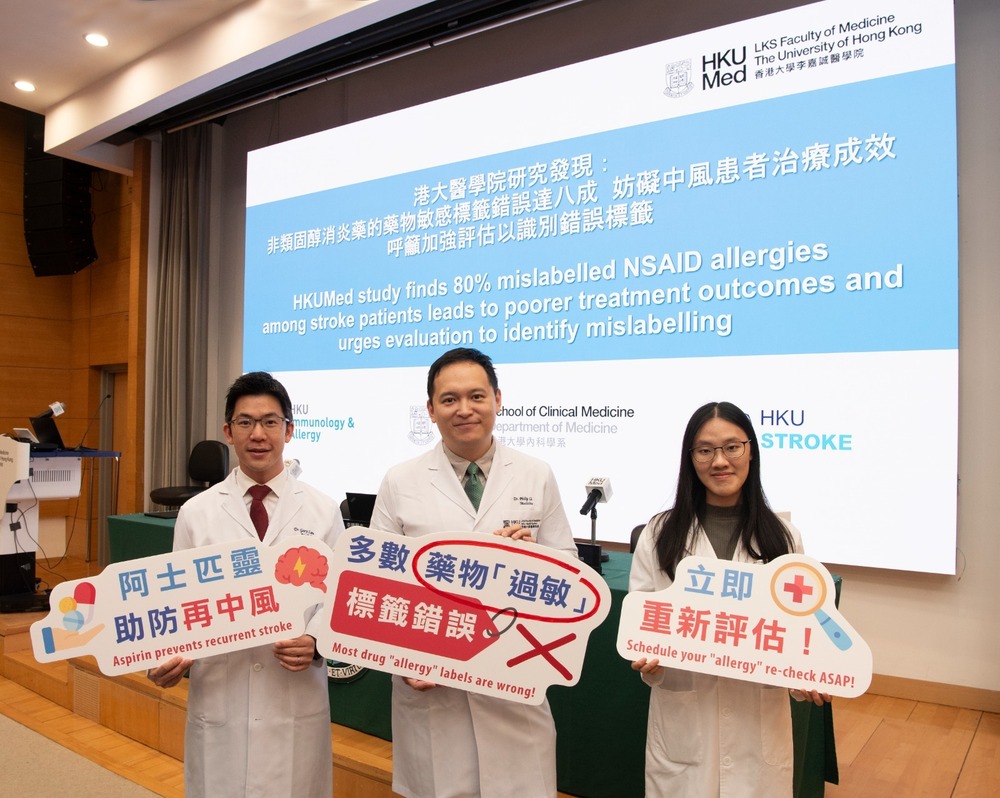
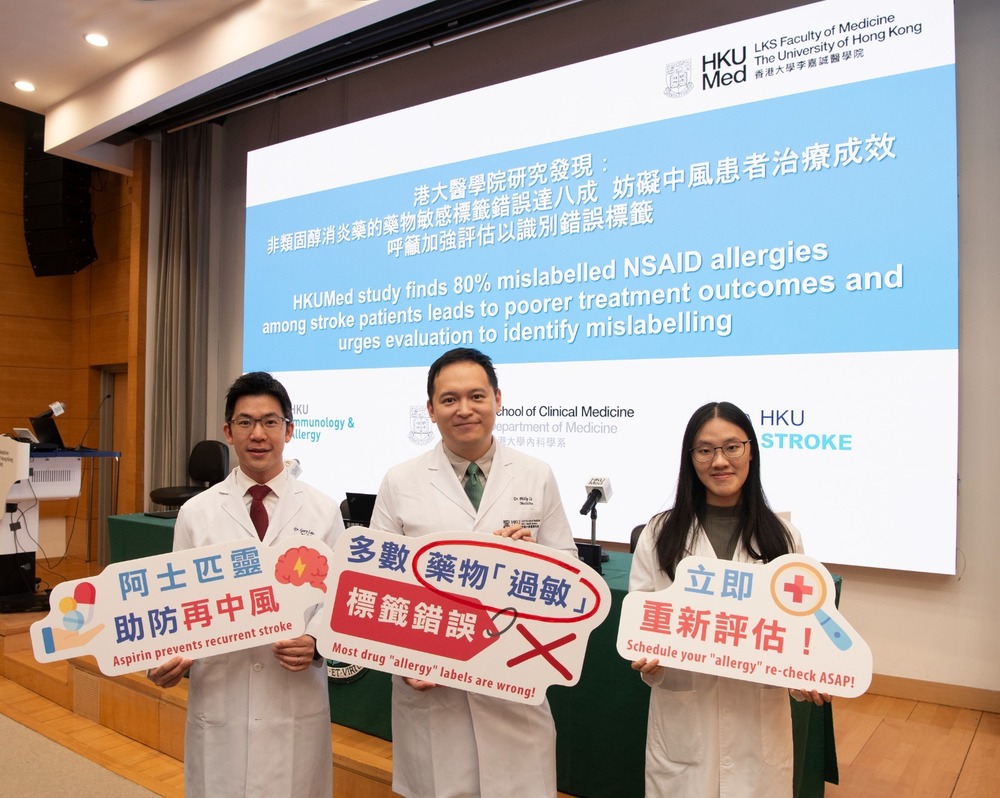
Researchers at the University of Hong Kong have uncovered that 80 percent of reported allergies to a drug used for treating cardiovascular diseases are mislabelled, obstructing patients from accessing vital medications like aspirin.
“These mislabelled allergies compel patients to use less-effective medications, which can pose significant health risks, including potentially dangerous or even fatal consequences,” said Philip Li Hei, clinical assistant professor at HKUMed.
The findings emerged from a study aimed at examining the connection between non-steroidal anti-inflammatory drug (NSAID) allergy labels and poorer cardiovascular outcomes in stroke patients.
“Patients were often astonished to learn that the allergy labels they had for years were incorrect and that they could have safely used aspirin all along,” said Cheryl Tsui Cheuk-wun, a year 4 undergraduate medical student at HKUMed.
The research, guided by Li and conducted by Tsui, analyzed data from 1,003 ischaemic stroke patients alongside healthcare records from 7.34 million Hongkongers between 2008 and 2014.
It revealed that NSAID allergy labels were significantly more prevalent among stroke patients, with those labeled as allergic being less likely to receive aspirin after a stroke.
This resulted in a staggering 7.44 times greater risk of death and a 6.1 times greater risk of major adverse cardiovascular events.
Alarmingly, 80 percent of stroke survivors with NSAID allergy labels were found to be inaccurately labelled upon testing.
Li said that many drug allergy labels in Hong Kong may be erroneous, as most patients have never undergone proper evaluations.
Gary Lau Kui-kai, director of HKU Stroke and clinical associate professor at HKUMed, urged patients with unverified drug allergies to seek evaluations to determine if they can safely use NSAIDs.
Li also said the urgent need to expand drug allergy testing services and proposed empowering community pharmacists to conduct evaluations in collaboration with HKUMed to enhance patient outcomes and public health.
(Cheng Wong)