Read More
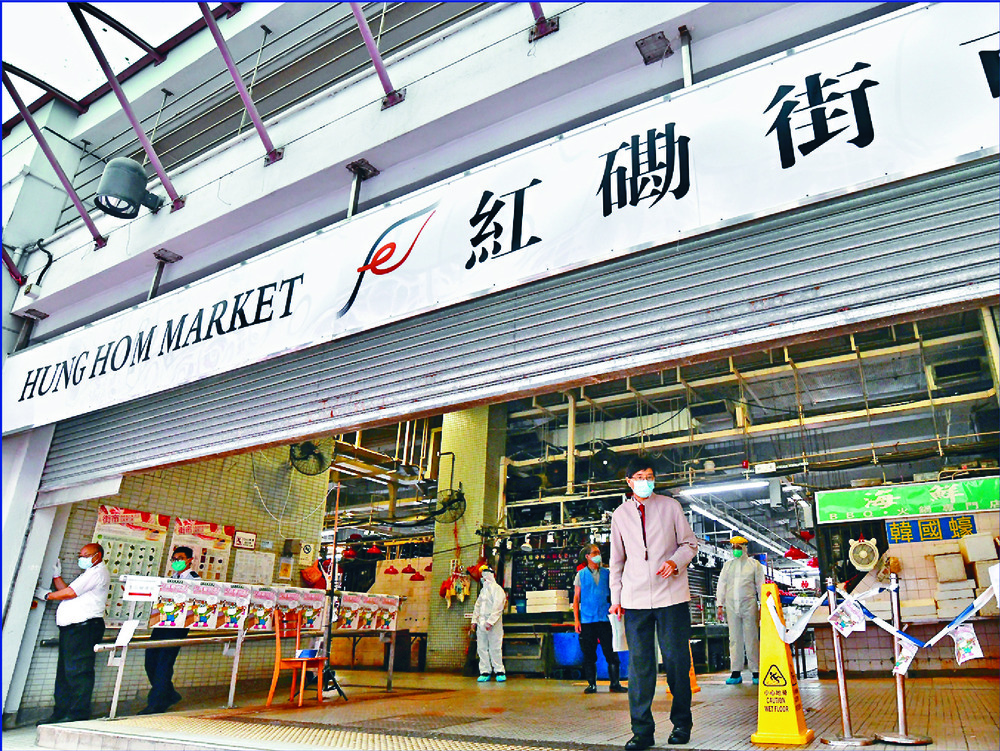
Cats, rats and cockroaches could have spread the coronavirus at Hung Hom and To Kwa Wan wet markets as at least 12 mostly seafood vendors have been infected, government adviser Yuen Kwok-yung said.
ADVERTISEMENT
SCROLL TO CONTINUE WITH CONTENT
Two of the vendors were among yesterday's 80 new cases that included five imported ones, 43 linked to previous local infections and 32 from unknown sources.
They take Hong Kong's tally to 3,670, in addition to around 50 preliminary cases expected to be confirmed today.
The death toll rose to 42 as five died - three women and two men aged between 75 to 85. Among these, an 85-year-old man passed away at Yan Chai Hospital in Tsuen Wan, two days after he was admitted for fever and pneumonia.
The Centre for Health Protection's Chuang Shuk-kwan said two more fishmongers from Hung Hom wet market were confirmed infected yesterday - in addition to three other seafood vendors on the ground floor, a frozen meat vendor on the first floor and four cleaners at the same market, all of whom were confirmed earlier.
To Kwa Wan market also saw another vendor from a fish stall confirmed with the virus earlier.
"In light of earlier outbreaks involving seafood and food markets in Wuhan and Beijing, we are worried the same thing will happen in Hong Kong, so we have asked experts to inspect the wet markets," she said.
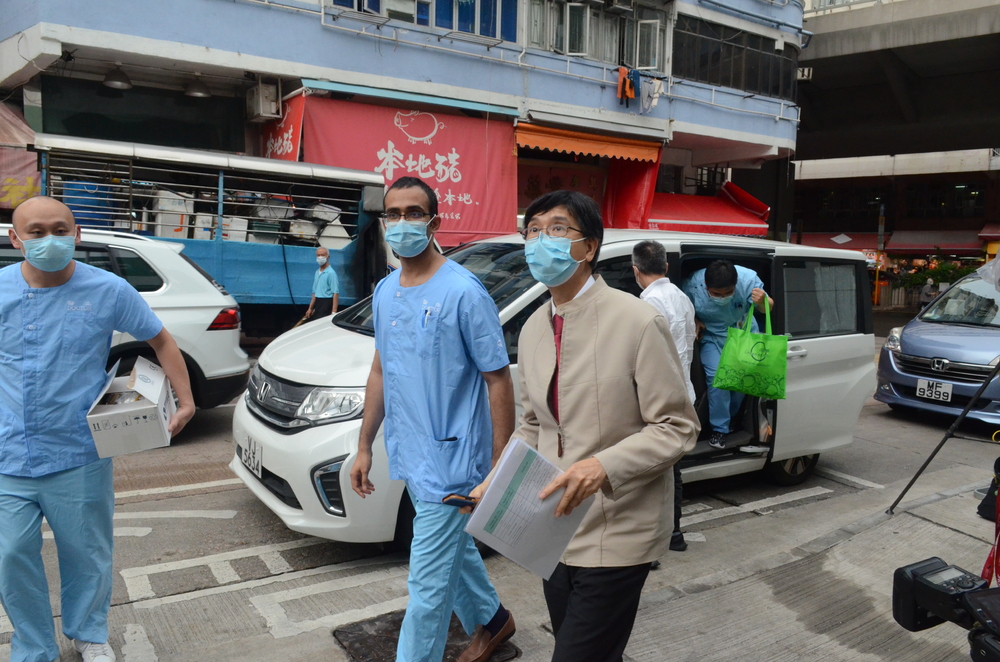
During his visits to the two markets - which are run by the Food and Environmental Hygiene Department - Yuen said he took samples from the fish stalls' water tanks, chopping boards, weighing scales and cash registers. There were, however, no seafood in the stalls. The two markets will be closed for disinfection today and tomorrow.
Yuen listed four possible sources of the virus' spread at the wet markets, with the most probable being a silent patient contaminating the environment.
"Seafood stalls are typically wet and cold, as they preserve fish in ice. The virus can survive for weeks at under four degrees Celsius," he said.
"The virus could have been brought around by cats, rats and cockroaches, especially since we all know cats love fish. They may wander around more frequently around seafood stalls."
The virus could also be spread through exchange of cash and products or human-to-human contact, as vendors usually rest between 1pm and 4pm every day, at which point they gather at the market's food court.
Asked if Hongkongers should avoid eating seafood, Yuen said: "I don't think eating seafood is a problem. The key point is to cook them well."
But he said wet markets are high-risk venues for transmission and asked people to keep their masks on while in the venues and also wash their hands.
In other cases, Hospital Authority chief manager for quality and standards Lau Ka-hin said a preliminary-positive 81-year-old patient is suspected to have contracted the virus after sharing a ward with a confirmed patient at Kwong Wah Hospital in Yau Ma Tei.
The man was first admitted to the internal medicine surveillance ward on July 22 due to digestive problems. He tested negative and was transferred to a normal ward until he was discharged last Wednesday.
He developed a fever and returned to Kwong Wah Hospital on Monday, where he tested positive. His condition worsened and he is now in the intensive care unit at Princess Margaret Hospital in Kwai Chung.
The man had stayed in the same ward as another 69-year-old patient, who was subsequently diagnosed with the virus and moved to an isolation ward.
jane.cheung@singtaonewscorp.com
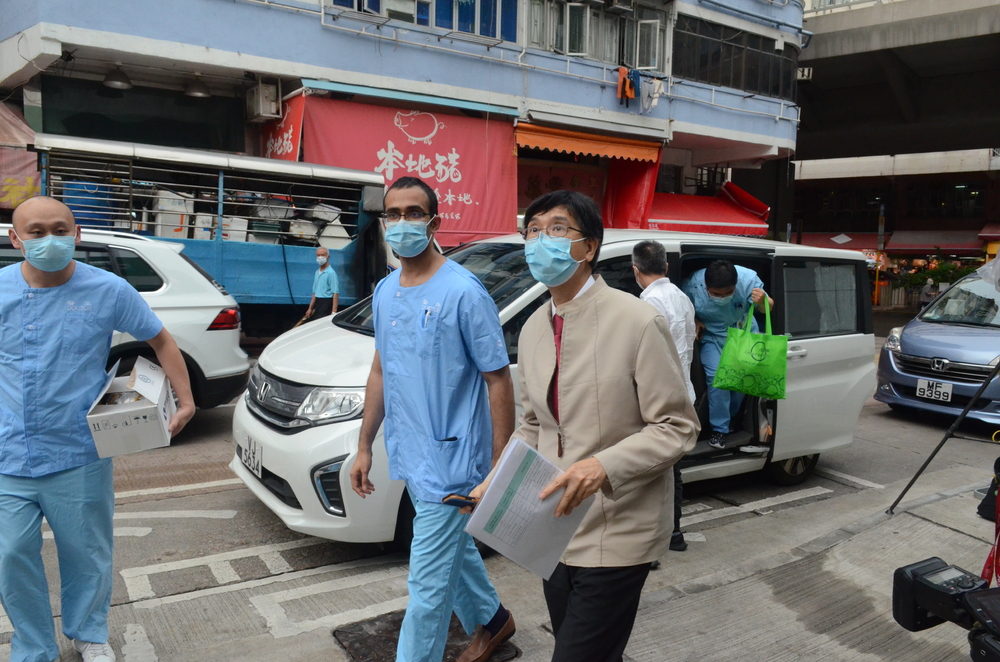
Yuen Kwok-yung, left and above right, leads the inspection of the Hung Hom and To Kwa Wan wet markets, where 12 vendors have fallen ill. SING TAO