Read More







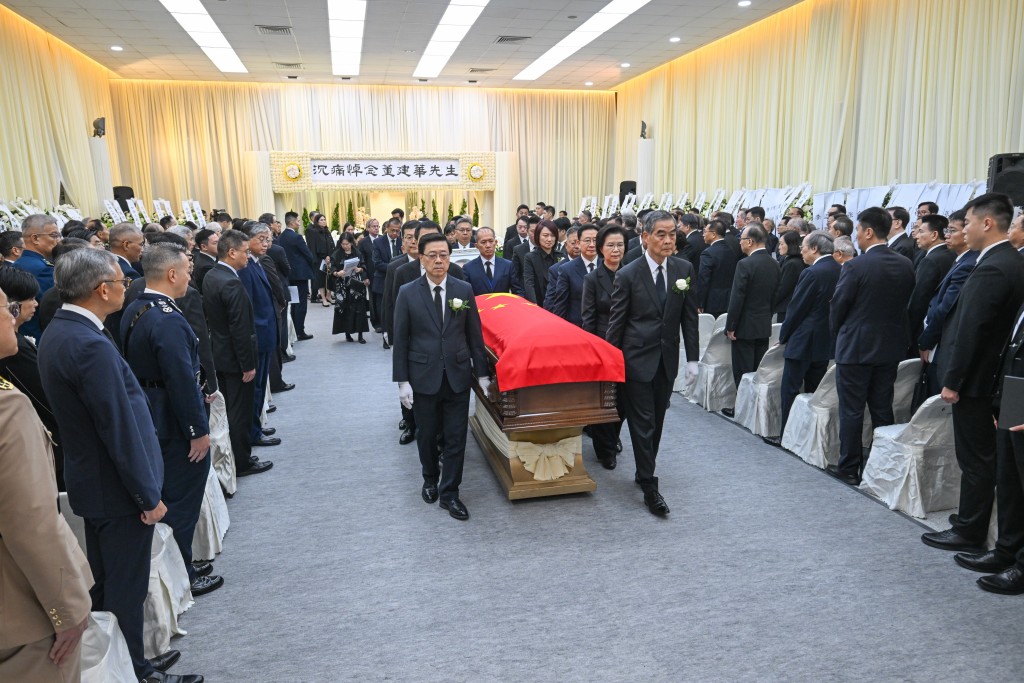
John Lee and CY Leung lead pallbearers for Tung Chee-hwa
20-09-2026 15:54 HKT


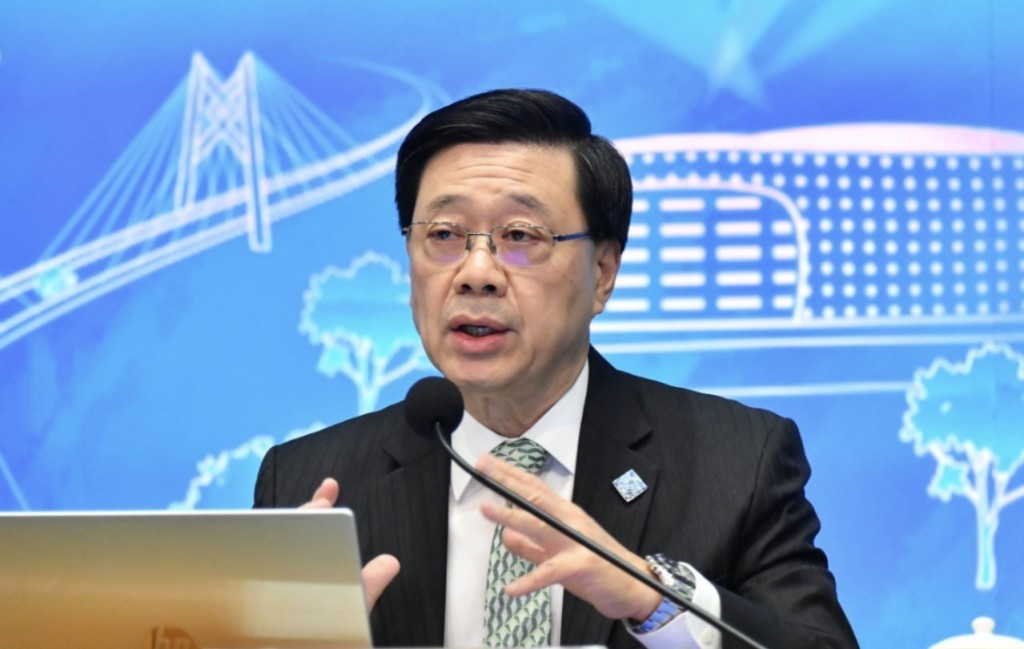
Chief Executive John Lee Ka-chiu aimed to enhance Hong Kong's status as an international city and take post-secondary education to a higher level by doubling the admission quota of non-local students to government-funded post-secondary institutions.
Lee said the city's post-secondary education is international and highly diversified, while it is also the only city with five universities in the world's top 100. He added that developing Hong Kong into an international hub for post-secondary education would benefit local students and help widen their global perspectives.
The admission quota of non-local students to government-funded post-secondary institutions will be doubled to 40 percent starting from the 2024/25 academic year. The institutions may consider their capacity to admit more non-local students to expand capacity and enhance standards through their teaching and supporting facilities.
To enhance learning and enrichment opportunities for international students, full-time non-local postgraduate students will be temporarily exempted from the restrictions on taking up part-time jobs starting next month to increase their incentive to stay for development after graduation.
The arrangement will be implemented on a trial basis for two years, during which more than 35,000 students are expected to benefit.
The government will also facilitate the establishment of universities of applied sciences (UASs) and strive to raise the status of vocational and professional education and training to attain qualifications at the university degree level.
Lee added that UASs will closely collaborate with technical professions and offer programs with more internship and practical learning opportunities to help students hone their practical skills in the fields.
The government will cooperate with the Hong Kong Council for Accreditation of Academic and Vocational Qualifications to make reference to the international experience and work to prescribe the standards to be qualified as UAS, covering such aspects as the admission, curriculum, accreditation, career articulation, collaboration with the industry sector.
To support suitable existing self-financing institutions to develop into UASs, the government will provide additional subsidies to encourage institutions to offer more applied degree programs related to the technical professions and provide more incentives for enrolment.
It will also set aside a start-up fund to support potential post-secondary institutions to form an Alliance of Universities in Applied Sciences to undertake joint promotional activities to instill in students, parents and the community a better appreciation of the importance of vocational and professional education and training.
In addition, it will strive to develop the Northern Metropolis University Town where post-secondary institutions are encouraged to strengthen cooperation with renowned mainland and overseas institutions and create synergy by sharing resources and enhancing collaboration with the industry sector.
The government will also look into establishing the Hong Kong Institute of Information Technology to nurture local talents in the information technology sector.
Apart from the development of the universities, the government will also expand scholarship schemes by injecting HK$1 billion into the Government Scholarship Fund, with the quota of the Belt and Road Scholarship to be increased by 50 percent.
The quota of the Hong Kong PhD Fellowship Scheme will also be increased by one-third gradually, from 300 to 400 places per academic year.