Read More



Amber rainstorm warning issued at 11am
9 hours ago




Man steals $22,000 Chanel handbag from Tsuen Wan Plaza shop
03-04-2026 20:43 HKT

Iran demands transit fees in yuan, stablecoins for Strait of Hormuz passage
03-04-2026 02:45 HKT
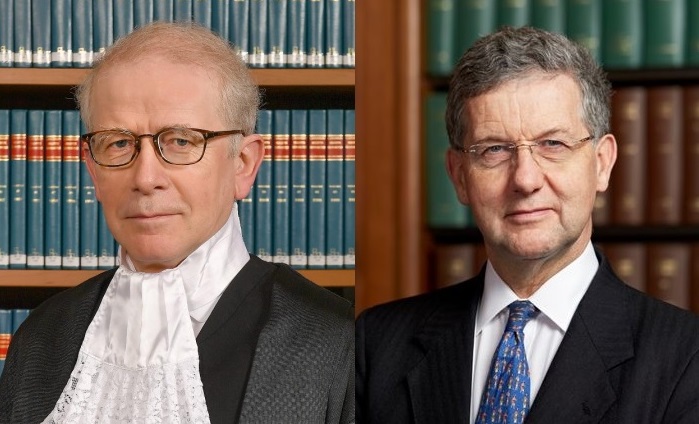
Two senior British judges, including the president of the UK Supreme Court, have submitted their resignation from Hong Kong's highest court as Britain said their presence was no longer tenable.
In a statement issued on Wednesday, Robert Reed, who heads Britain's top judicial body, said he and fellow judge Patrick Hodge would leave their roles as non-permanent judges on the Hong Kong Court of Final Appeal (HKCFA).
Reed and Hodge have been serving as non-permanent judges in Hong Kong since 2017 and 2020, respectively. Reed also succeeded Lady Brenda Hale as President of the UK Supreme Court in 2020.
"I have concluded, in agreement with the government, that the judges of the Supreme Court cannot continue to sit in Hong Kong without appearing to endorse an administration which has departed from values of political freedom and freedom of expression," Reed said in a statement on Wednesday.
The two submitted their resignations with immediate effect.
Britain, which ruled Hong Kong for over 150 years, has said the national security law imposed on the territory by Beijing two years ago was a breach of the 1984 Sino-British Joint Declaration that paved the way for the handover in 1997.
British foreign secretary Liz Truss supports the withdrawal of serving UK judges from the Hong Kong Court of Final Appeal.
Following discussions with the deputy prime minister Lord Chancellor Dominic Raab, and the President of the Supreme Court, it was agreed that it is no longer tenable for serving UK judges to sit on Hong Kong's top court, she stated.
"We have seen a systematic erosion of liberty and democracy in Hong Kong. Since the National Security Law was imposed, authorities have cracked down on free speech, the free press, and free association," she wrote.
"The situation has reached a tipping point where it is no longer tenable for British judges to sit on Hong Kong's leading court and would risk legitimizing oppression."
Last August, Reed issued a statement in which he said he, alongside the foreign secretary and the Lord Chancellor, had been reviewing the operation of British judges sitting in Hong Kong.
Their shared assessment at that time was that the city's judiciary continued "to act largely independently of government and their decisions continue to be consistent with the rule of law."
Another British judge Brenda Hale, a former non-permanent judge of Hong Kong's highest court, did not seek reappointment after her term ended on July 29 last year.
She cited the implementation of the national security law as the main reason: "The jury is out on how they will be able to operate the new national security law. There are all sorts of question marks up in the air."
But Jonathan Sumption, also a non-permanent judge, opposed calls for British judges in Hong Kong to quit.
"The problem about these demands is that they do not distinguish between democracy and the rule of law. Democracy has never existed in Hong Kong, but the rule of law has and still does."
The colony's courts were independent. It was just that the legislation they applied was not democratic, he reasoned.
Following the resignation of Reed and Hodge, five British judges will remain in Hong Kong.
(Reuters and staff reporter)