Read More





Morning Recap - April 23, 2026
9 hours ago




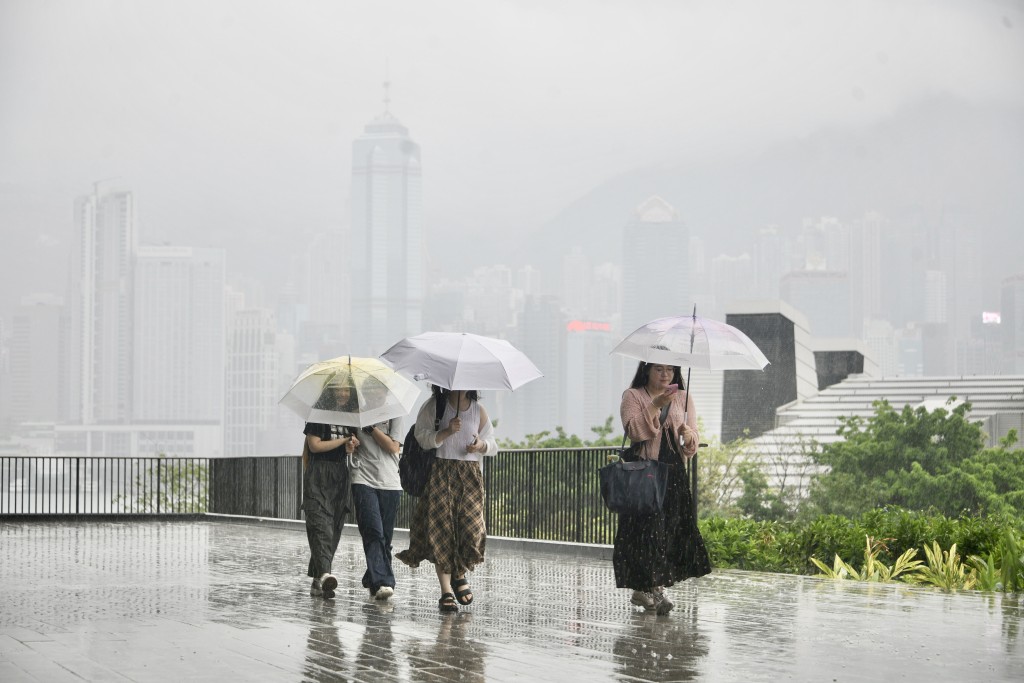
HK braces for 7-degree plunge and heavy rain on Fri as cold front arrives
22-04-2026 13:19 HKT
Rolex and diamond ring stolen from sleeping man in Tsim Sha Tsui park
22-04-2026 12:18 HKT


In an interview touching on an unauthorised assembly case (DCCC 536/2020), Mr Paul Harris, SC, chairman of the Bar Association, said, “People have strong feelings and they need to find an outlet for those feelings, a peaceful demonstration is an outlet. If you don’t allow it, those feelings will not go away. They are very likely to turn to very damaging channels, which can include violence.” Mr. Harris told me that this passage was made in relation to his book on peaceful demonstrations.
Obviously, the quoted passage is prone to suggest to the public very damaging misconceptions, that “peaceful” acts are innocuous, and that strong feelings can justify violence. These misconceptions must be dispelled.
I The first implied misconception is: “If an act is ‘peaceful’, the law should not intervene”
But “peaceful” acts can also do harm, and even more harm, to society. One can, for instance, peacefully deceive another into losing life savings; peacefully steal from a jewellery shop; peacefully defame another; peacefully spread fake news to trigger a bank run; peacefully incite youngsters to commit crimes - on the “peaceful analysis” that the rule of law principle is not injured because offenders will be pursued; peacefully induced hatred by making flimsy accusations of “police brutality”, or peacefully promote the contradiction that “the rule of law can be maintained” by “repeated and escalating breaches of the law” (Coleman J rightly rejected such nonsense, in HCA1957/2019, para 33). Whether an act is a crime should be decided by the law, not by whether the act is “peaceful”.
An unauthorised assembly which occurs “peacefully” in crowded streets during the heat of an ongoing, violent social turmoil, would inevitably infringe other citizens’ basic rights, and likely add disorder and encourage more violence. As shown by the meticulous judgment of the Court of Appeal in CAAR 4/2020, and paraphrased by the learned trial judge: “it is artificial and unreasonable to divide unlawful assemblies by violence when passing sentence.” (Para 47, DCCC 536-2020, Reason for Sentence) The fact that an unauthorised assembly was “peaceful” could hardly reduce its criminality.
II The more damaging misconception is this: “Strong feelings justify violence”
The message suggests that, to avoid the possibility of violence, the law should give way to “strong feelings”. It implies that, if two opposing groups each with strong feelings against the other, the law should give way to the one with stronger feelings, i.e., the one more prone to use violence. Instead of acting as a higher norm to ensure justice for all, the law is debased to become the servant of those with “stronger feelings”. Many may see in this “prediction of violence” a justification of violence smack of triad logic. Even if violence is a historical “fact”, obviously the law “ought” not to condone it. This misconception can easily return us to the Hobbesian state of nature, where “might is right”.
In recent years, the theme of violence has been advocated by, among others, vocal barristers: that unlawful violence can sometimes solve problems; that going to jail can make life more wonderful/colourful. Others, notably some law lecturers and teachers, have helped to disable the law by giving “moral halos” to especially youngsters: that the law should not apply if you are fighting for what you perceive to be “freedom”, or “democracy”, that is, if you are “sacrificing” yourself for “justice”, and so on, you are above the law.
The mentality of violence proliferated, and was put into practice by many in the 2019 turmoil. During the latter half of that year, some 4,000 firebombs have been thrown in the streets, to court buildings, police stations, and other public and private facilities, with another around 10,000 firebombs seized from the premises of two universities and other locations. News reports were repeatedly filled with images of hundreds, if not thousands, of rioters (many are just young students) perpetrating countless incidents of street violence, arson, wounding, intimidation, vandalism, false imprisonment, dangerous interference with mass transport systems, cyber-bullying, and even setting people on fire.
This is a distressing “world record” of organised violence. Its unlawful nature is no different from the Capitol Hill riot in Washington on 6 January 2021, but far more extensive in scale and in damage. It has caused immense sufferings to all sides of the Hong Kong community, in particular to those innocent, crying parents who suddenly found their most precious children radicalised into young criminals. Many would expect the Bar Association to have unequivocally defended the rule of law by condemning such unlawful violence, and they were disappointed.
III Can our desires, or “strong feelings”, for “noble causes” such as “freedom” and “democracy”, justify violence?
False “freedom” should not be pursued and cannot justify violence
Many “liberals” mistakenly believe that un-restrained desires mean freedom, that is, “freedom” is the absence of obstacles to our desires. If such “freedom” has been frustrated, causing “strong feelings”, then arguably violence can be justified?
The idea that un-restrained desires mean freedom cannot be more wrong and dangerous. Individual desires (often re-labelled as “human rights”) are biological, amoral, irrational, and mutually exclusive. As Hobbes has powerfully warned, un-restrained desires would lead to unending chaos and violence - the Hobbesian “state of nature”, not freedom. Elevating biological desires to “human rights” tends to strengthen inter-person antagonism more than “human dignity”.
Blackstone is apprehensive about this “natural liberty without any restraint or control”, and rightly suggests that true freedom depends on establishing laws and “legal obedience”: “…But every man, when he enters into society, gives up a part of his natural liberty, as the price of so valuable a purchase; and …obliges himself to conform to those laws, which the community has thought proper to establish. And this species of legal obedience and conformity is infinitely more desirable than that wild and savage liberty which is sacrificed to obtain it….”
Dworkin also cautions against the dangers of this popular, desire-based “freedom”: “…I have in mind the traditional definition of liberty as the absence of constraints placed by a government upon what a man might do if he wants to. …This conception of liberty as license is neutral amongst the various activities a man might pursue… It diminishes a man’s liberty when we prevent him from talking or making love as he wishes, but it also diminishes his liberty when we prevent him from murdering or defaming others.”
Popper rightly emphasises responsibility as a key constituent of freedom: “…I do believe that every freedom involves duties: to use your freedom responsibly. Those who don’t may kill the freedom. Every freedom can be misused. And our ancestors in this struggle – so Voltaire, Kant, Mill – believed that we will be civilized enough to live up to this almost obvious demand.”
Freedom is constituted by responsibility and legal order. Mutual freedom can only co-exist under a legal system and when everyone respects that system by acting responsibly. It is nonsensical and counterproductive to try to pursue false freedom through irresponsible, “repeated and escalating breaches of the law”.
Ailing democracy should not be pursued and cannot justify violence
Responsible professionals should honestly and critically face the changing signs that, even in “mature democracies”, voting democracy is mal-functioning. It is increasingly plagued by social polarisation, poor governance, irrational and irresponsible voting practices, failing election promises, and incoherence of the voting logic. And the failures of voting democracy are causing social turmoil and grave sufferings in “developing democracies”. If democracy is sick, Foreign Minister Mr Wang Yi is right to be cautious: Coca cola is unlikely to be good for the health of all countries.
Many would find it absurd to implement a sick democracy by breaking down a healthy legal system. If democracy is ailing, it must be nursed back to health. The common law has developed rational platforms to enable explorations of social improvements through responsible, critical processes. The Bar should defend the rule of law by channelling any “strong feelings” about the ailing democracy (or, for that matter, about desire-infested “human rights”, “freedom”, or “justice) back to the constitutional and legal framework.
True civilisation and social progress are sustained by responsibility, critical rationality, mutual respect, and equality under legal orders, not by violence. The right way to “defend” mal-functioning “liberal values” is to responsibly and vigilantly explore better and workable new options. The well-being of future generations is too much at stake to allow professionals to carry themselves away by political slogans, or “strong feelings”.
IV Looking ahead
Independence of the Bar is diminished when barristers indulge themselves in isolating elitism. The future of the Bar is advanced by keeping the desire-dominated “liberal” ideology and politics out of the law; by holding a responsible and sensible attitude towards the constitutional demarcations; and by a respect of the people, and of their different mode of development in the mainland.
For years some influential members of the Bar have indulged themselves in an ideological quagmire which is repugnant to meeting the above requirements. Such cumulative failings have led to a crisis which is not just about leadership but also about the fate of the law. The crisis is deep and the task of resolving it is arduous.
Robert S K Lee, Senior Counsel
Robert Lee is a Senior Counsel, he is also a former Deputy Director of Public Prosecutions of the Department of Justice.