Read More


Morning Recap - September 21, 2026
4 hours ago
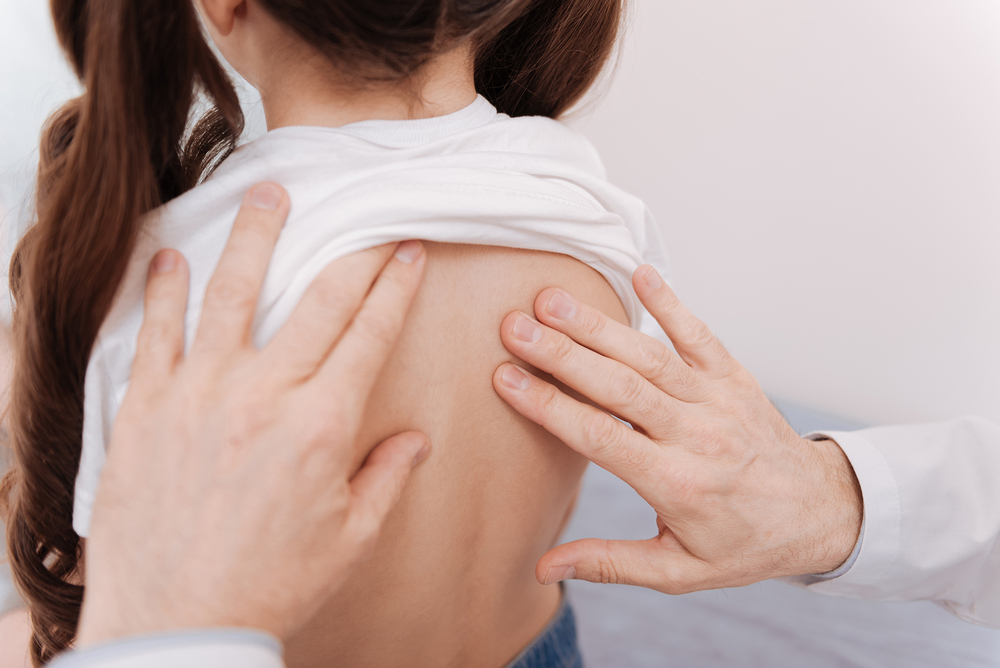
Scoliosis is a form of twisting of the spine, and the medical term “scoliosis” is used to describe sideways bending. It can develop in children and being unnoticed at an early stage as the curve in the spine is small. As it progresses, scoliosis may negatively affect a patient’s confidence and stirs notable anxiety among patients and their families.
What are the types of scoliosis?
Different types of scoliosis can occur depending on the ages. For children and teens, there are four common types of scoliosis: Congenital scoliosis, idiopathic scoliosis, neuromuscular scoliosis, and syndromic scoliosis. Among all, idiopathic scoliosis is the most common type of unknown cause.
What causes idiopathic scoliosis?
Researches have been conducted, yet no evidence proves any exact cause of idiopathic scoliosis. It is believed that genetic conditions with complex inheritance would affect the development of the spine. Indeed, studies show that identical twins are affected by idiopathic scoliosis with over 90% concordance although the severity and curve location may not be the same. And it tends to occur in families.
How likely is my child to be affected by idiopathic scoliosis?
A large study of school screening in Hong Kong shows scoliosis affects about 3% of teenagers. Scoliosis mainly affects girls. Mild scoliosis is about three times more common in girls than boys, and moderate to severe scoliosis is about eight times more common in girls than boys.
How can I spot scoliosis in my children?
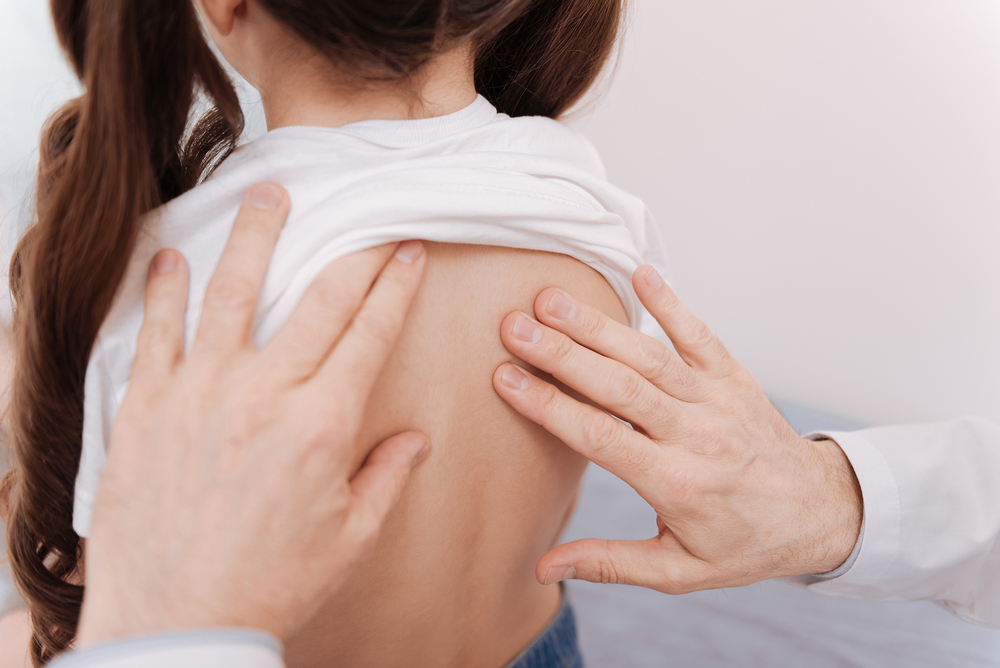
Common signs of scoliosis include uneven shoulders or hips and curve in the spine, but mild scoliosis is usually hard to detect particularly when the child is wearing clothes. The best way is to have an assessment by a medical professional or to participate in a school screening program, which usually starts at the age of 10. School screening also provides a safe, simple, and comfortable setting for children.
What happens if my child has scoliosis?
If your child has a mild level of deformity in the spine, it does not affect much and your child may not even be aware of it. When the deformity develops, there may be some prominence of the rib cage on one side that becomes a cosmetic problem. And it may affect your child’s confidence.
However, severe scoliosis causes both cosmetic and functional problems. Long term studies show that severe scoliosis leads to premature death from cardiopulmonary diseases and an increased death rate from age 40-80.
What are the possible treatments?
The size of the curve and the age and maturity of the patient are factors to consider treatment options.
For a relatively mild case (curves above 25°), and the patient is still growing, brace treatment is recommended. The brace would be worn 23 hours a day until the patient reaches skeletal maturity, which is usually around 16 years old. For severe scoliosis (curves over 50°), an operation is recommended.
Idiopathic scoliosis could be hard to spot at an early stage. Ensure your kids participate in school screening regularly to help detect scoliosis earlier. Consult a medical professional if you notice a curvature of your child’s spine. Early diagnosis is key, especially changes in children could be fast and drastic as they grow. Once detected, treatment can start early and prevent scoliosis from progressing.
About the author
Dr Bobby Ng is an Orthopaedic Surgeon, who is interested in children’s orthopaedic and scoliosis, and is passionate in research and teaching. Dr Ng is also a Honorary Clinical Professor in the Department of Orthopaedics & Traumatology of the Chinese University of Hong Kong.