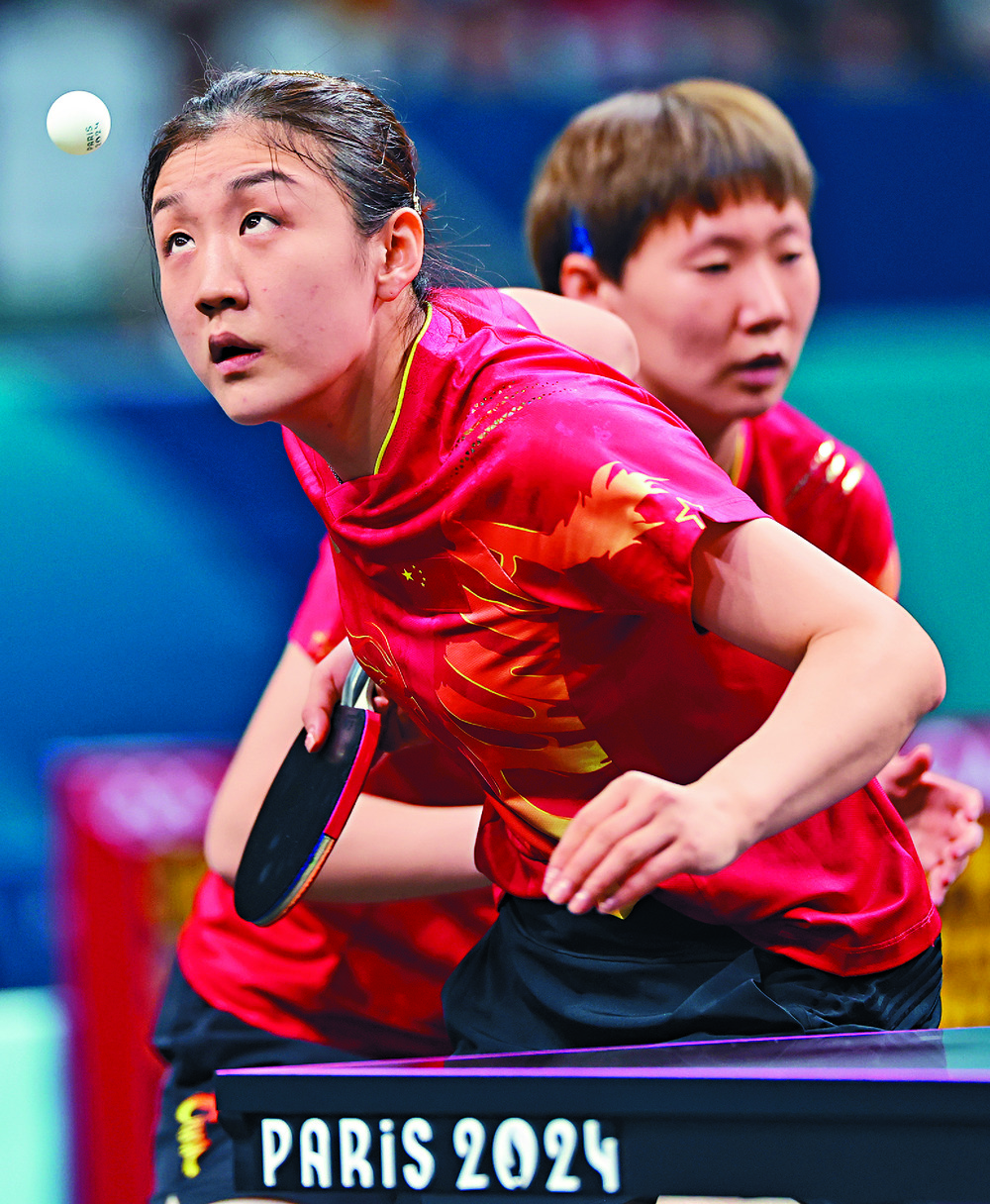
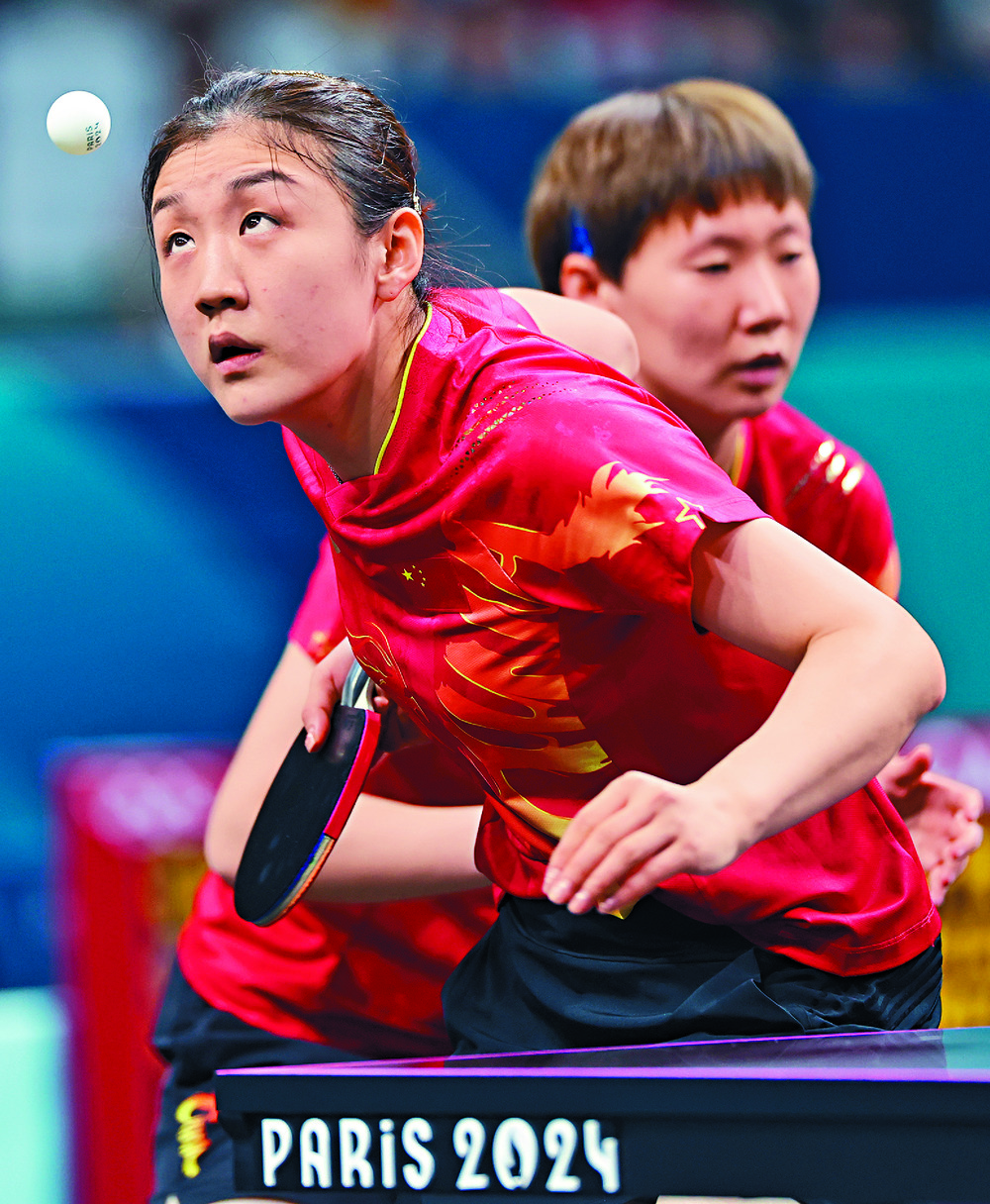
Continuing with my series on the technologies backing up the Olympic Games, let us look at table tennis.
Chinese players have significantly developed their skills over the past decades to become world leaders in the sport.
Not only have they won many medals in the past few Olympic Games but they have also excelled in manufacturing table tennis equipment.
China won 91 medals (40 golds, 27 silvers and 24 bronzes) in Paris this year, securing a leading position that they have held for many years.
They are also leaders in the provision of equipment for the sport.
The tables used in the Paris Olympic Games were manufactured in China, chosen not only for their cost but also for their quality.
The electronic system used in Paris also includes video-recording systems with analytical power that instantly shows ball speeds, no doubt aided by 5G technology.
But table tennis remains a traditional game.
Its tables are still one of the few pieces of modern sports equipment that use imperial measurements.
They are nine feet long, five feet wide, 2.5 feet tall and come with a six-inch-tall net.
Their wooden tops sport robust support to counter excessive vibrations.
Obviously, there are technical specifications for surface flatness and hardness to ensure the ball bounces smoothly without unexpected changes in direction.
The rackets are more interesting.
With players continuing to improve skills, more effective rackets can provide stronger impact forces with significantly increased speed and superior ball control.
Starting with plain wood on both sides, as the game developed, batting speed increased and spins became an integral part of a player's arsenal.
To provide friction for spins, rubber layers started to be applied.
To create the frictional force for spins, specially developed layers are often used - with one side of the bat featuring pimpled rubber and the other side flat rubber.
Beneath each of these rubber layers is a layer of sponge materials that absorbs impacts to allow the player to return the ball back to the opponent's side with great force and spin.
Experienced players can strike the ball strategically so it not only hits the table at high speeds but also come with topspins, bottomspins and sidespins that make defending harder as a simple and direct return may send the ball too high and too long, too low and into the net or otherwise wide of the table.
Rackets these days feature pimpled rubber that faces inward toward the underlying sponge layers and not on the surfaces.
This arrangement enables the momentum of fast shots that pack a lot of spin to be absorbed and the rapidly revolving ball to be nullified and returned with great force and counter spins.
To ensure fair play, there are stringent rules imposed by the International Table Tennis Federation.
The combined thickness of the rubber and the sponge must not exceed four millimeters.
As players often use a variety of thickness and softness for the rubber covering on each side of the racket for better spins, its backside must be black so opponents can identify which side was used to hit the ball and be able to gauge the potential strength and spin of the shot.
The racket handle is also designed for different grips.
Most players go for the "shakehand" grip, which necessitates a longer handle while the "penhold" grip makes do with shorter and slimmer handles.
A most interesting recent development is the increased size of the balls.
They were traditionally made of celluloid.
However, for environmental reasons and to minimize fire risks, they are now made of plastic.
To ensure fair play and encourage players to concentrate on developing skills and training rather than relying on new technology, the ball's diameter has been increased from 38 to 40 mm, making it heavier and more air resistant.
The combined effect is to prevent its speed from increasing to the point where it becomes difficult for spectators to follow trajectories and umpires to do their work.
The bigger ball, with tighter specifications, keeps ball speeds to levels where skill remains vital and spectators are entertained.
Once again, technology in sports and games ensures fair play and provides good enjoyment for spectators.
Veteran engineer Edmund Leung Kwong-ho casts an expert eye over
features of modern life
The game is on with, clockwise from left, Japan's Miu Hirano seeming to be transfixed by the ball as she serves to South Korea's Shin Yubin at the Paris Olympics; Fan Zhendong, wielding a shakehand grip, using the red rubber side of his bat to go for