Read More









Right to a trial without a jury | To The Point | Cheng Huan
15-06-2026 00:07 HKT



(Video) 2 passengers thrown from taxi and killed in Tsing Sha Highway crash
17-06-2026 01:37 HKT



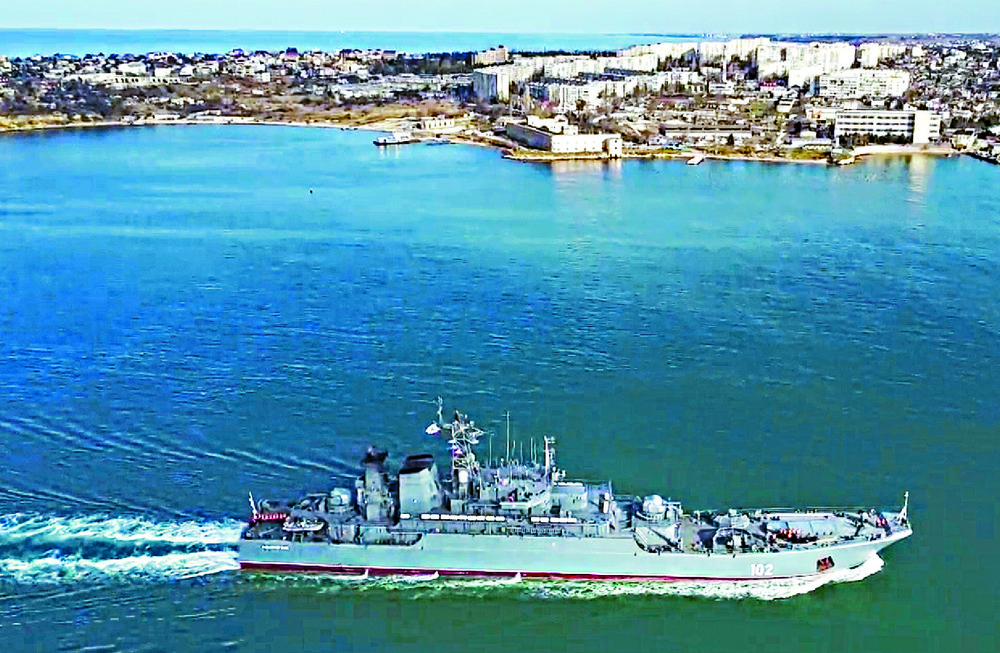
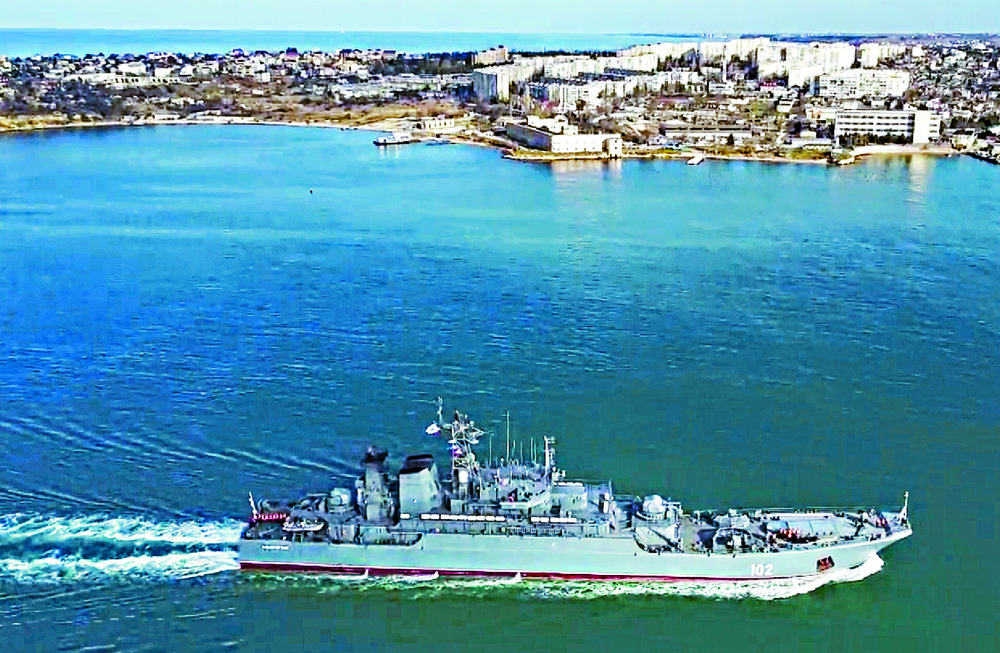
The ongoing conflict between Russia and Ukraine has played out largely on land and in the air. But a less appreciated but vital focus of the war is happening on water, too. There, a contest for control of the Black Sea has seen Russia stunningly defeated.
Russia's stunning defeat in the Black Sea has seen it retreat from the Ukrainian shoreline and keep its ships far away from the battlefront.
The Black Sea is a tightly enclosed and relatively small sea comprising the near waters of the countries that surround it: Turkey to the south, Bulgaria and Romania to the west, Georgia to the east, and Ukraine and Russia to the north.
Russia's seizure of the Crimean Peninsula in 2014 allowed it to control the naval port of Sevastopol. What were near waters of Ukraine became its near waters.It allowed Russia to disrupt Ukraine's trade, especially grain exports to Africa.
But its actions were thwarted by Romania, Bulgaria and Turkey allowing passage of cargo ships through their near waters, then through the Bosporus into the Mediterranean Sea.That allowed Ukraine to export 5.2 million to 5.8 million tonnes of grain per month in the first quarter. To be sure, this was a decline from 6.5 million tonnes prior to the war, which then dropped to two million in 2023 because of Russian attacks and threats.
But efforts to constrain Russia's control of Ukraine's near waters and Moscow's unwillingness to attack ships in NATO countries' near waters meant Kyiv was still able to keep its economy afloat.Russia has also come under direct naval attack. Since February 2022, using drones, Ukraine has sunk or damaged its ships and whittled away at its Black sea fleet, sinking 15 of its prewar fleet of 36 warships and damaging many others.
Russia has been forced to limit its use of Sevastopol and station its ships in the eastern part of the Black Sea.Its naval setbacks are only the latest in its historical difficulties in projecting sea power and its resulting tendency to mainly focus on the defense of near waters.
Even in cases where it was not outright defeated, its sea power has been continually constrained. In World War I, it cooperated with the Britain to limit German merchant activity in the Baltic Sea and Turkish trade and military reach in the Black Sea.In World War II, it relied on material support from the Allies and was largely blockaded within its Baltic Sea and Black Sea ports.
During the Cold War, though the Soviet Union built fast-moving missile boats and some aircraft carriers, its reach into far waters relied on submarines. The main purpose of its Mediterranean fleet was to prevent NATO penetration into the Black Sea.And now, it has lost control of the Black Sea. The losses reduce its ability to project naval power from the Black Sea and into the Mediterranean Sea.
As a result it can project power only through cooperation with a China that is investing heavily in a far-water capacity.Joint naval exercises in the South China Sea in July are evidence of this cooperation.
Wang Guangzheng of the People's Liberation Army Navy's Southern Theater claimed the exercise "effectively enhanced the ability to the two sides to jointly respond to maritime security threats."This cooperation makes sense in purely military terms for Russia, a mutually beneficial project of sea power projection. But it is largely to China's benefit.
Russia can help China's defense of its northern near waters and secure access to far waters through the Arctic Ocean - an increasingly important arena as global climate change reduces the hindrance posed by sea ice. But Russia remains very much the junior partner.Its strategic interests will be supported only if they match Chinese interests.
More to the point, sea power is about power projection for economic gain. China will likely use Russia to help protect its ongoing economic reach into Africa, Pacific, Europe and south America. But it is unlikely to jeopardize these interests for Russian goals.To be sure, Russia has far-water economic interests, especially in the Sahel and sub-Saharan Africa. And securing Russian interests in Africa complements China's growing naval presence in the Indian Ocean to secure its own, and greater, global economic interests. But cooperation will still be at China's behest.
Bottled up in Black Sea near waters as a result of its war in Ukraine, Russia's only current avenue for projecting its naval power is access to Africa and the Indian Ocean as a junior partner with China, which will dictate the terms and conditions.Even if Russia achieves victory on land against Ukraine, it will not compensate for its ongoing inability to project power across the oceans on its own.
THE CONVERSATION/ASSOCIATED PRESSColin Flint is a professor of political geography at Utah State University