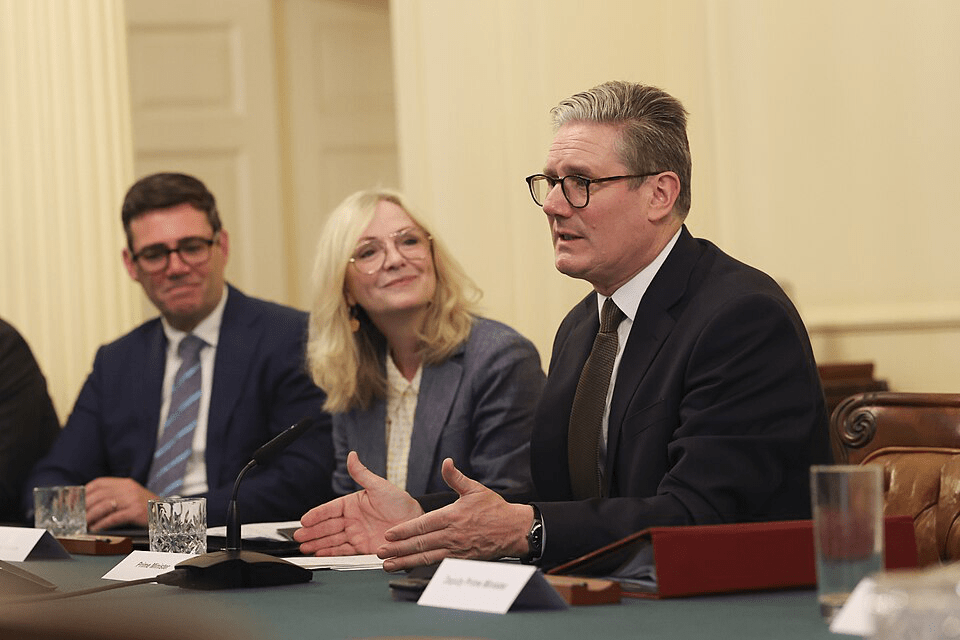
Andy Burnham wants to be Prime Minister; that much is hardly a secret. But before any of that becomes possible, he has to win a parliamentary by-election on 18 June — in a seat that, on the most recent evidence, Reform UK would take from him.
Makerfield, a working-class constituency on the border of Greater Manchester and Merseyside, was a safe Labour heartland for four decades. In 2024, Josh Simons held it with a 13.4-point majority over Reform UK — 45.2% to 31.8%. That margin looks fragile today. In the May 2026 local elections, Reform swept all eight council wards inside the Makerfield constituency, winning roughly 50% of the vote. Labour collapsed to 23%. A straight projection from those results would put Reform ahead.
The numbers explain why Burnham’s personal vote matters so much. Polling aggregator Britain Elects estimates that with Burnham on the ballot, Labour would secure around 39% — down from 2024 but high enough for a narrow three-point win. The analysis suggests Burnham’s name alone would pull five points away from Reform UK and four from the Greens. Survation’s post-mortem of the Gorton and Denton by-election — a seat Burnham was blocked from contesting in January — found that 19% of people who voted Reform there said they would have backed Burnham had he been allowed to stand.
Reform’s candidate is Robert Kenyon, a newly elected Wigan councillor who contested Makerfield in 2024. Nigel Farage has vowed to “throw absolutely everything” at stopping Burnham. Prediction markets currently give Burnham a 57.5% chance of winning; Kenyon sits at 39%. That is not the spread of a candidate strolling to victory — it is the spread of a genuine contest.
A wrinkle has emerged from the right: Rupert Lowe’s Restore Britain party has announced a candidate, local businesswoman Rebecca Shepherd. Bookmakers initially priced them as a 50/1 outsider but have since moved the odds in, partly because any vote they take will almost certainly come at Reform’s expense rather than Labour’s — a dynamic that, perversely, might help Burnham hold on.
The stakes could hardly be higher. A Burnham win clears the path to a Labour leadership challenge; a Reform victory would throw the party into open crisis and leave Starmer’s most credible rival stranded outside parliament. Political commentator Steve Richards has called it “the most significant by-election in post-war British history”.
But the question runs deeper than one man’s career. The more important test is whether any mainstream politician can actually beat Reform on their own ground. A Burnham victory would demonstrate something no other senior Labour figure has managed to show: that the Reform surge is not unstoppable, and that a Labour politician with the right record and the right voice can win back the voters Reform has taken. On 18 June, the voters of Makerfield will decide whether he is the one to make it.
Isaac Teng is a London-based commentator on politics and culture.
Email : isaacteng@ireducation.org