After delving into accelerated computing and AI factories, I'm going this week into the last AI advance: humanoid robots.
"Robot" is actually a Czech word that means "slave."
Writer Karel Capek first coined the word in 1921 in his play: Rossum's Universal Robots.
The play tells the story of a company that uses the latest advances in biological, chemistry and physiological knowhow to mass-produce workers who "lack nothing but a soul."
In the end, the robots revolt against their human creators and two robots somehow acquire the human traits of love and compassion and go off into the sunset to make the world anew.
In 1954, American inventor George Devol designed the first industrial robot "Unimate," a programmable arm that transported die castings in an automobile plant.
The 1960s saw the arrival of digitally controlled industrial robots.
Robotics in the United States became a burgeoning science, attracted large investments, and spread rapidly to the manufacturing industry in Japan, South Korea and many parts of Europe, from conveyor-belt assembly lines to robots on the factory floor.
Traditionally, robots are machines designed to perform one narrowly defined task over and over again.
Humans possess remarkable qualities - compassion, love, genius. By creating humanlike robots, we aspire to imbue machines with these capabilities.
Humanoid robots mimic humans in appearance, including limbs, facial features and expressions.
They incorporate vision, touch and auditory sensors and aim for natural movement, balance and agility. More importantly, they learn and adapt to their environment.
Like systems biology, humanoid robotics represent a form of meta-biology.
They integrate knowledge from diverse scientific domains, fostering cross-pollination among computational neuroscience, AI, speech recognition and more.
Humanoids are at the forefront of AI technological progress.
Figure AI, a startup founded by Brett Adcock in 2022, wants to build humanoid robots - that is, two-legged robots that resemble the human body in shape - that can flexibly handle a range of tasks.
Partnering with OpenAI, a Figure 01 robot is able to identify an apple as edible and hand it over, pick up trash while explaining its reasoning, identify that dishes go in the dish rack, and then put them there.
Humanoids can interact with human tools and environments.
Their ability to mimic human movements and interact with the environment opens up new possibilities in manufacturing, health care, entertainment and more.
Most factories find it increasingly hard to find reliable workers for physically demanding, repetitive and dull tasks.
Humanoids seem to be an attractive alternative to replace expensive workers.
For example, Mercedes-Benz is trialing Apollo humanoids by Apptronik, at 1.77 meters and 72.6 kg, for about four hours on a single battery pack at its car factory in Hungary, a country facing a labor shortage for the automobile industry.
Using humanoids will improve quality in complex modern automation in factories that have little tolerance for error and without making major changes to their workspace layout, because human-like robots can walk and operate through spaces designed for humans.
This will free up human workers to focus on more important tasks and reduce the risk of repetitive strain injuries and other health and safety issues related to manual tasks.
Moreover, AI-powered humanoids often operate with greater precision and consistency than human operators.
NASA's Robonaut is a humanoid designed for space missions.
It can perform tasks in environments too hazardous for humans.
The Hong Kong Productivity Council and the RWTH Aachen Campus from Germany joined forces to establish the Hong Kong Industrial Artificial Intelligence & Robotics Centre in addressing major R&D problems encountered by the industries in adopting AI.
The future of humanoid robots is promising. But when will they be commonplace?
While it's hard to pinpoint an exact timeline, fully functioning humanoid robots will likely become a reality within the next few years.
It's essential to address ethical concerns related to autonomy, privacy, and safety. Researchers, engineers, and industries must collaborate to overcome challenges.
Dr Jolly Wong is a policy fellow at the Centre for Science and Policy, University of Cambridge
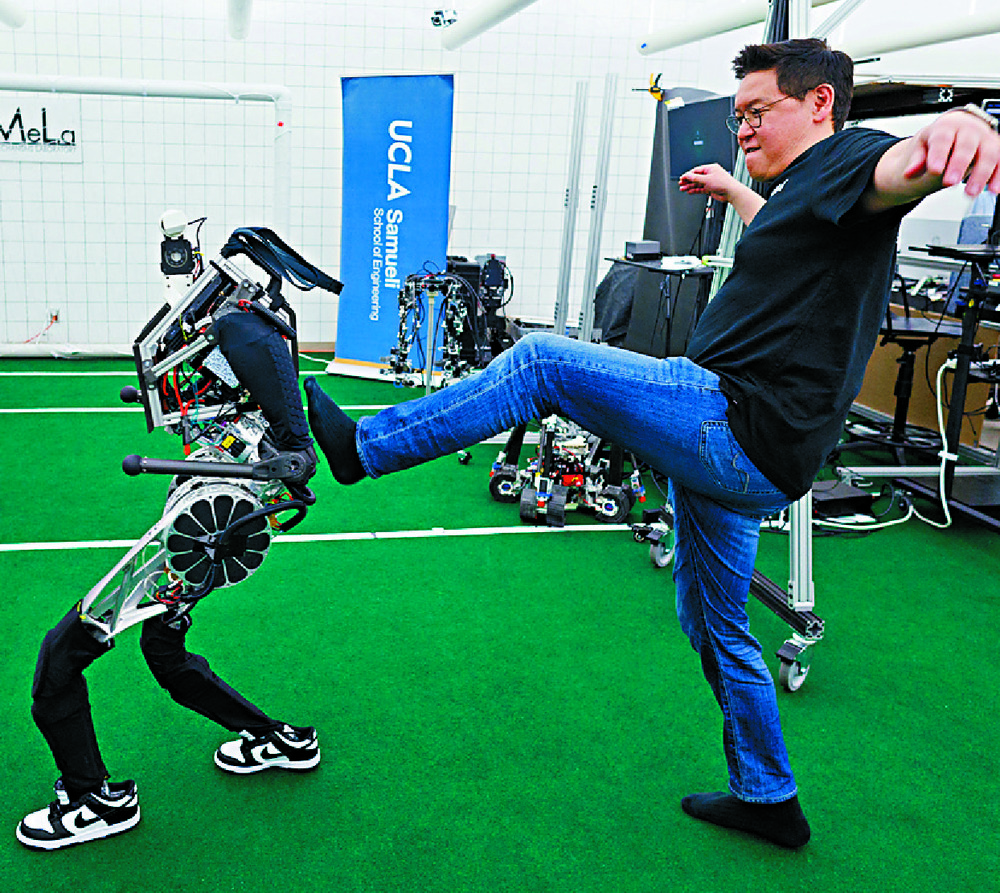
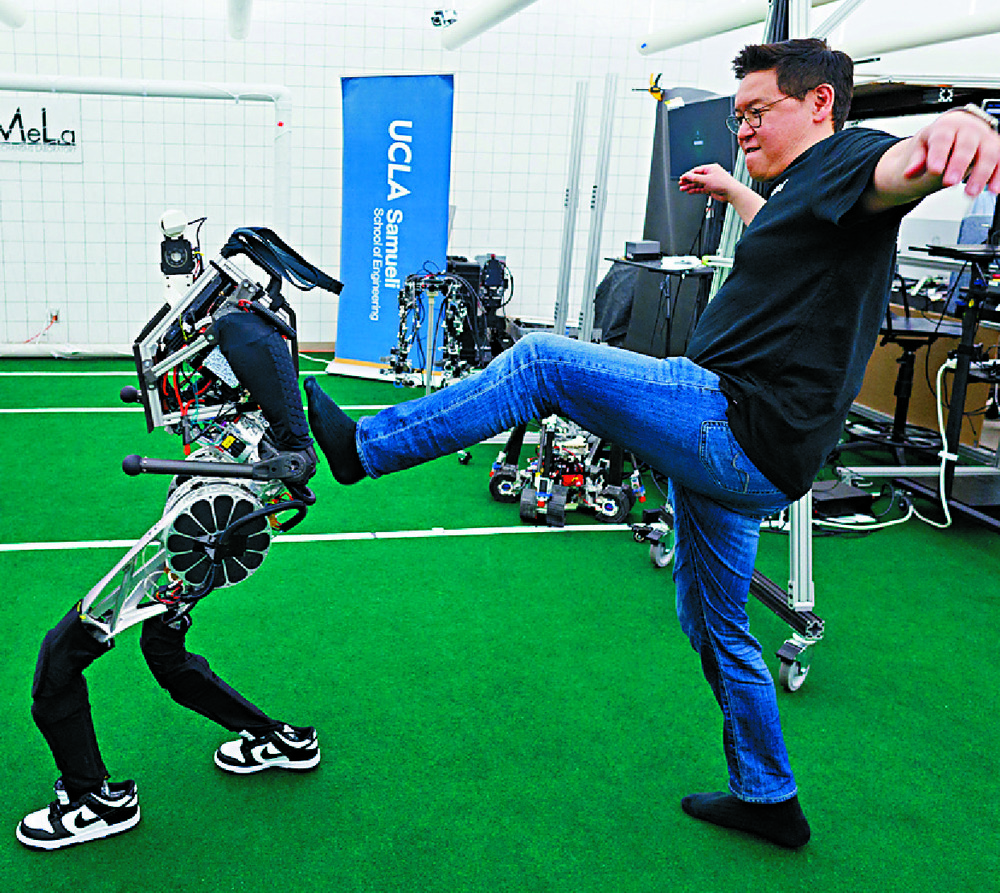
Humanoid robots making a difference include, clockwise from top, Apollo; Kepler Exploration Robot's Forerunner at the CES show in January; Artemis, with UCLA professor Dennis Hong getting a kick out of showing its steadiness; Figure 01; and Robonaut