Read More
Caroline de la Tournelle says her ability to decipher handwriting has influenced whether hundreds of people got jobs, helped police track sources of death threats and saved a child being abused.
ADVERTISEMENT
SCROLL TO CONTINUE WITH CONTENT
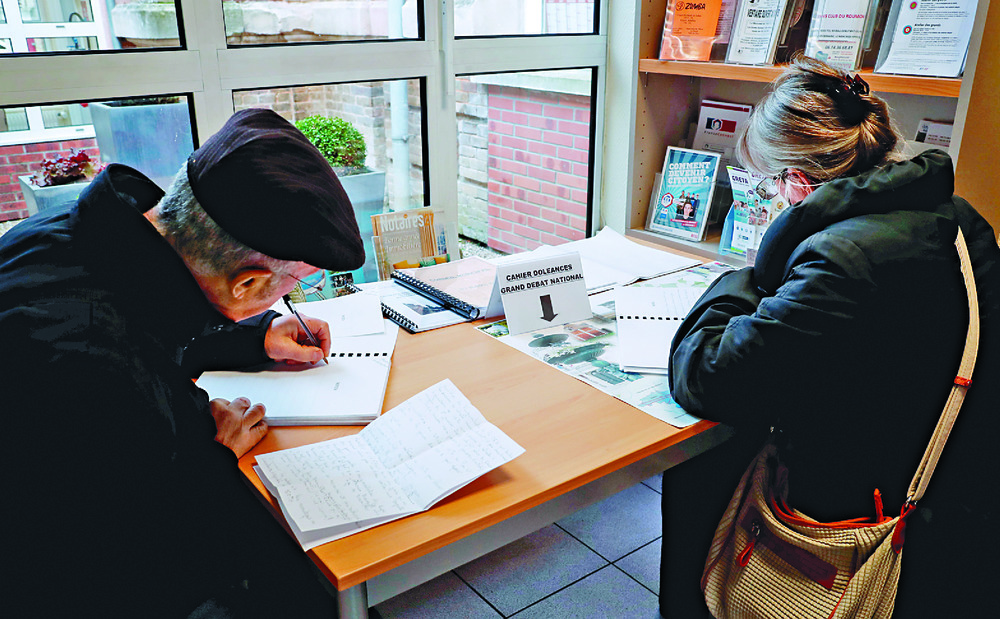
Graphology remains a controversial topic and has fallen out of favor in recent years - even in France, where it was widely used in the 20th century to gain psychological insights into individuals, especially for job applications.
But in the right hands practitioners and their clients say it can be a useful tool.
"When I look at a piece of writing I have to enter into it," says Paris-based de la Tournelle, who has more than a decade in the business. "It takes time. Some is warm, welcoming. Other pieces are harsher, more reserved.
"Pressure is always the first thing I look at," she adds, running her fingers softly over an example. "How hard they pressed, how the writing moves, how it is organized. It all has meaning."
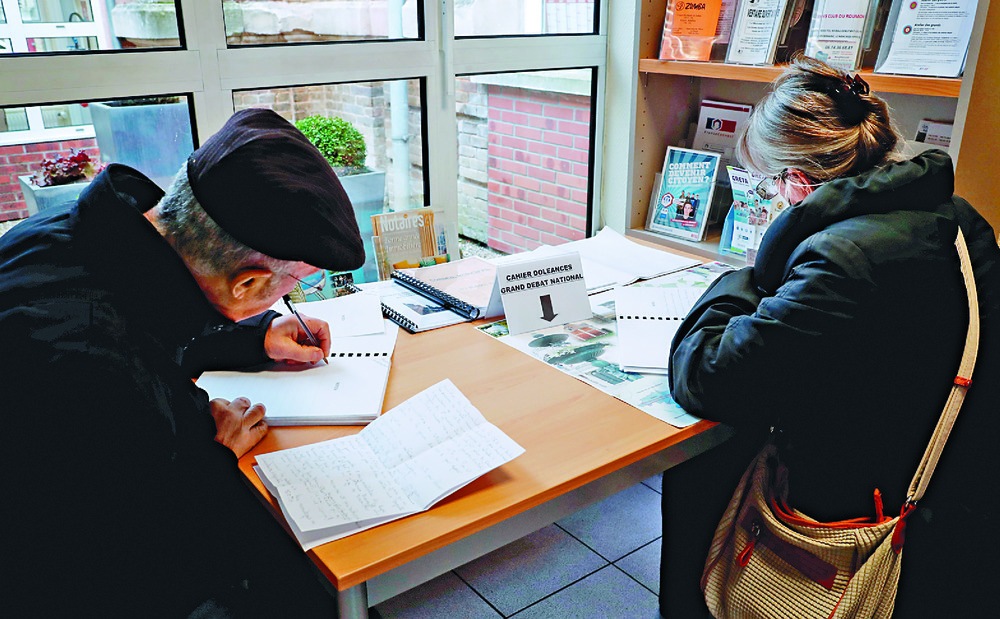
Not long ago it was common in France for job applicants to undergo handwriting evaluations. Although largely replaced by psychometric tests, some firms have recently returned to graphology.
"I tried other things, but they were no good," says Marc Foujols, manager of a Paris real estate firm. "Graphology finds the main characteristics of a person - not everything but a lot."
Christophe Dherbecourt, who has 25 years in personnel work at a communications firm in Paris, says graphology allows him to ask job candidates "the right questions."
Twice his firm rejected an applicant when handwriting analysis by de la Tournelle supported suspicions the people would be difficult employees.
"Of course, you can have graphologists who say any old rubbish, but she captures people well," Dherbecourt says.
"It's impressive what you can pull out. I had it done when I was hired here - they showed me the results and I felt it was 80 percent right."
Yet studies have debunked claims by leading exponents of graphology in the past, and it has attracted fraudsters and charlatans over the years.
But Tracey Trussell of the British Institute of Graphologists says "don't diss it until you've tried it. It's like a plumber - it's only as good as the person doing it.
"People say it's not a science, but year one of our training is all about measuring and assessing on a scientific basis."
As de la Tournelle explains: "Our writing comes from the heart, from our cardiac movement, through the nervous system and to the end of our fingers and through the pen.
"We are full of nuance, but three things never change - how emotional and energetic we are, and how much we rely on outside stimuli to act.'
Other aspects of the business are beyond dispute and of use to police.
De la Tournelle began her career in the small town of Brive in southwest France and worked with local cops to match handwriting samples.
She helped find people behind death threats, messages written with lipstick on mirrors, marker pens on office walls and even scratched into a car door.
"Crazy stories of greed, revenge, hate," she says. "Life can be like that in a small village."
She also interprets drawings, including for children, and this gave rise to her most shocking case, when a woman brought in her three-year-old granddaughter.
"Everything bad was in there - very angled, everything purple, everything bunched on the right," de la Tournelle recalls.
She conferred with her graphology teacher and they brought in a court-appointed psychologist who found the child was being abused by her mother. They now cooperate in other family cases.