In baseball-mad South Korea teams of professional cheerleaders pumping up players and fans with elaborate K-pop routines are as integral to games as beer and fried chicken in the United States.
Imported by American missionaries more than 100 years ago, baseball is South Korea's most cherished spectator sport, beating out even football.
There are no cheerleaders in Major League Baseball in the United States, but they are central to the spectacle in South Korea as they relentlessly dance, cheer and lead fan chanting throughout games.
Even when stadiums were devoid of supporters during the height of the pandemic the players requested that cheerleaders continue to perform every innings, saying it was too depressing without them.
"We usually performed facing the players, not the empty seats, so we were really able to watch the game and cheer in earnest," says 21-year-old Mok Na Gyeong, a cheerleader with the No 1-ranked SSG team. "We received thank-you messages from players saying they got an extra dose of energy from us."
Every player in South Korea's KBO League has a song written for them by their team. When they step up to the batter's box their music is blasted out and the cheerleaders start dancing.
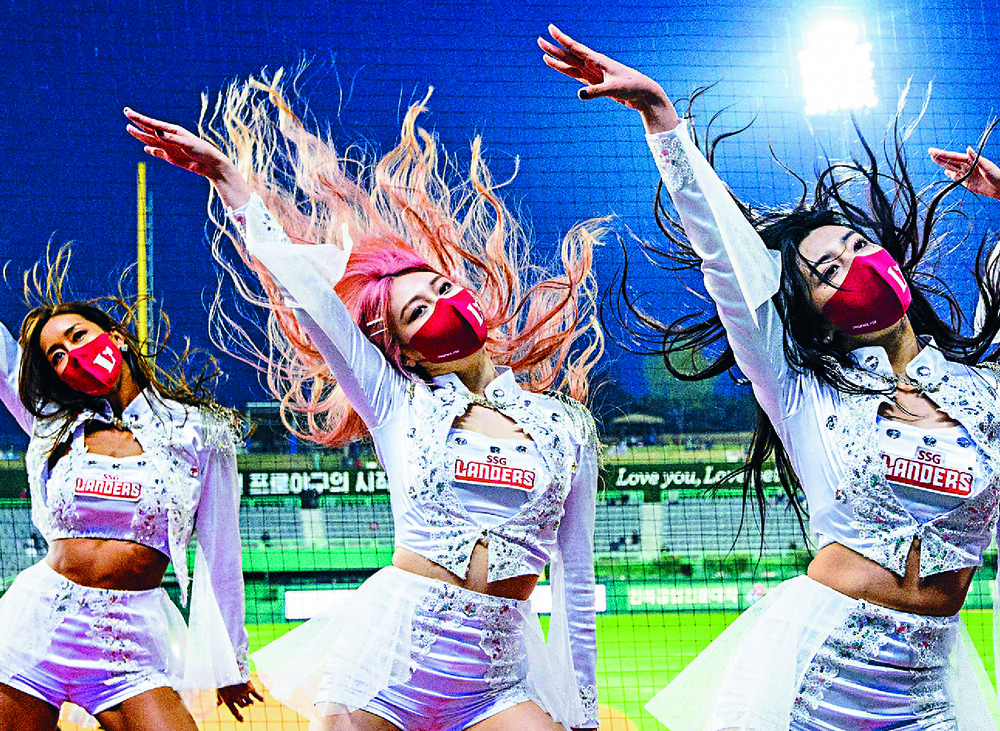
Bae Soo Hyun, 37, is South Korea's longest-serving cheerleader and has been performing at SSG Landers Field in Incheon for nearly 20 years. The public perception of cheerleaders has changed, she says, from women in short skirts who dance to professionals who act as a bridge between players and fans.
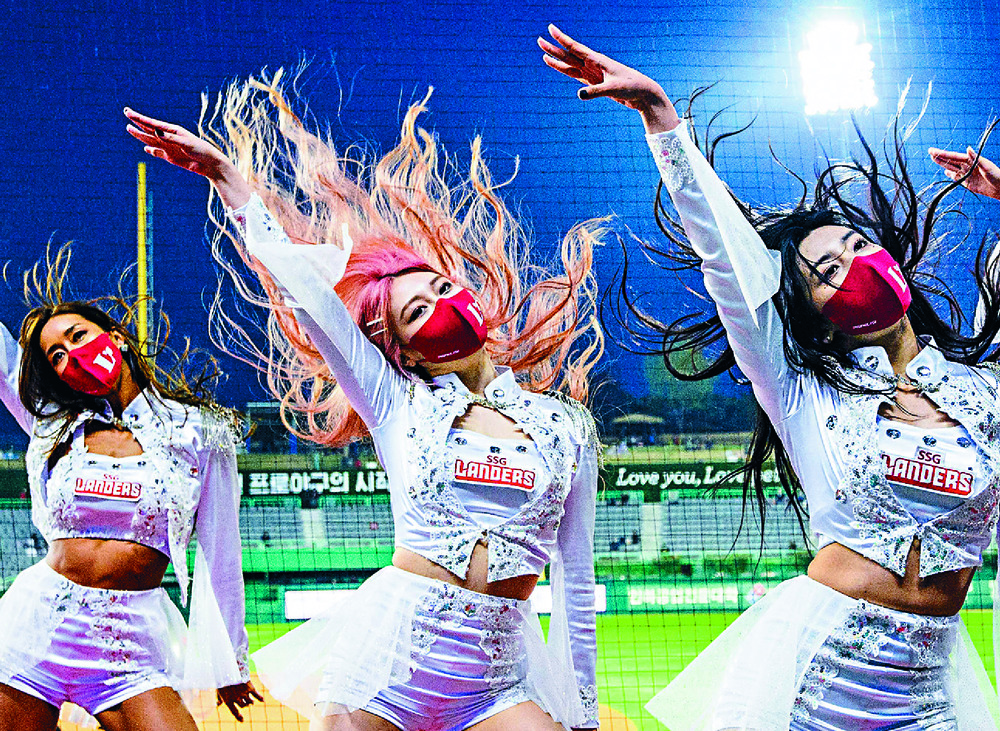
Usually, from four to six SSG cheerleaders perform on a stage in front of one section of the stand. Their outfit includes a white crop-top with lace over it and silver epaulets, plus wedge trainers to give them extra height.
For Bae and her colleagues it's a full-time job.
"Without us there wouldn't be coordinated cheering for the players," she says, describing how she and her team lead fans through dance routines and chants for specific players. "Our cheerleading helps players focus more at bat and on the mound. We unite the fans."
South Koreans are so accustomed to cheerleaders running through routines with every twist and turn of the game that to watch baseball without them is unthinkable, she says. "We are the flowers of the game. It would be far less entertaining if we weren't there."
South Korea's professional baseball league is a legacy of Chun Doo Hwan, who seized power through a military coup in 1979, crushing democracy movements nationwide.
In a bid to distract South Korean civilians from politics, he then eased tight controls on popular culture in what would become known as the "3S policy" of promoting sports, sex and screen.
He abolished curfews, poured money into the film industry, especially into promoting erotic movies, and established professional baseball and football leagues.
"Chun tried to divert critical attention drawn to his dictatorship by launching a pro-baseball league," says Song Gi Seong, a sports journalist at broadcaster MBC. "While there was a political ulterior motive behind the launch it has turned out to be South Korea's most popular sport league over the past 40 years."
The military regime used "an element of coercion" initially to force companies to sponsor teams and support the new leagues, Song notes, but "in hindsight it laid down the groundwork for baseball to become a sizable sports industry."
Professional teams created their own cheer squads in the 1980s and began using them as an "active audience marketing strategy," the Korea Cheerleading Association recalls.
The strategy worked, and now for many fans the synchronized cheering in the crowd is as important as the action on the field.
Park Han Eol, 23, who was watching at SSG stadium while waving a Korean flag, says cheerleaders bring "positive energy to the ballpark." Stadiums would feel "empty" without them, Park adds.
SSG Landers cheerleaders see their role as key during the pandemic.