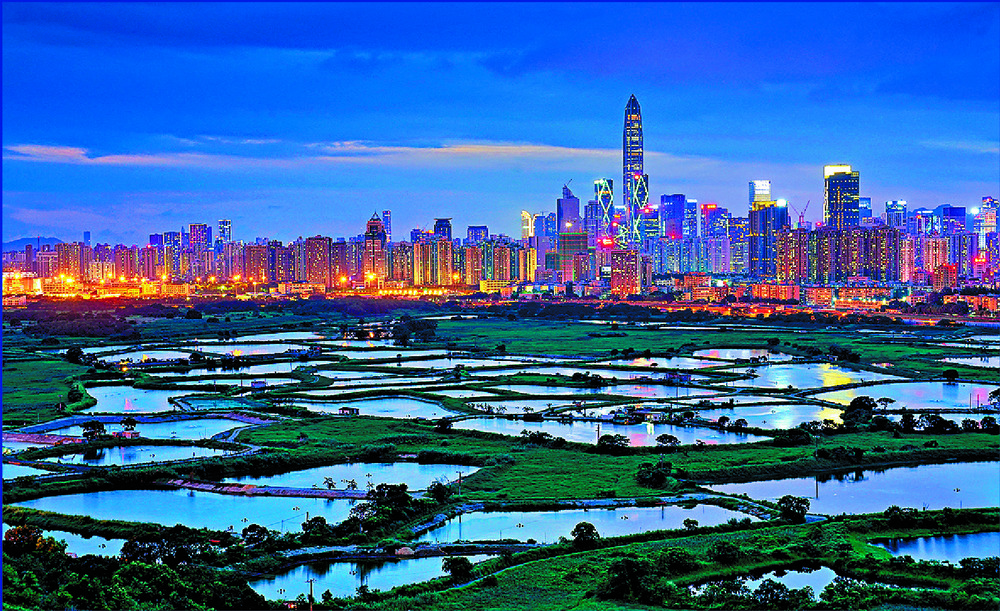
The chief executive's policy address painted a future of two cities and three circles. By that we're referring to Shenzhen and Hong Kong, the Shenzhen Bay Quality Development Circle, the Hong Kong-Shenzhen Close Interaction Circle, and the Mirs Bay/Yan Chau Tong Eco-recreation/tourism Circle.
This could appear to be a distant dream, but it dovetails neatly into the grand plan of integrating Hong Kong into the Greater Bay Area. It is also laudable because it's the first time Hong Kong planning takes into account what's happening across the border, hopefully dispelling the fallacy that the SAR's growth can be independent of Shenzhen and neighboring districts.
I'm particularly pleased to see transport infrastructure a priority, as I believe that building a city without first planning the transport infrastructure is a recipe for disaster - as proven in many crowded places.
Transport infrastructure occupies land in the same way commercial and industrial developments does, but it has inherently a lot more constraints and must be planned before other features.
To enable the "circles" to work efficiently we must facilitate access. The "one-hour living zone" concept dictates reliable access for the masses and road transport. Rail transport will be a right choice because it has a vastly superior carrying capacity on a smaller footprint, and it is more reliable in bad weather.
The new link between Hung Shui Kiu/Ha Tsuen to Qianhai in Shenzhen, the extension of the Northern Link northwards to connect to Huanggang Port in Shenzhen and the East Rail to Luohu in Shenzhen, as well as relocating the border control point to the mainland side, will help massively.
It will enhance connectivity with a much greater throughput and provide more alternatives for passenger traffic, freeing the existing cross-border points for mostly goods vehicles and people who insist on traveling by private car.
The efficient connections will enable business people to commute between Hong Kong and Shenzhen within an hour.
Being able to pick up documents from a Hong Kong office to attend meetings and a lunch in Shenzhen, and then being able to return to the SAR for business dinners in the evening, will soon be easily achievable.
One other distinct advantage of rail travel is the ability to get from center to center, further shortening total travel time. Air or road travel cannot match that as they invariably require access points from out-of-city locations.
This does not even take into account the reduced environmental impact of rail travel compared to other modes.
Capital costs are also lower per passenger trip and can be financed by releasing prime sites for sale close to railway stations.
The property plus railways concept that we have had for decades is a model other cities have long admired as a successful financing model.
As population and commercial activities grow, it is natural to expand into new areas or link up with adjacent cities.
Timely planning of transport infrastructure eliminates inefficiencies in commuting - vital to ensure good connections and enable the twin city operation concept. With determination, this dream can become a reality.
Veteran engineer Edmund Leung Kwong-ho casts an expert eye over Hong Kong's iconic infrastructure
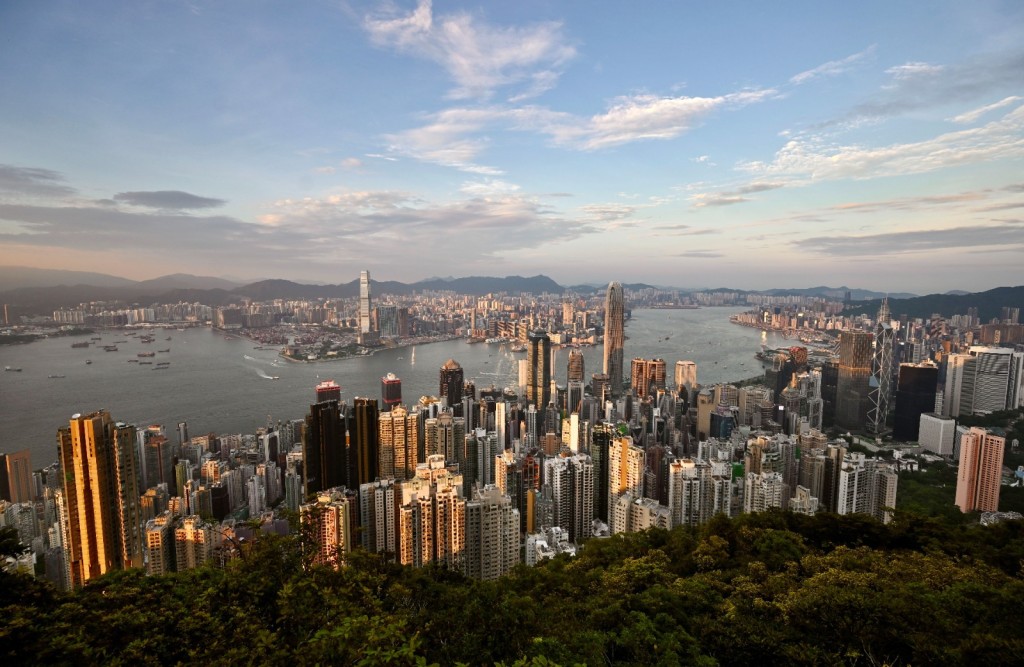
The North district, with Shenzhen in the background.