For two decades the question asked of Hong Kong was whether it could hold its ground against Singapore. It was always the wrong question. The contest that will shape the city's next decade is not a rivalry with another Asian hub. It is a partnership with one nearly 6,000km to the West.
Global capital has stopped merely diversifying across asset classes. It now hedges across geopolitical blocs. A recent Schroders study found that 53 per cent of global investors rank the ability to navigate uncertainty as the leading factor shaping investment confidence — ahead of cost, ahead of returns. That single finding reorders the logic of financial centres. The winning hubs are no longer those promising the least friction. They are those that can absorb a shock and keep working.
Judged that way, Hong Kong and Dubai have both been tested recently, and both have begun building something together that neither could build alone.
Hong Kong's recovery has been striking mainly because perception lagged so far behind reality. After the pandemic, a familiar narrative took hold in the West: multinationals would quietly draw down, the golden era had passed, Singapore had won. That verdict overlooked what actually anchors the city — deep capital markets, an internationally respected common-law system, sophisticated financial oversight, and a position connecting the mainland to global capital that no other jurisdiction can replicate.
The numbers have since caught up with the fundamentals. Hong Kong's IPO market reached roughly HK$110 billion in the first quarter of 2026 alone, a five-year high. Average daily turnover grew 18 per cent year on year in the first half, indicating genuine depth rather than one good quarter. Single family offices passed 3,380 by the end of 2025, a rise of more than a quarter in two years. Hong Kong did not avoid disruption. It adapted to it.
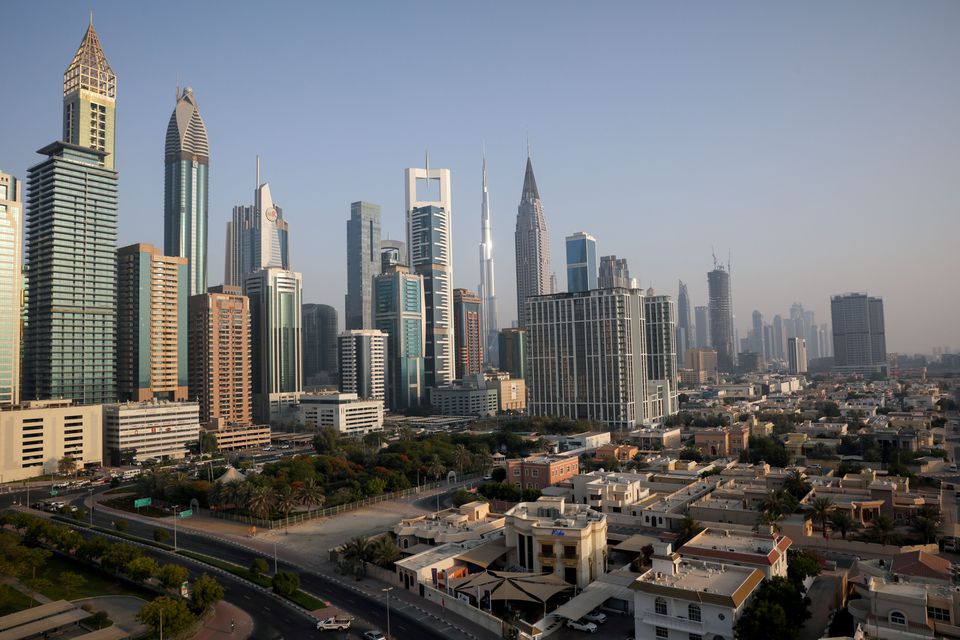
Dubai's test came differently and was far more sudden. Regional conflict this year brought strikes on infrastructure, temporary airport closures and a period of uncertainty few had priced in. The emirate did not just hold, but is bouncing back stronger.
Government support measures paired with fast, transparent communication kept both markets and residents steady, and business continuity was maintained through the worst of it.
Its swift action and long-established procedures mean that global entrepreneurs know that in Dubai they have a successful future underpinned by resilience and strong governance frameworks. Despite external shocks, Dubai’s GDP grew 2.4 per cent in the first quarter of 2026 and the Dubai Chamber of Commerce saw more than 2,700 new business registrations in March alone.
The Dubai International Financial Centre has long been an incubator for economic growth. It now hosts family offices managing more than US$1 trillion in assets across over 8,000 registered companies — capacity built across decades of patient institutional work, not a marketing cycle.
What connects the two cities is not geography or sector mix. It is that each has demonstrated the one attribute capital now prices above all others: the capacity to keep functioning when the environment does not cooperate.
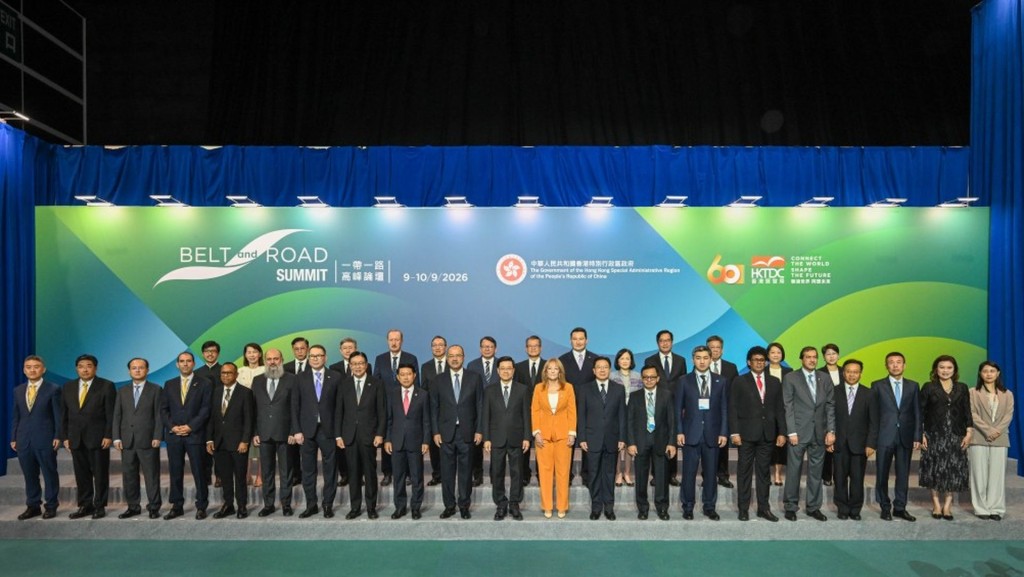
That shared attribute is now being formalised. In September 2025, Hong Kong's Securities and Futures Commission and the UAE's Securities and Commodities Authority signed a mutual recognition of funds arrangement — the first such agreement between Hong Kong and any Middle Eastern market, allowing funds authorised in one jurisdiction to reach retail investors in the other.
On the same day, the Abu Dhabi Securities Exchange and Hong Kong Exchanges agreed to explore dual listings, ETFs and cross-market products. These followed a financial cooperation framework signed between the Hong Kong Monetary Authority and the UAE central bank in December 2024, and a sequence of high-level visits by Chief Executive John Lee across the Gulf.
This is the architecture of a resilience corridor: two hubs sitting on opposite sides of an increasingly divided global economy, each robust in its own right, deliberately wiring themselves to one another.
The strategic logic is easy to miss if the corridor is read as a trade route. It is better understood as a hedge. In a fragmenting world, serious capital no longer wants a single domicile, however excellent. It wants a pair — one foothold oriented toward the mainland and Asian growth, another toward the Gulf, Africa and the wider emerging world, joined by frameworks that let money, funds and founders move between them without renegotiating their legal existence at every step.
Founders already behave this way, running businesses that span both cities. Emirates alone flies to Hong Kong more than three times daily. The regulation is catching up with the behaviour, not creating it.
For Hong Kong specifically, this reframes the strategic conversation. The Singapore comparison is a defensive frame, one that invites the city to justify itself against a peer. The Gulf corridor is a more front footed one. It positions Hong Kong not as a contested Asian hub, but as the eastern anchor of a capital route that did not previously exist — and one in which Hong Kong's connection to the mainland is the asset rather than the complication.
Both cities have been prematurely written off in recent years. Both are now demonstrating that resilience is not a defensive quality but a competitive one. The more interesting question is no longer whether Hong Kong recovers. It is what Hong Kong and Dubai build together next.
Radu Magdin is a global Romanian analyst and adviser to governments and family businesses.