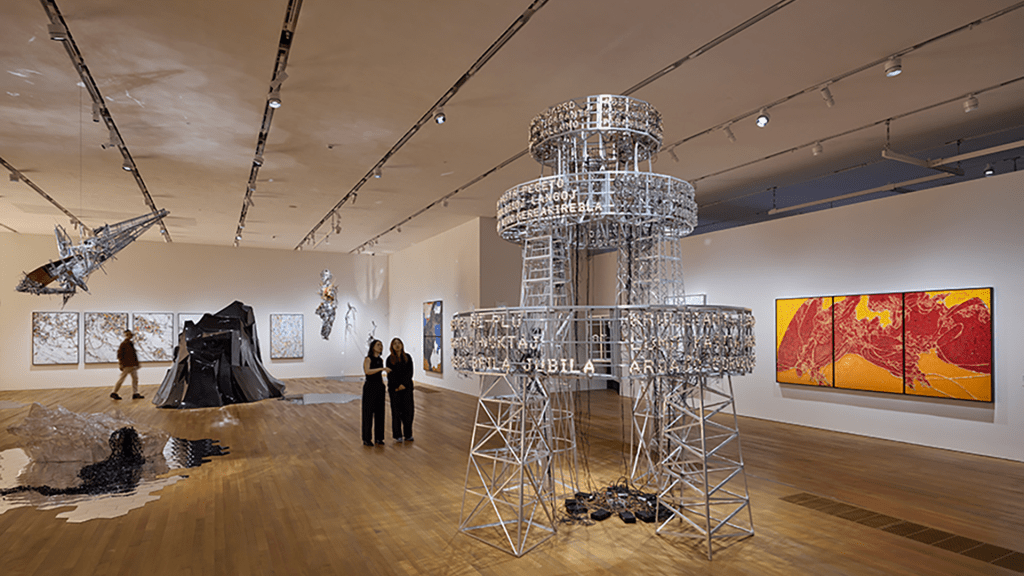
M+ has devoted its vast West Gallery to South Korean artist Lee Bul, and the result is one of the season’s most eye-catching shows. “Lee Bul: From 1998 to Now” brings together more than 20 years of her work and presents it as a clear, physical narrative about city life, technology and the future, told through objects rather than theory.
The show opens with large installations from her Mon grand récit series. These dramatic structures hang from the ceiling, resembling broken models of bridges or transport systems, partly lit and partly in shadow, inviting viewers to walk around and beneath them.
They feel ambitious yet damaged, as if a grand plan for a perfect city has been interrupted mid-flight. In Hong Kong, where new rail lines, tunnels and districts are constantly discussed, this sense of big ideas meeting hard reality will be familiar to many visitors.
As you move further into the gallery, the works grow smaller, yet the atmosphere becomes more intense. Lee’s Cyborg sculptures combine parts of the human body with sleek, mechanical surfaces, yet none of the figures feels complete. Arms end abruptly, torsos stop short, and smooth, polished areas sit alongside rough, unfinished textures.
Instead of presenting a perfect or unified body, these sculptures seem more like fragments – traces of lives shaped and reshaped by technology. At a time when robotics, artificial intelligence, apps, and personal devices accompany us everywhere, Lee’s Cyborgs quietly prompt us to consider how much of ourselves we allow to merge with the systems that surround us.
The exhibition also slows down with drawings, collages and later sculptural works that show how Lee develops and revises her ideas over time. Screens nearby present early performance pieces from the late 1980s and 1990s, linking today’s large, carefully engineered installations to more direct experiments with the body and space.
Running until August 9, “Lee Bul: From 1998 to Now” is an easy recommendation for a family weekend visit: The large installations make an immediate visual impact, while repeated viewing rewards regular museum-goers with deeper questions about progress and how we imagine the future of our cities.
Bernard Charnwut Chan is the chairman of the West Kowloon Cultural District