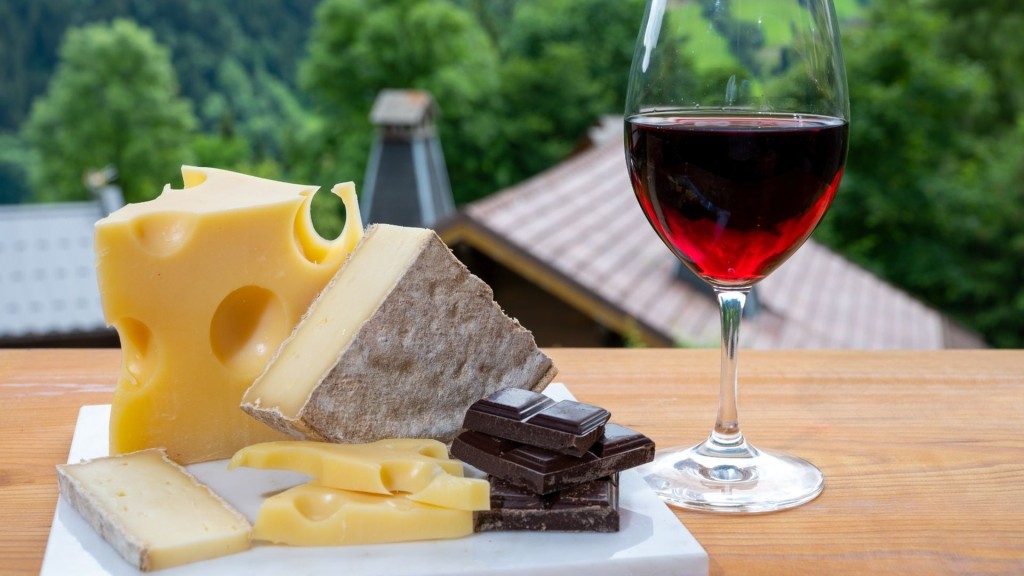
Tomorrow (August 1) marks the 735th anniversary of Switzerland. The date was chosen as the Swiss National Day in honor of the Federal Charter of 1291 when three Alpine cantons (Schwyz, Uri and Unterwalden) swore the oath of confederation. Today the federal republic is comprised of 26 cantons with four principal languages – German, French, Italian and Romansh. The country’s multiculturalism is reflected not only in its languages, but also in the diversity of its wines.
The 62 Swiss wine Appellation d’Origine Controlee (AOC) are grouped into six official wine regions according to their specific landscape and climate. Four of the regions – Valais, Vaud, Geneva and the Three Lakes – are close to the French border on the west and are responsible for approximately 75 percent of the country’s wine production. Of the 100 million liters of wine Switzerland produces annually, only 1-2 percent are exported, making Swiss wines very rare outside of the country.
With its proximity to France, Switzerland naturally adopts French grape varieties in many of their wines. Pinot Noir, Gamay, and Merlot together take up 40 percent of Switzerland’s wine grape planting area. However, beyond the typical vinification methods, these French grape varieties also generate several interesting Swiss styles.
Pinot Noir has the most important role in Swiss viticulture. Once called “Servagnin,” Pinot Noir has been cultivated in Switzerland since the end of the 15th century. Now mostly found in Valais, Pinot Noir can also be used to make a special rose called Oeil de Perdrix in the canton of Neuchatel. The name means “partridge’s eye,” which has a similar coppery-pink color as the wine. Originated from Champagne in the Middle Ages, Oeil de Perdrix is now more common in Switzerland than in France.
Gamay is the third most common black grape variety in Switzerland, particularly popular in Geneva, Vaud and Valais. Its liveliness and red-berried characters make the wine fun and appealing. Combining Gamay with Pinot Noir gives the Valais specialty “Dole,” a red wine with a light body and soft tannins. When skin contact is eliminated, this combination can also produce the white version “Dole Blanche.”
As for hard core wine lovers who think French varieties are not Swiss enough, let’s turn to indigenous Swiss grapes!
(To be continued)
Alice Wong is a certified wine educator based in Hong Kong