
Read More
To get a glimpse of the rapid economic development of the Greater Bay Area, I made two short trips to Nansha in the last two months and have learnt a bit more about their recent developments.
ADVERTISEMENT
SCROLL TO CONTINUE WITH CONTENT
Nansha is probably the fastest growing district in the GBA. I first visited it some 20 years ago to see the then-new campus of the Guangzhou branch of the Hong Kong University of Science and Technology, and the scenery along the journey from the ferry pier (yes, it was the only way to reach Nansha in those days, apart from a long taxi ride from Guangzhou city) was all countryside and farms. On my recent trips there, I was astounded to see it well developed into a modern city with wide roads and plenty of new offices and residential buildings.
I visited a data exchange platform, a manufacturer of deep-sea exploration equipment, and the Guangdong Aerospace Research Institute. In the latter organization, not only did I see a huge wind tunnel that can test the aerodynamics of small aircraft and drones, but also a stealth plane. In the front hall of a showroom, there was a full-scale model of a stealth plane, some seven meters long, that we can see at close distance, though obviously we were not allowed to touch it or to take photos. But it goes to show the extent of world-class high-technology development that is happening right on our doorsteps.
For large scale manufacturing, I also visited the GAC car factory, which makes not only their own brand of Aion EVs, but also conventional petrol engine Toyotas. I was told it is one of the largest car manufacturers in the region.
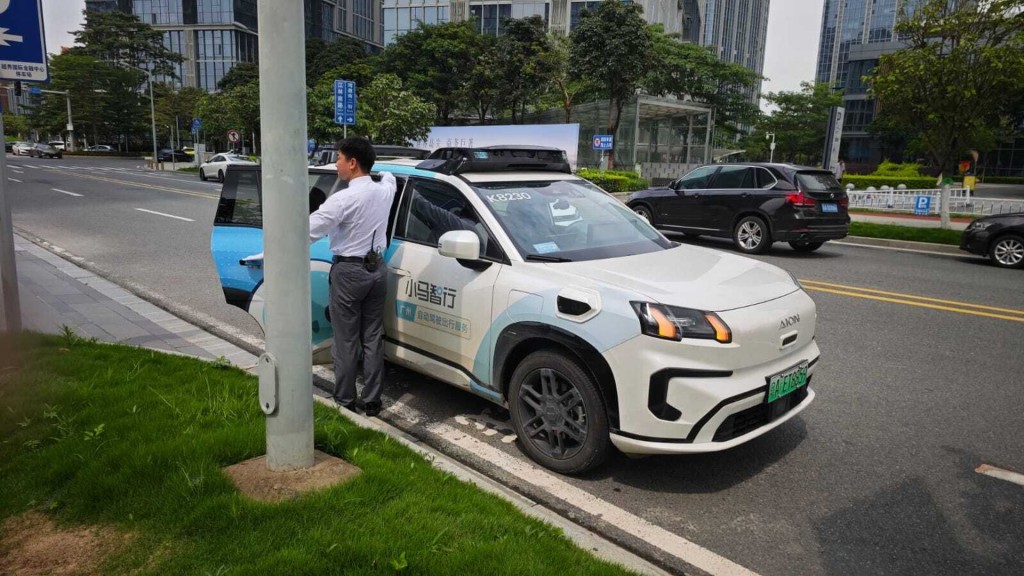
But the highlight were two observations in my second visit a fortnight ago. I took two trips in PONY.AI’s driverless ride-hailing cars. Let alone the very low cost (a 10-minute trip costed 6 yuan, or HK$6.92), the ride was smooth, as if a professional driver was at the helm, with no harsh acceleration or braking. It skillfully and carefully maneuvered through narrow side streets with parked cars on both sides. It even stopped smoothly to make way for pedestrians crossing the street and narrowly avoided an impolite driver who stopped abruptly in front of us and then immediately proceeded to reverse into a parking space, forcing us to swerve quickly to avoid a possible collision. I wish the system can be proven for application to Hong Kong in the course of time.
The other observation was the First Affiliated Hospital of the Sun Yat-sen University, which is huge by any standard. It has 1,500 beds and a floor area of some half a million square meters. We traveled from one block to another like a boarding activity in an airport, using electric golf carts. The corridors are wide and the halls are huge. I was shown a fully automated laboratory which analyses blood and medical samples. Samples are brought to the lab by conveyors and go through various analytic kiosks entirely without human hands. Overall, it felt more like a hotel and a factory than a hospital.
The lesson I learned in these visits is the need to have vast land space with effective forward planning for effective development of a new city. I also see the vital need for Hong Kong to cooperate and integrate with a new city with vast land resources and long-term planning to exploit mutual benefits.
In terms of traveling time, Nansha is less than an hour away by High Speed Rail from West Kowloon, and a similar amount of time, I suppose, by road travel through the new Shenzhen-Zhongshan Link. Living costs there are also much lower, with plenty of open spaces and parks for leisure and a huge growth potential for many types of work.
I strongly urge our young generation to visit Nansha. It will be an eye-opener as a potential location for their future career. We in Hong Kong need new land for future development and we must look beyond our physical boundaries for our future.
Veteran engineer Edmund Leung Kwong-ho casts an expert eye over features of modern life