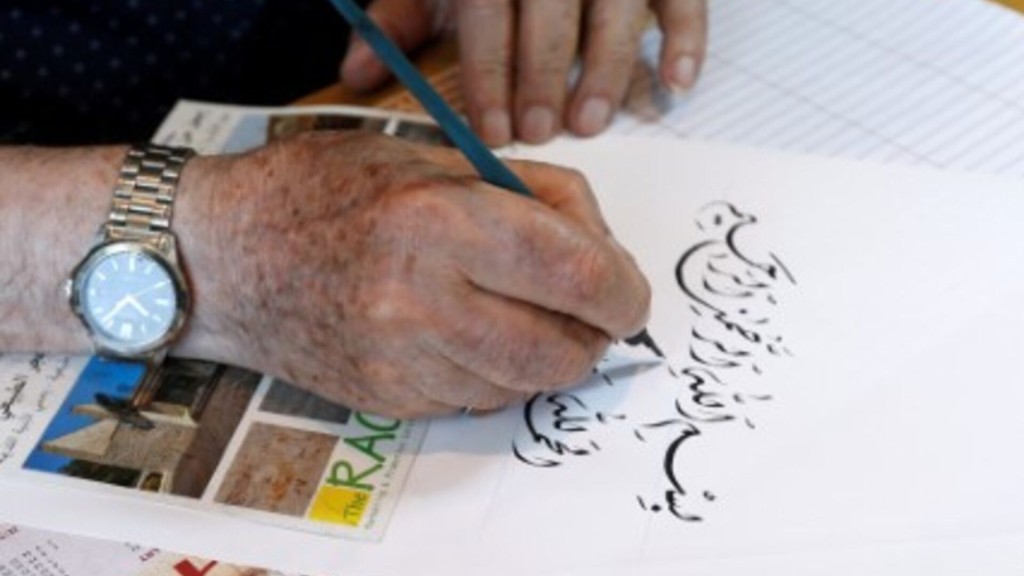
Chinese calligraphy stands as a profound pillar of national pride, meticulously passed down as a visual chronicle of China’s rich heritage. Similarly, Arabic calligraphy is the most ancient of Arab arts, inextricably intertwined with epic poetry.
In early centuries, the majestic Mu’allaqat (Suspended Odes) were masterfully inscribed and hung during renowned poetic symposiums.
Arabs eloquently described this craft as “the tongue of the hand, the delight of the soul, the ambassador of the intellect, and the repository of secrets.”
Though ancient, Arabic calligraphy evolved profoundly in the seventh century, driven by the sacred necessity to transcribe the Holy Quran. Flourishing within a cosmopolitan empire open to the world, master calligraphers elevated the art to the absolute zenith of beauty, bestowing upon it a stunning Oriental charm.
While Chinese masters wielded animal-hair brushes, Arab calligraphers used reed pens and liquid ink – this ink was historically imported from China. As the art expanded, magnificent scripts emerged. Kufic, the oldest, utilized bold, angular strokes and contrasting red diacritics, making it ideal for majestic stone carvings.
Later, Naskh introduced a fluid, cursive elegance; pioneered for copying classical manuscripts, it remains the foundation of modern typography.
Meanwhile, Thuluth brought a monumental grace. Named for its graceful “one-third” slants, it became the gold standard for breathtaking architectural ornamentation and monumental Qur’ans.
The most enchanting chapter of this shared history unfolded during the Tang Dynasty, as Arabs brought their culture east. A graceful merging of civilizations blossomed. The unique materials and aesthetic philosophies of Chinese culture undeniably transformed Arabic styles.
Chinese calligraphers began crafting Arabic text deeply infused with the spirit of their native landscape. This magnificent exchange breathed life into an elegant, hybrid art form; an authentic Arabic calligraphy radiating a captivating Chinese soul, forever linking two great empires through the masterful stroke of a pen.
Amjad Refai is the director of the Arabic Programme at the University of Hong Kong
𝗗𝗼𝘄𝗻𝗹𝗼𝗮𝗱 𝗧𝗵𝗲 𝗦𝘁𝗮𝗻𝗱𝗮𝗿𝗱 𝗔𝗽𝗽 ↓