I said previously that I hate to write about aircraft incidents, but I just could not resist writing again, as this one occurred right in Hong Kong last week.
By this time, our readers would have read the local news and have a reasonably good knowledge of the incident, but to briefly recap: a Boeing 747-400 cargo plane of Emirates Skycargo, EK9788, operated by Turkish Carrier ACT, was landing at the Hong Kong International Airport at about 4am on October 20.
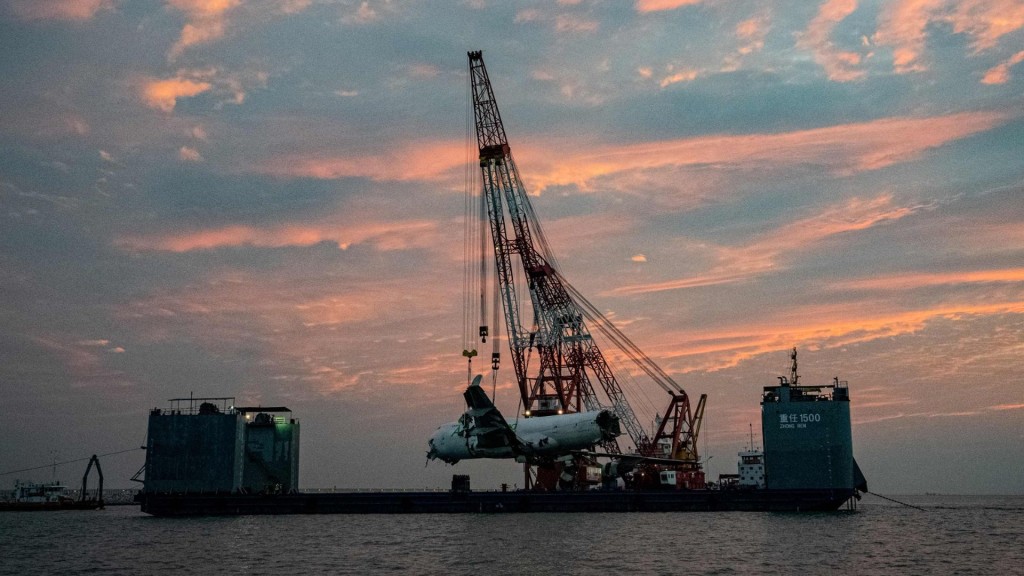
As it touched down on the North Runway, the plane suddenly veered off to the left around the mid-point of the 4-kilometer landing strip, and hit an airport patrol vehicle parked along the perimeter road. The aircraft also skidded off the airport peninsula and broke into two pieces. Miraculously, all four of the aircrew on board were not injured, but two Hong Kong International Airport security officers were inside the patrol vehicle when it was pushed to the sea. One of the officers was confirmed dead; the other died in hospital a few hours afterward.
The cargo plane was not carrying any payload at the time of the incident, and had already touched down on the North Runway, traveling at about 100 kph, when it suddenly veered left. No distress signals were received in the control tower, and the pilot did not call for assistance. Audio records showed no further communication after permission to land was granted.
The official investigations will invariably take months, after the black boxes retrieved have been analyzed, but I can hazard a few guesses.
Weather conditions were fine, despite Typhoon Signal 3 was hoisted. Records showed there was a sudden gust at the time of the incident, but at 20 knots, it was well within the limits for safe landing for a Boeing 747 aircraft. There was no report of rain, and the runway surface was dry. Since the airplane had also already touched the ground before it veered off and was proceeding straight along the runway for a short distance before it changed direction, the effect of wind should not be significant. The chance of weather affecting the plane was slight.
The airplane was built in 1993, but we can assume it would be reasonably well maintained and mechanical faults would not be likely. To veer off suddenly at that angle, it would require a major but sudden breakdown of nose wheels or wing wheels to cause it, and if so, the pilot or co-pilot would have reported it to the control tower.
The other possibility could be pilot inattention or error. It was in the early hours of the morning, but pilots are trained to work all hours and thus, time of day should not be a factor. There was no report on the experience of the pilot, apart from that he was a Turkish national and aged 35, but we can assume he would have at least some experience flying internationally, and competence in English language communication. One could guess that his attention was drawn away, and when suddenly seeing the entry point of the taxiway, made a quick swing to meet it, but somehow turned toward the wrong angle. The plane was also landing at the North Runway, which is a new runway that opened earlier this year. Could the pilot have misread the runway or taxiway lights?
Meanwhile, the patrol vehicle on the perimeter road was surveying the conditions of the airport peninsula's north shore as a routine exercise.
At the time of the incident, it was parked around the midpoint of the 4-km-long runway length, apparently at the best location to view the whole north shore. The perimeter road is located about 165 meters away from the runway's centerline, with a good margin exceeding the safe distance of 150 meters, as per international airport standards.
Until the full report is published, anything we guess is pure conjecture, but we can establish that what transpired was a very rare incident, almost proving that it does not entail a design or operation shortfall of the runway or airport. We must also thank the airport emergency crew who immediately attended to the incident and rescued the aircrew to safety. Some may ask if they could have saved the patrol staff, but unfortunately, the vehicle was finally found at the seabed some 7 meters below sea level; we could imagine the time it would take to break the vehicle's windows, reach inside to release the safety belts, and pull the two victims out from it. It was extremely unfortunate as they were young people with a bright career ahead and a family to look after.
Once again, this shows the vital importance of preserving safety for all forms of transport, whether it be air, sea, or land. Whatever the cause, the disastrous consequence is extremely hard to bear.
I wish that I do not have such incidents to write about in the future. It breaks my heart.
Veteran engineer Edmund Leung Kwong-ho casts an expert eye over features of modern life