No countries want wars, as they are destructive. That is why many countries try to avoid conflict by equipping themselves with powerful weapons to ward off attackers.
Currently, the most powerful and destructive weapon is the nuclear bomb. Heaven forbid it be used again as the result would be most devastating.
To launch a nuclear bomb, a missile would be the most effective carrier. It can travel at great speed across a huge distance, reaching the target before an enemy can detect and defend against it. Missiles can also be launched from a warplane to cut the traveling distance.
Fortunately, almost all missile attacks so far are only use conventional TNT, but these alone already cause extensive damage to buildings and infrastructure.
There are many types of missiles. The most known types are: ballistic missiles, cruise missiles, and hypersonic missiles. They have different characteristics and can serve different purposes.
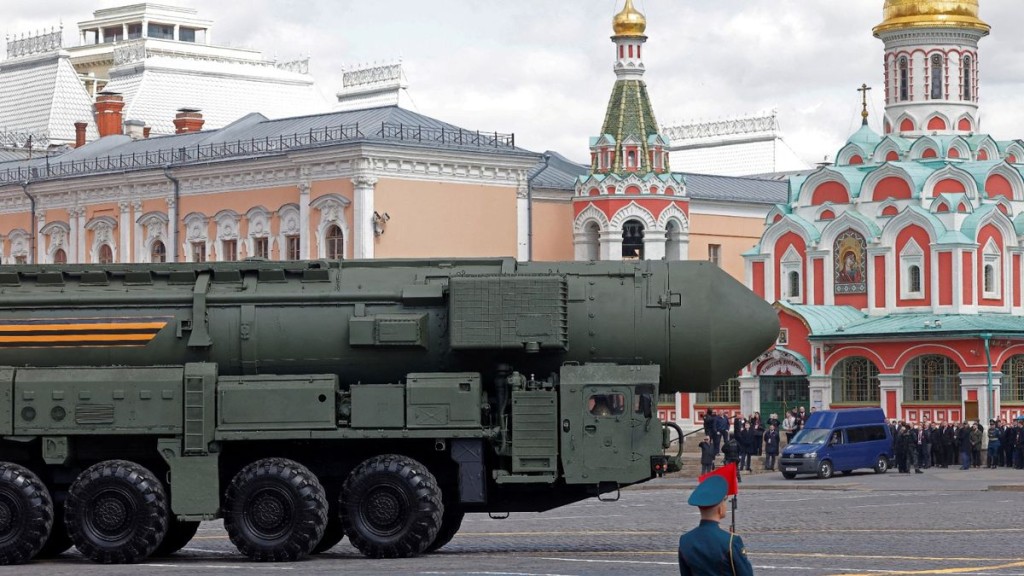
A ballistic missile is the most common type as it is simple to manufacture. It works on the principle of a parabolic trajectory using rocket propulsion. This trajectory is like that of a cannon ball or javelin. The missile is propelled skywards at a sharp angle which allows it to reach a great height. A powerful rocket propels the missile from a launch vehicle, operating for about two minutes to reach a speed of about 2 kilometers per second, many times the speed of sound. This speed and angle allow the missile to reach an altitude of about 1,000 km, such that the parabolic path can reach a horizontal distance of 10,000 km. The shape of the trajectory is fixed, but the height determines the distance it can reach.
Russia’s Yars intercontinental ballistic missile system. REUTERS
Also, once it is launched, any subsequent change of direction will be difficult, though most modern ballistic missiles have thrusters and small wings which allow a small degree of fine tuning of the final approach for accurate aiming to hit the target.
At high altitudes, the atmosphere is rarefied, which means air resistance will be minimal, allowing the missile to travel a long distance. The parabolic trajectory is symmetrical along the horizontal axis so that the missile gains immense speed again as it hits the ground. At that speed, it will be most difficult to track and defend against. The only known way to prevent it hitting the target would be to track it by radar when it is still at a high altitude and hitting it with another missile, as it will be traveling at a lower speed at that point.
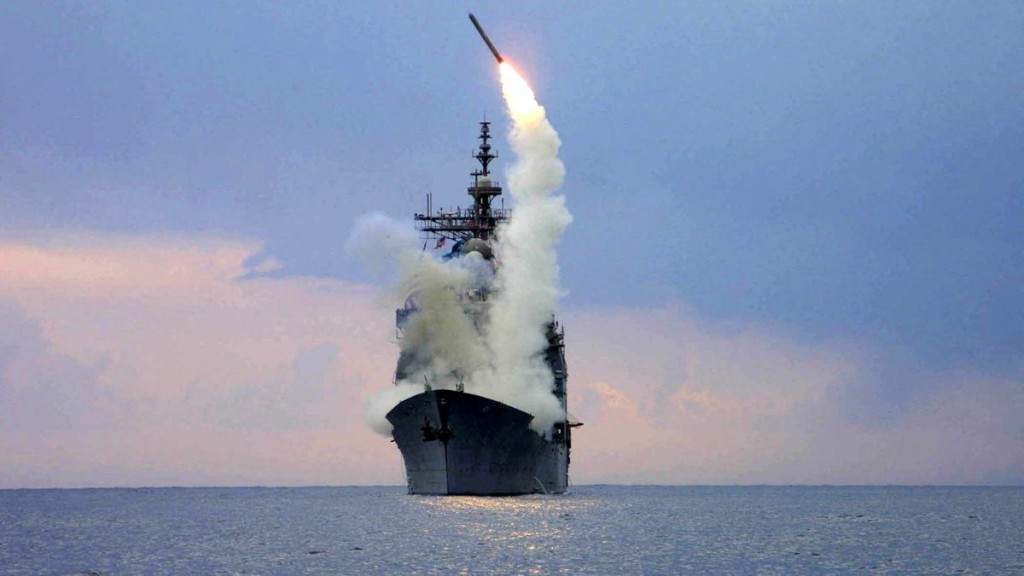
A cruise missile works on a different engineering principle. It can be equipped for continuous propulsion, using jet engines like an airplane.
Small wings and fins enable the missile to adjust its direction, and it can travel close to the Earth’s surface to avoid radar detection – at a low level of about 100 meters on land and even 10 meters at sea. At such low altitudes, it will require GPS guidance and accurate terrain traversing via stored data to avoid hitting hills and other buildings along the path until it reaches the target.
Its main disadvantage is that it can only travel at subsonic speed, and is therefore vulnerable to attack by anti-aircraft systems. The maximum range a cruise missile can reach is only about 5,000 km, limited by the weight of the amount of fuel it can carry.
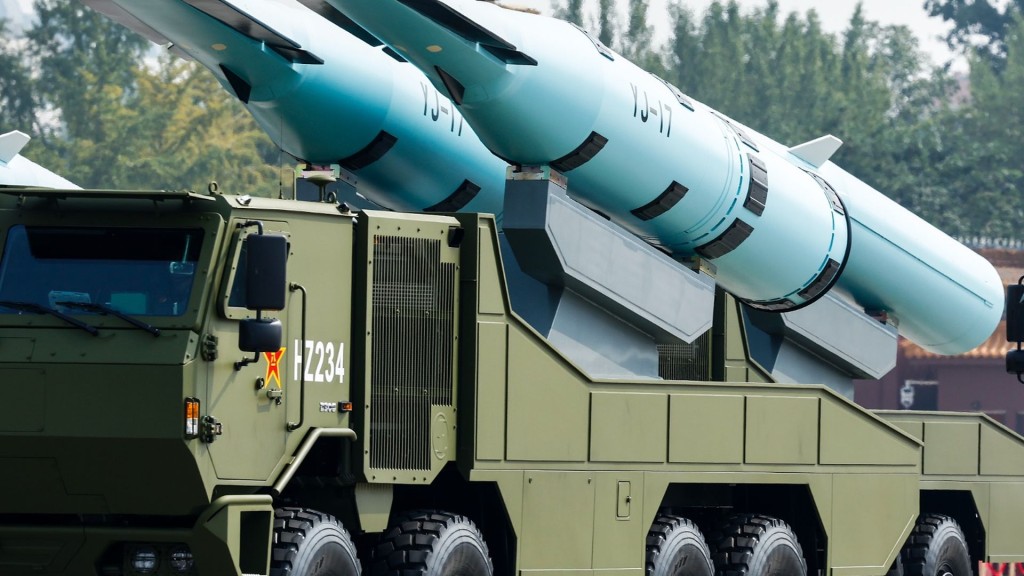
Hypersonic missiles represent new developments for cruise missiles. These can travel at a speed of Mach 5 (five times acoustic speed), achieving intercontinental distance. They use rockets for launching and ram jet engines for propulsion at cruise.
A Tomahawk missile is launched from the USS Cape St George during the Iraq War. REUTERS
But their technology is relatively new and still under development and testing, so the technical details are not known to the general public. They have the advantage of being able to cruise at low altitudes to avoid radar detection, but with ultra-high speed, they can reach the target across continents in a matter of minutes and are therefore extremely powerful, as they are difficult to track down and intercept.
One other important factor that limits the actual operation of missiles is the high temperature attained at peak landing velocity. As a missile gathers speed on approach to land, its warhead’s temperature can reach extremes so high that the metal surface may ignite and burn. This is undesirable as the bomb it carries could then explode prematurely in mid-air before it reaches its intended destination.
To prevent this, the front cone of the missile is coated with an ablative material, which is designed to burn at a slow rate sacrificially – the rate being accurately calibrated so that the warhead remains protected until it hits the target.
It is ironic that, to prevent an attack, a country needs strong weapons to deter aggressors. That is why most leading countries are equipped with both missiles and anti-missile weapons. They train military engineers who have special skills and are capable of designing and manufacturing equipment for combat. Such development is closely guarded, and details are not publicly known and only partly revealed at military parades.
Let us hope they all stay that way, and never be put to actual combat activities.
Veteran engineer Edmund Leung Kwong-ho casts an expert eye over features of modern life