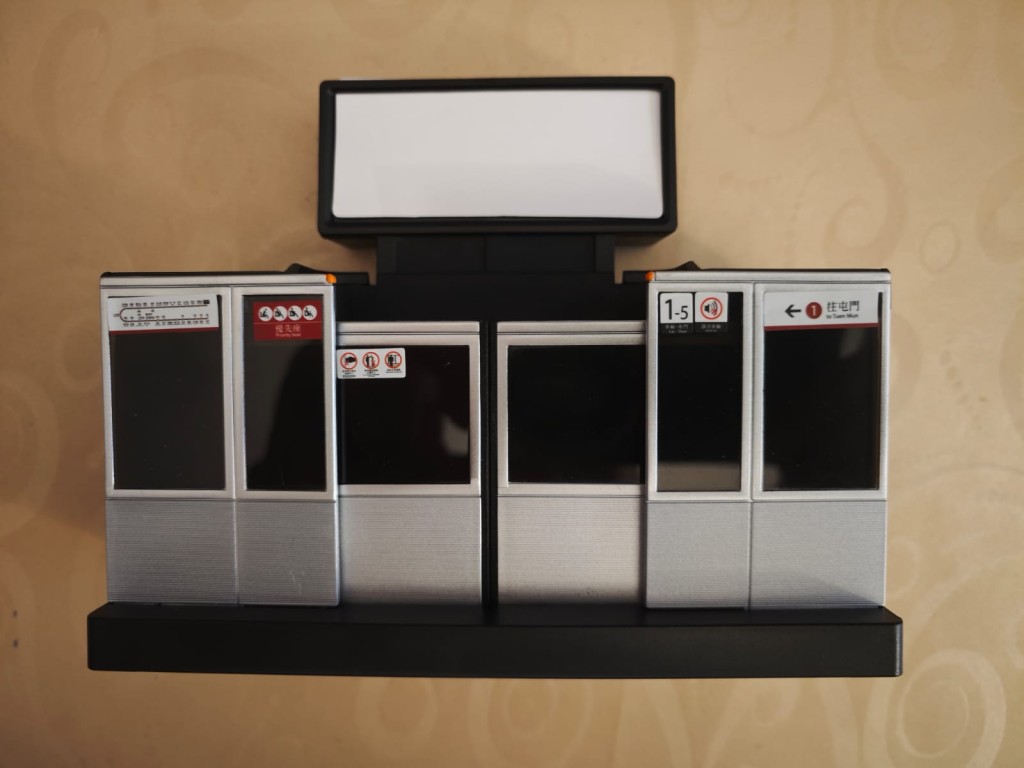
On Father’s Day some weeks ago, my granddaughter teamed up with her father to give me a model MTR platform gate as my new mobile phone charger.
They know I like railways and recognize that I would treasure it. It also served to remind me of the history of the railway platform doors and platform gates in Hong Kong.
The Hong Kong underground railway system, commencing service in 1979, was the first underground railway in the world with air-conditioning for station platforms.
The original ventilation design tried to use air curtains at the station ends to keep the air-conditioned air within the station, but in actual operation, it fell short of its design intent and cooled air were frequently pumped into the tunnels due to the strong piston effects of the arriving trains. This not only compromised the system’s ability to keep the platforms cool and dry but also led to excessive energy loss, which was not desirable.
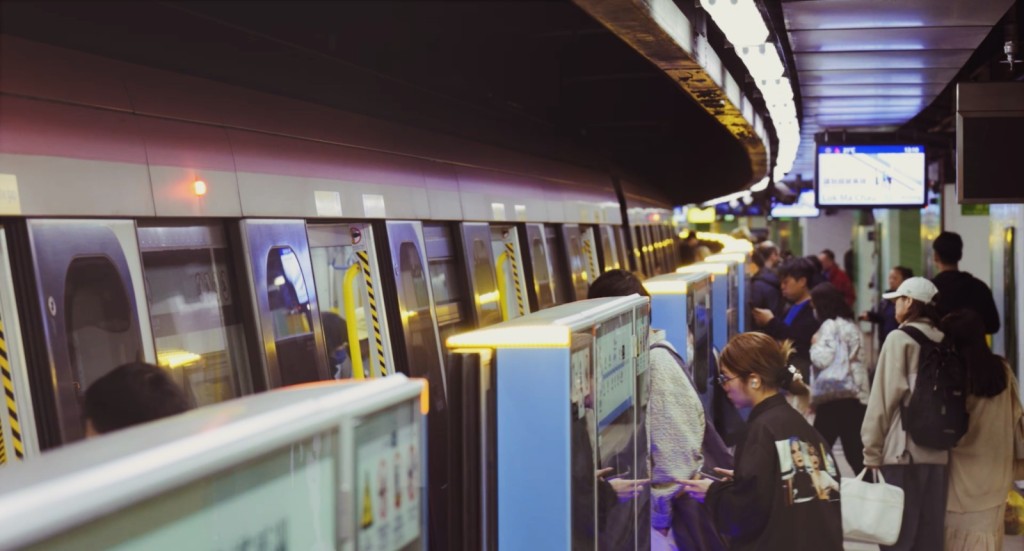
Platform screen doors were therefore retrofitted to keep the cooled air in. They only open when the trains are in the station to drop and pick up passengers and proved to be effective. This system was soon adopted by railway systems in other parts of the world.
The other advantage of these screen doors is the additional safety offered to passengers standing at the platform, as the risks of them falling onto rail tracks have been generally eliminated.
Platform screen doors have therefore become a safety feature for railways and the general public soon demanded that these be fitted to all parts of the railways system, including the overhead stations which are not air-conditioned.
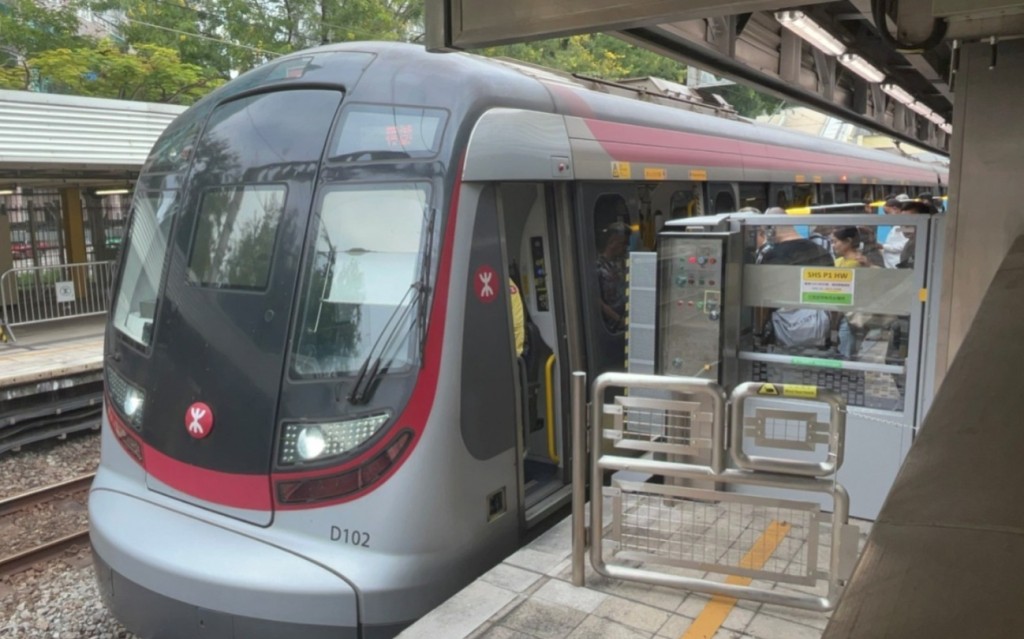
They became the platform gates which are half height purely for protecting passengers from falling onto the tracks and not for segregation of airflow.
But retrofitting platform gates to an existing railway system is not a simple task.
The first challenge is to ensure that the train stops at a station platform accurately so that when the train doors open, it aligns with the platform gates to ensure easy movement of passengers. The signaling system needs to be upgraded for controlling the operation of platform gates with trains, achieving an accuracy of stopping within half a meter.
This takes a lot of time and expense, but fortunately it could be done along with the signaling system upgrade plan which is to facilitate more frequent train service demanded by the much-increased traffic.
It goes without saying that the repeated operation of these platform gates needs to be very reliable to ensure that they can open and close in tandem with the train doors every time, which in itself is an engineering challenge met by extensive proof testing.
The other issue is much more complicated. In the East Rail System, which has been in operation long before the underground system, the layout of the station platform follows site limitations imposed by surrounding building structures, with some of them having curved platforms. Installing straight platform gates into a curve platform is not easy, and a lot of detailed engineering design is required to make it work.
The station platforms were also original built as light structures, cantilevered out from the platform building to save costs. Fitting additional features on the platform edge, which includes heavy door frames together with the motor and drive gears, will add extraneous weight to the light structure, and substantial bolstering of the platform edge are required to accommodate this additional weight together with their dynamic forces while in operation.
These new platform gates now even incorporate a 3D laser system to check that passengers are not in the path of the closing gates, for added safety.
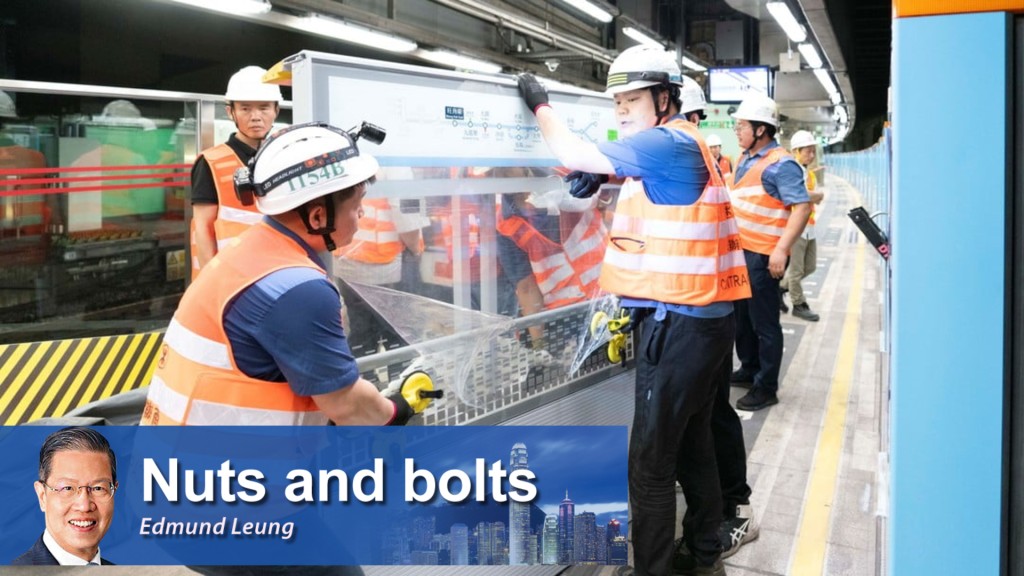
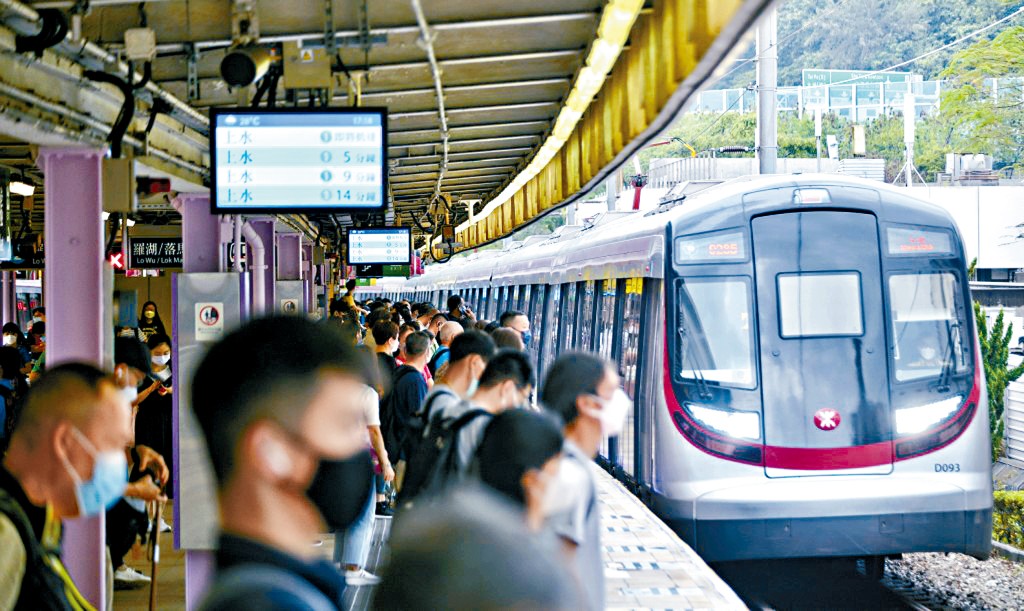
The East Rail, one of the busiest railway lines, require all retrofitting work to be carried out during the limited “golden two hours” at night, while maintaining normal train service throughout the entire construction period. These works are further constrained by adverse weather and noise restrictions.
For this line alone, there are 13 stations with 35 platforms, totaling approximately 1,600 pairs of gates. The complete retrofitting program that started in 2023 was finally completed in May this year because of the inhibitions.
This is another excellent example of continuous improvement projects which started as an engineering requirement but ended up enhancing safety for users. Hong Kong, once again, leads the world in some technical areas.
Veteran engineer Edmund Leung Kwong-ho casts an expert eye over features of modern life