The torrential rains over the past few weeks reminded me of the vital importance of slope safety in Hong Kong.
Finding land to build residential housing has always been a problem in Hong Kong, and inevitably, a lot of them are built on hillsides. The higher elevation also gives a breathtaking view of our scenic harbor, making such buildings popular.
Fortunately, our geological characteristics, which comprise a lot of hard granite, offer high strength for the foundations of buildings, allowing more and more tall blocks to be built on these hills.
From the harbor, one can see the continuous rows of buildings all the way from the sea level to the high Mid-Levels, ranging from North Point to Western.
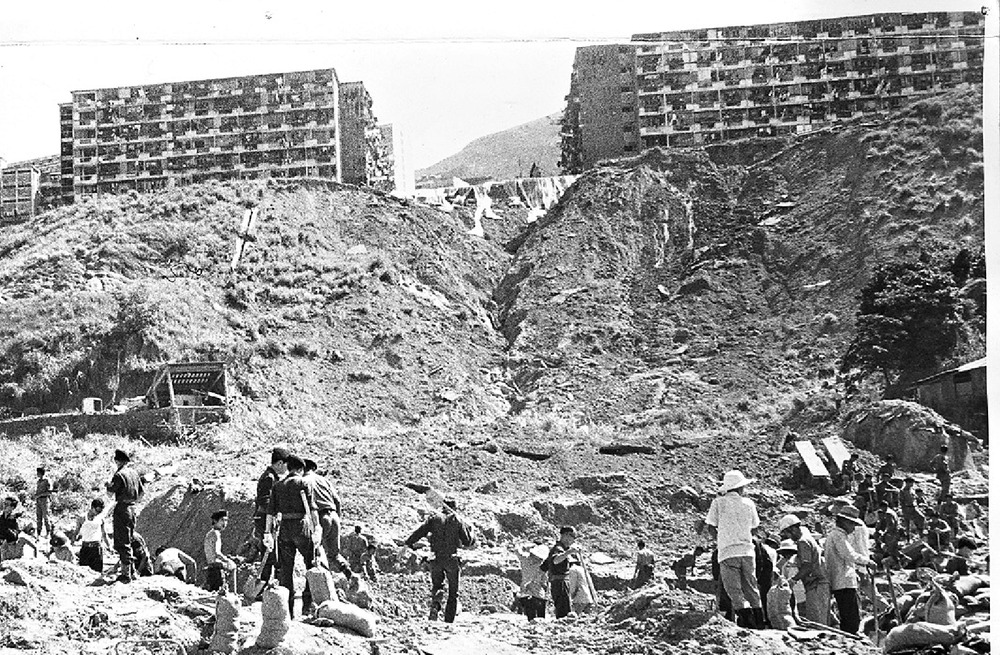
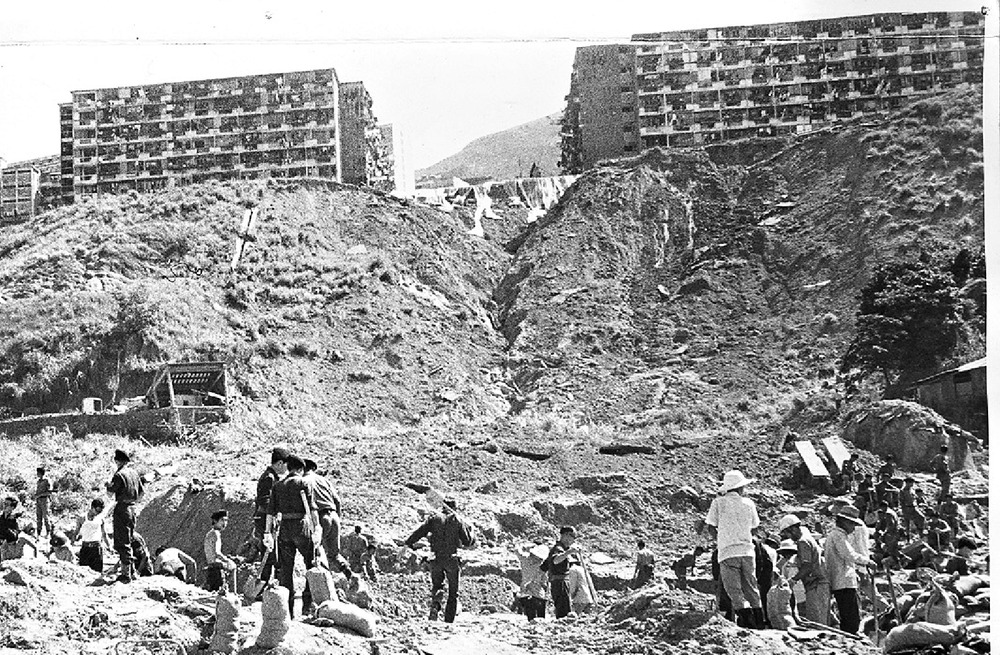
Some of us may remember the heavy rain in 1972, when on June 18 two disasters struck us.
In Sau Ming Ping, a landslide swept away part of a village in Tsui Ping Road, killing 70 people.
On Hong Kong Island, on Po Shan Road, a landslide brought down a building and as it fell, it dragged down a larger block on Kotewall Road.
Like a domino effect, the debris then smashed into buildings on Robinson Road and Babington Path, again resulting in 67 killed.
Together with other landslides at other places, more than 150 casualties were recorded in a single day.
This alarmed the administration, and the Public Works Department had to quickly step in to find a comprehensive solution to prevent reoccurrence.
Foreign experts and academics in the universities teamed up to support the PWD to first establish what constitutes stability on slopes.
The slope angle, the geological characteristics of the rock, the amount of water saturation that could affect its stability, and the ability to hold a structure above were studied.
Extensive research on the effects of rainwater saturation on slope stability were also carried out.
The PWD formed a Geotechnical Engineering Office, with special responsibility for ensuring those key characteristics would be fully understood.
With the results of these extensive analyses, the GEO was able to devise a comprehensive slope information system, which comprises a landslip warning system and a landslip prevention and mitigation program.
One key point of this slope information system is that all slopes are identified and catalogued so that their characteristics are known and conditions monitored.
This is unique to Hong Kong as there are no other cities in the world that we know of that has this comprehensive catalogue of all slopes.
Together with the landslip warning system, which is triggered by weather warnings from the observatory, the people are well informed and adequately warned to stay away from dangerous slopes during severe storms.
A comprehensive program to maintain slopes also serves to prevents landslips.
Steep slopes are cut to safe angles so that landslips will not occur even under torrential rains.
The slope surfaces are treated, usually by greening, by growing grass to prevent surface soil erosion.
For locations where there is no room to cut to shallow angles, soil nails that act like giant iron nails, geotextile mats applied like huge fishing nets, and other devices are used to effectively ensure slope stability.
The people of Hong Kong no longer live in fear of landslides, and the threat to lives due to such accidents is behind us.
Veteran engineer Edmund Leung Kwong-ho casts an expert eye over Hong Kong's iconic infrastructure
Lady MacLehose, wife of the then governor, visits the site of the Sau Mau Ping landslide in 1972.