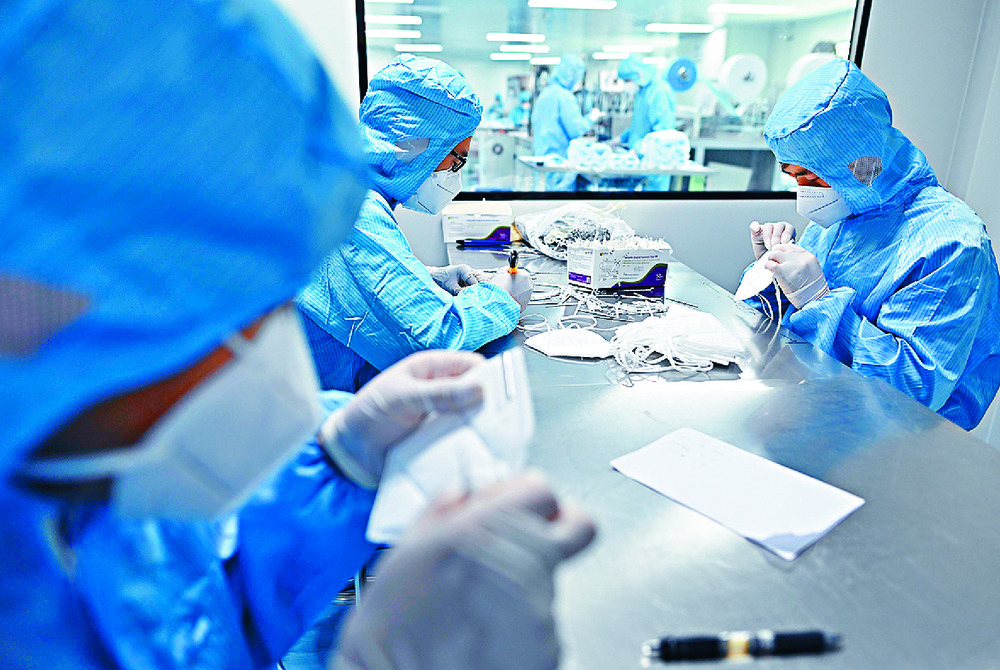
Tens of thousands of mask-making companies mushroomed across China at the start of the coronavirus pandemic, but many are struggling to survive as they face stricter quality control measures and falling domestic demand.
China launched a huge effort to produce protective gear to meet shortages during the outbreak, which first emerged in the country late last year before spreading across the globe.
More than 73,000 companies registered as mask makers in the first half - over 36,000 new operators in April alone - as prices and demand soared.
But the influx of new companies led to a "dilution in quality and a surge in scams," according to China-based researchers at Daxue Consulting, as firms ranging from carmakers to diaper producers converted production lines to make masks.
Now that the outbreak is largely under control in the mainland, domestic demand has dropped dramatically, pushing prices down.
"Our orders have been slashed five or sixfold since April," says Yang Hao, a sales director at CCST, a company in Shenzhen that was making air purifiers before adding masks to its range. "We do not need to produce masks day and night every day now."
Some of the companies that piled into the industry are backing out.
China Labour Bulletin, which tracks worker unrest in the mainland, says there have been a number of protests in recent months due to some mask factories closing abruptly and leaving staff unpaid.
Companies have said orders had dropped significantly, and some were refocusing their business.
"Our company had several business lines," says a sales director named Xu at an operation that makes medical products in Hebei province. "We stepped up the production of masks when the pandemic hit China hard, but we will shift back to our other products."
Xu says the company now sells each mask for four fen (five HK cents) - a quarter of the price they sold for at the height of the domestic outbreak this year.
And after international complaints about low-grade products, mainland authorities now demand a certificate of quality for those looking to export masks, which has also hit some of the smaller producers.
Between March and May, China exported more than 50 billion face masks - a tenfold increase in total production from last year, according to analysts.
And Beijing used mask donations as a propaganda tool - described by analysts as "mask diplomacy" - to deflect blame for the virus. But global friction has also had an impact on the ease of business.
Exports to the United States are done via a third country due to soaring diplomatic tensions between Washington and Beijing, CCST's Yang says.
But China is set to remain the world's top mask provider, according to analysts, with big companies ramping up production as the virus continues its global march.
United States producer 3M reported last month it was on track to produce two billion N95 masks this year, effectively doubling production rates.
"There will still be demand from the United States and a lot of other countries in the rest of Asia and the European Union that are unable to sustain their own mask supply," says Wilfred Yuen, an analyst at Bank of China International, adding that more sub-quality mask makers will continue to be whittled out of the market.
"As demand for masks gradually slows or supply of better-quality masks increases, those inferior suppliers will struggle to stay in the market."
AGENCE FRANCE-PRESSE
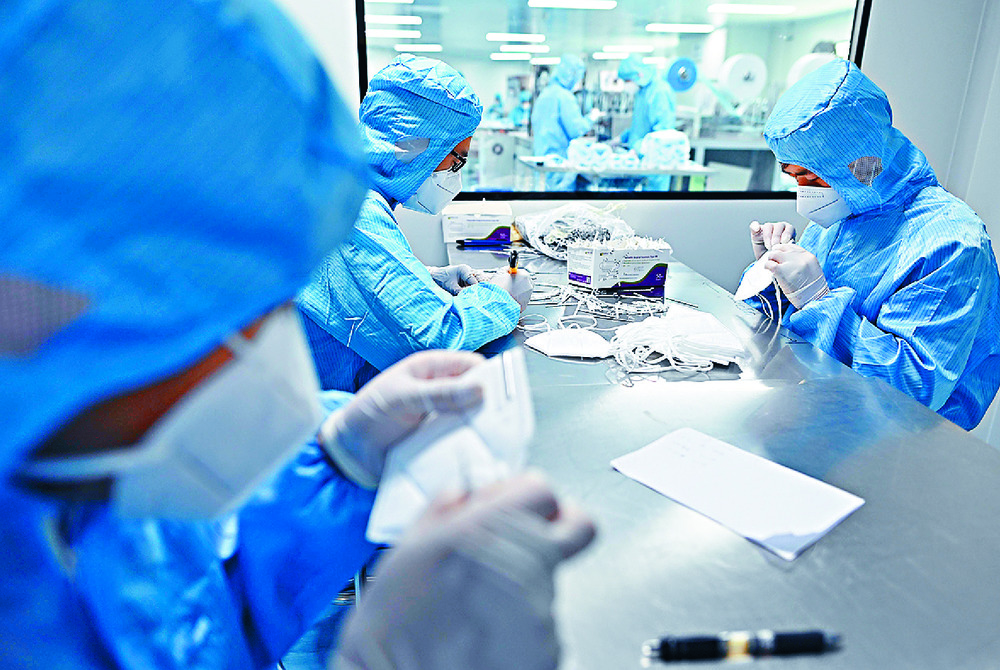
Chinese mask factories had been operating around the clock to meet global demand. afp