Despite Hong Kong being a city dubbed as a construction haven in the modern world, there is still a lot of traditional materials and construction methods being used in everyday construction activities. Among this is the widespread use of bamboo scaffolds.
While most part of the Western world use steel scaffolds for construction, Hong Kong continues to use bamboo as scaffolding materials. Its advantages are obvious: it is light, sturdy, versatile and cost effective. Furthermore, as bamboo is classified as grass and not wood, it is environmentally friendly.
When erected by trained workers under the supervision of a competent person, there is not reason to doubt that the scaffolding structure will serve its useful function under all perceivable conditions without risks of failure, comparing favorably with steel scaffolds on robustness, costs and, above all, flexibility. But to comply with modern day requirements for safety, especially when bamboo scaffolds are used with construction or maintenance activities for tall buildings, the Labour Department has drafted a detailed code of practice to ensure a high level of safety.
The initial draft was made in 2001 but in 2024 it was updated mainly with the requirement for trained workmen for erection of trussed out scaffolds.
As bamboo scaffolds were developed over a thousand years of experience by expert craftsmen, but not by modern engineering analyses, it is difficult to draft technical specifications to control the design and construction details.
Also, bamboo scaffolds are used not only in the construction of new buildings, but many maintenance activities over a variety of applications, from renewing the facade of tiles, plaster or other types of a building to minor work such as fitting split unit air conditioners or replacing windows for residential buildings.
The Building Department has therefore found the need to draft a list of guidelines on the design and construction of bamboo scaffolds, covering the whole range from single, double-layered, truss out and signboard scaffolds.
Drawings of standard design, types of bamboo poles and minimum diameter, methods of knotting nylon strips and other details are provided to guide and assist trained workmen to erect scaffolds safe enough for normal applications. Other details such as the use of lateral restraints, drill-in anchor bolts and other anchoring methods aim to ensure the scaffolds are erected as robust frames for workmen to access areas they are working on.
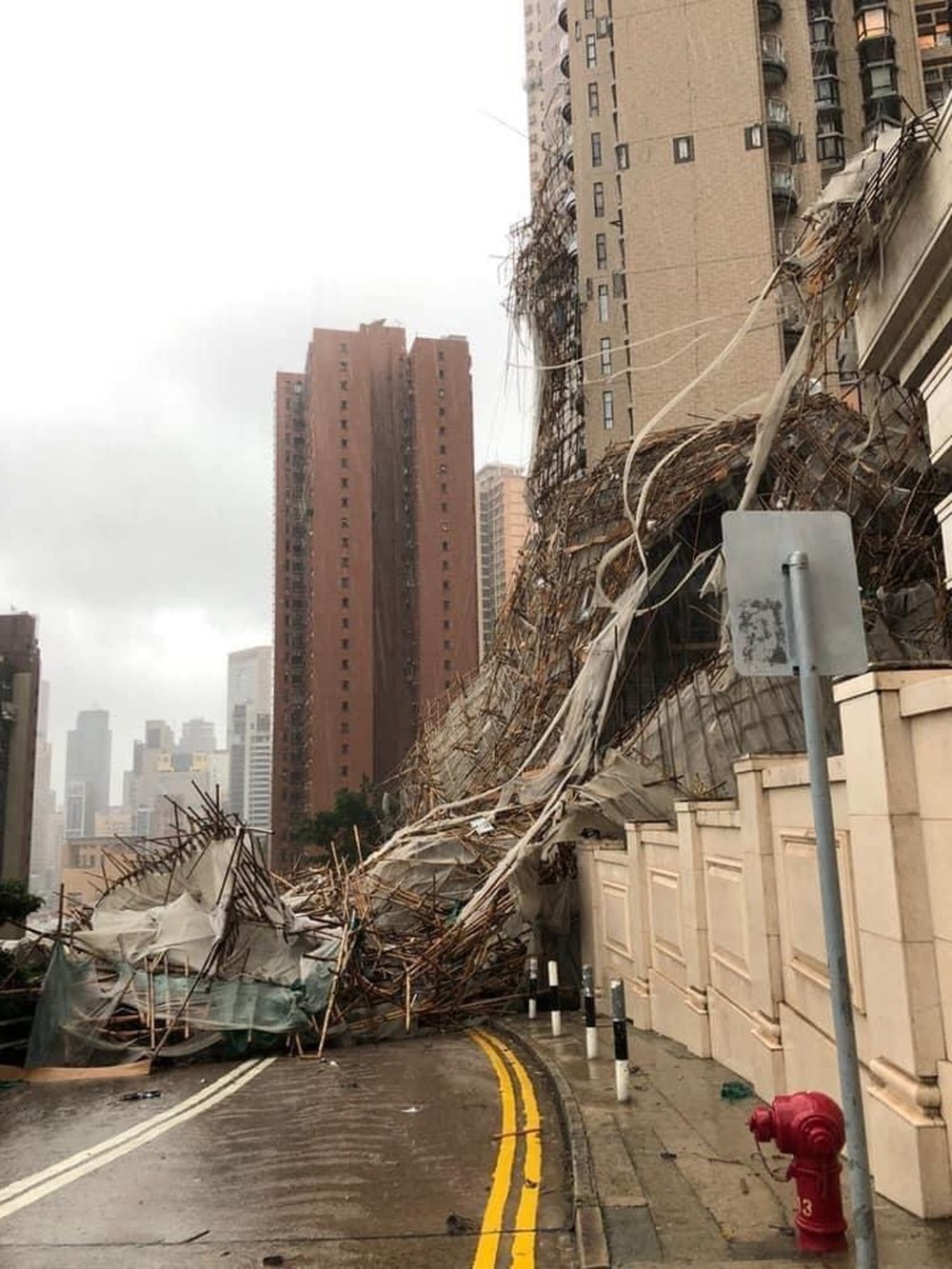
But despite these detailed codes of practice and guidelines, there are still some cases of scaffold incidents. Inclement weather, with storms and typhoons imposing extraneous load to the scaffold structure with plastic sheet covering, or unauthorized removal of lateral ties to access certain parts of the building front to finish off the facade, such as curtain wall panels installation, can also lead to scaffold failure, causing damage to property and even threatening the safety of workers.
This is a rude awakening to the construction industry, and the Construction Industry Council has recently called the attention of construction workers to enlist professional engineering input to ensure integrity of bamboo scaffolds, and with periodic inspection and maintenance to minimize deterioration with weather conditions. I shall explain in detail in my next article what they are recommending.
But ordinances, codes of practice and guidelines can only be useful when everyone complies with them. When some workers, for expediency, cut corners to meet construction deadlines or costs, these documents and the system will not help to protect the workers or the public.
To ensure safety, the construction industry must work closely with government to erect scaffolds that are robust enough to stand up to the particular activities, but more importantly to maintain them so they remain robust and intact throughout the life of the construction activity.
Routine inspection by trained professionals will help ensure the integrity of the scaffolds, and any unauthorized removal of lateral ties must be condemned. Overloading of scaffolds during construction activities and unauthorized removal of lateral ties which may weaken their stability must not be allowed as these are the most common cause of scaffold failure. For erection of glass curtain walls, during the last stage of installation there could be some difficulties as some lateral ties need to be removed to allow that part of the facade to be completed. This is when engineering supervision will be required to suggest alternative tying arrangement to make sure the scaffold remains securely tied and its stability not weakened.
There had been many cases of scaffold failures during curtain wall fitting activities, and although it has not been proven that removal of lateral ties is the only reason, such practices must not be allowed to happen.
Construction activities are complicated processes involving many parties. The authorities, owners, consultants and contractors must work together closely to ensure total safety. The use of trained workmen, supported by competent engineers, is definitely the safe way forward.
Veteran engineer Edmund Leung Kwong-ho casts an expert eye over features of modern life