Read More
For Paralympic athletes, wheelchairs are, needless to say, absolutely essential to many of the Games events.
ADVERTISEMENT
SCROLL TO CONTINUE WITH CONTENT
Most of these events take place on the track, where athletes race by vigorously pushing on the hand rims to come out on top.
Wheelchairs designed for track races are light and operate with low friction.
Though originally manufactured with steel, modern sports wheelchairs are made from much lighter aluminum tubes and, recently, carbon fiber.
Carbon fiber is tough but light, making it an ideal material for wheelchair frames.
Furthermore, typical wheelchair features such as foldable sections and brakes are dispensed with to reduce weight.
Paralympic wheelchairs have greater stability as their wheels have a negative camber of up to about 20 degrees.
These racers also come equipped with a long T-frame that has a single front wheel, creating less friction and improving stability.
For ball games and fencing, however, speed is not the main objective.
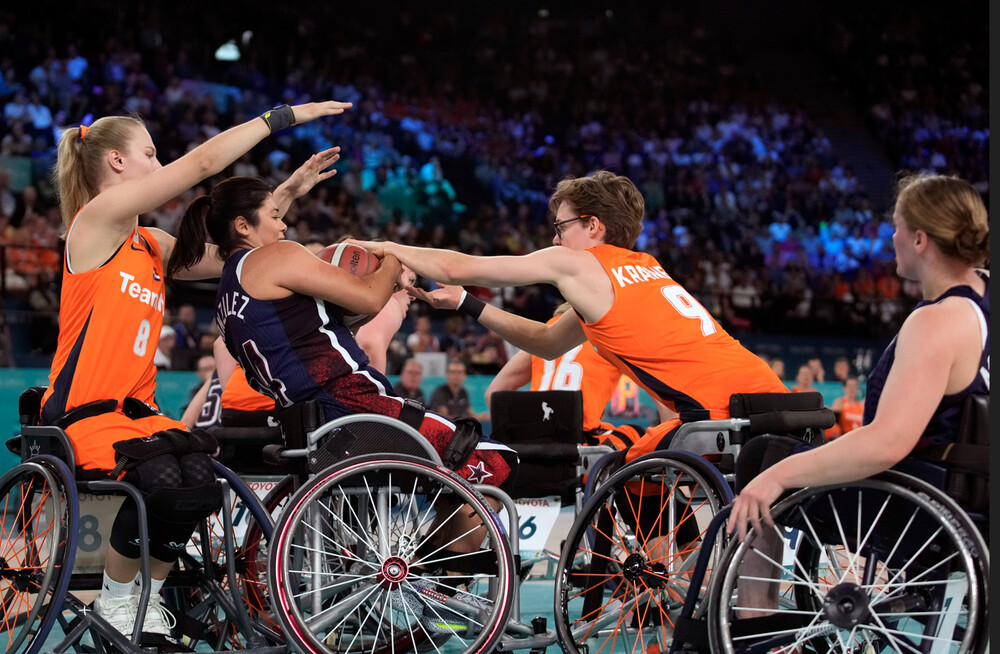
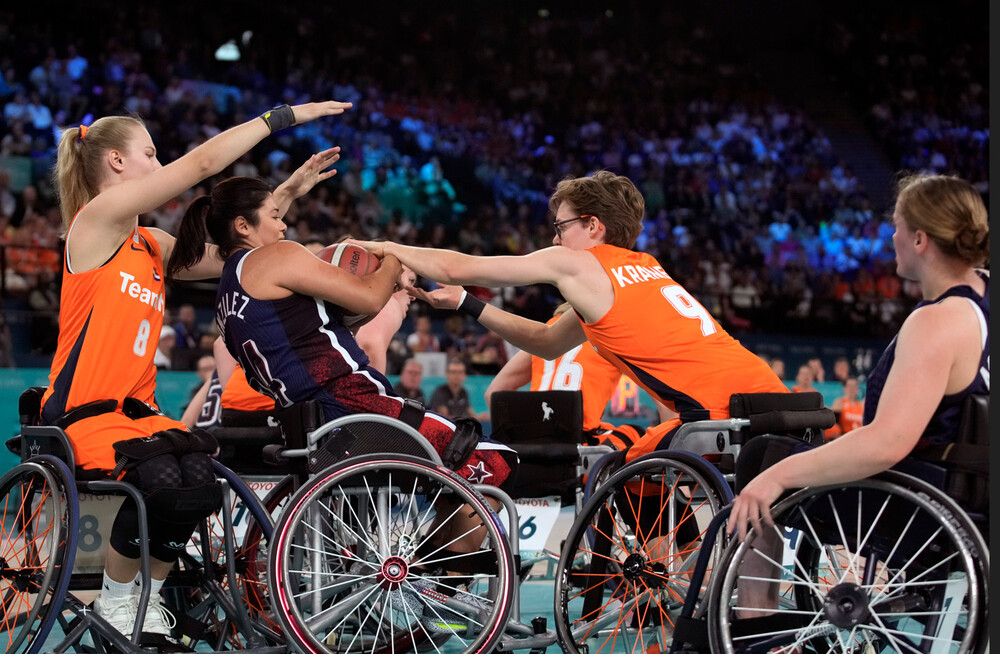
For basketball, tennis and rugby, the ability to make quick stops and directional changes is paramount.
Frequent contact with other players and minor collisions require a frame that is robust and highly durable.
In rugby for example, the high frequency of tackles and contact necessitates a tough wheelchair that can withstand the weight of two or more bodies on top of it.
Design elements can be for offense or defense.
The front bumper helps players tackle and hold opponents while the wings make it more difficult for a wheelchair to be stopped and held.
The ability to change direction in an instant is also a big advantage.
Players wear gloves for better grip of the hand rim and handling the rugby ball.
For basketball, a round bumper in front of the wheelchair prevents it from getting tangled with others.
For tennis, there is no contact, but the front wheels are set further apart to allow athletes to reach with their rackets without obstruction.
For fencing, the wheelchair is normally locked in position and there are no armrests to impede athletes' movements.
The backrest also allows a fencer to lean back to avoid attacks.
In general, wheelchairs for ball games allow the athlete to sit high for better visibility and body movements, unlike those for track racing, which are set as low as practical for minimum air resistance and stability.
The backrests are robustly built to support the athlete and to offer strong reactive forces for strong arm movements.
To allow quick movements and changes in direction during ball games, the wheels are of much larger diameter, allowing extremely fast maneuvering.
The wheel diameter is often about 60 to 68 centimeters, while for racing, it can be as small as 35 cm.
As we can see, wheelchairs for paralympic athletes need to cater to a wide range of special requirements.
They need to suit not only a particular game but also athletes with different degrees of impairment.
These wheelchairs are custom made for individual athletes and not interchangeable with others.
Finally, they are designed to provide mobility but not to give an unfair advantage in speed or control.
Modern competitive sport is sophisticated and wheelchairs allow the handicapped to continue to lead an active life on the court or track, equal to their able-bodied counterparts.
In true Olympic spirit, a win should be achieved on just skill and the will to succeed, nothing else.
Veteran engineer Edmund Leung Kwong-ho casts an expert eye over features of modern life