Read More
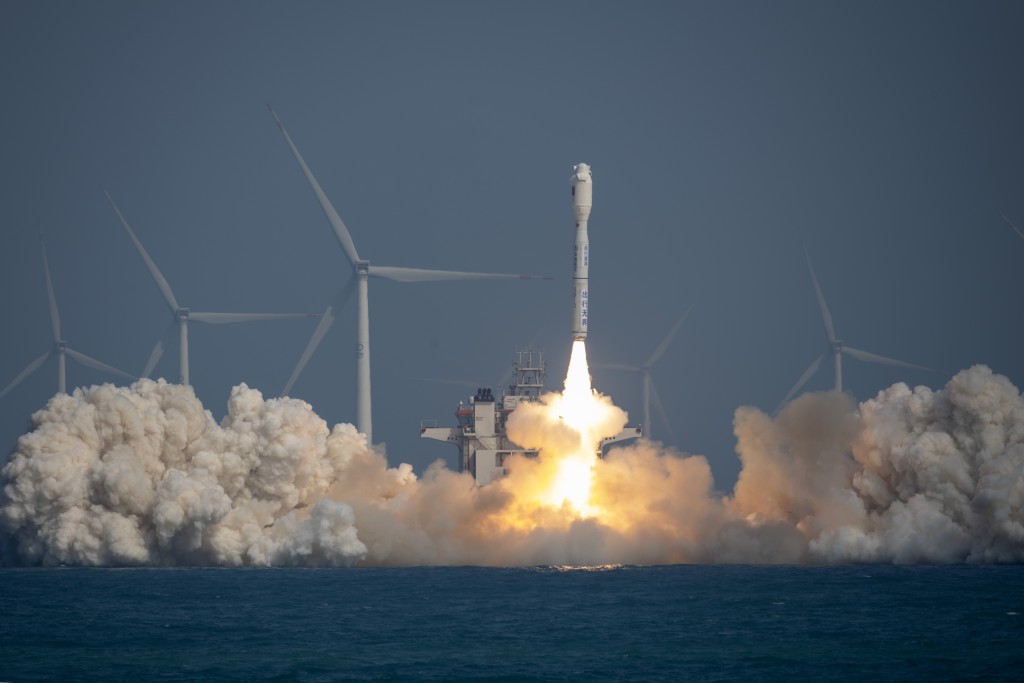
The world's first artificial intelligence-powered scientific satellite, named after the Chinese University of Hong Kong and designed for urban sustainability, was successfully launched on Thursday.
ADVERTISEMENT
SCROLL TO CONTINUE WITH CONTENT
Carried into orbit by a Jielong-3 rocket from the South China Sea, the satellite is set to connect with the "Hong Kong Youth Scientific Innovation" satellite — launched last September for disaster monitoring and sustainable development research — to form Hong Kong's first Low Earth Orbit (LEO) satellite constellation.
The groundbreaking satellite research project is not only the first Earth observation satellite initiative funded by the Innovation and Technology Support Programme Special Call on Aerospace Technology but also the first satellite directly involving a Hong Kong university in its design, research, and application.
Equipped with a high-resolution multi-spectral optical remote sensing camera, the satellite captures data across 10 spectral bands—from near-ultraviolet to near-infrared—at a resolution of one meter.
It is expected to provide detailed environmental monitoring, aiding in disaster prevention, smart city development, and regional sustainable growth.
Significantly, it is the first satellite in the world to deploy the DeepSeek large language model onboard, enabling near real-time data analysis and information extraction, effectively breaking the traditional bottleneck of data transmission delays.
15th Five-Year plan and beyond
The successful launch comes in the opening year of the nation's 15th Five-Year Plan, underscoring CUHK's commitment to leveraging technology and innovation in support of both the nation and Hong Kong government's vision of developing the city into an international innovation and technology hub.
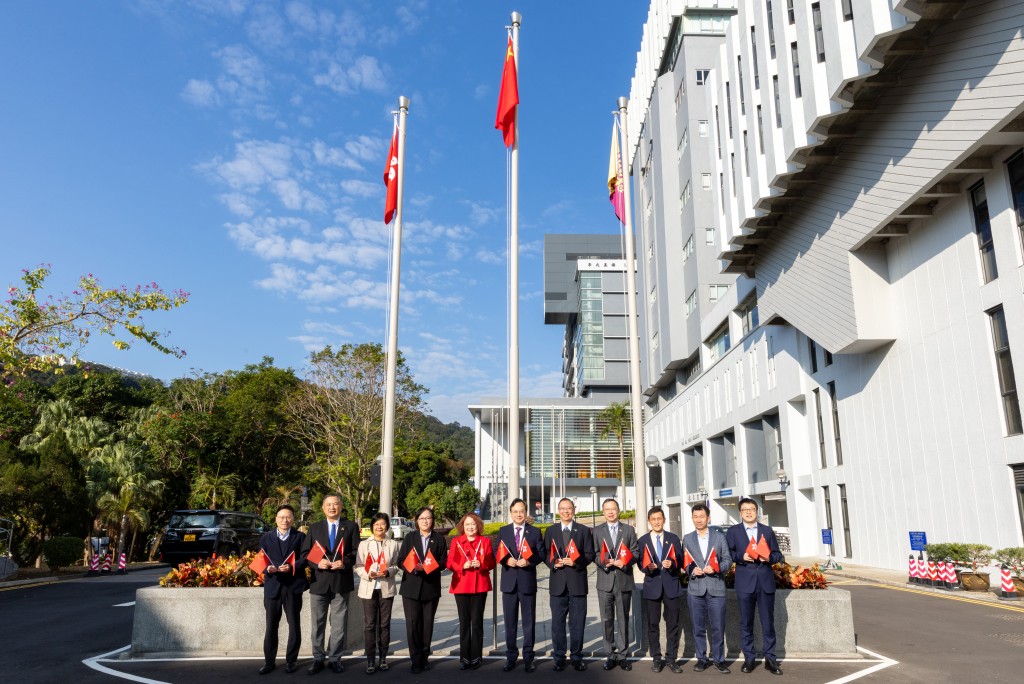
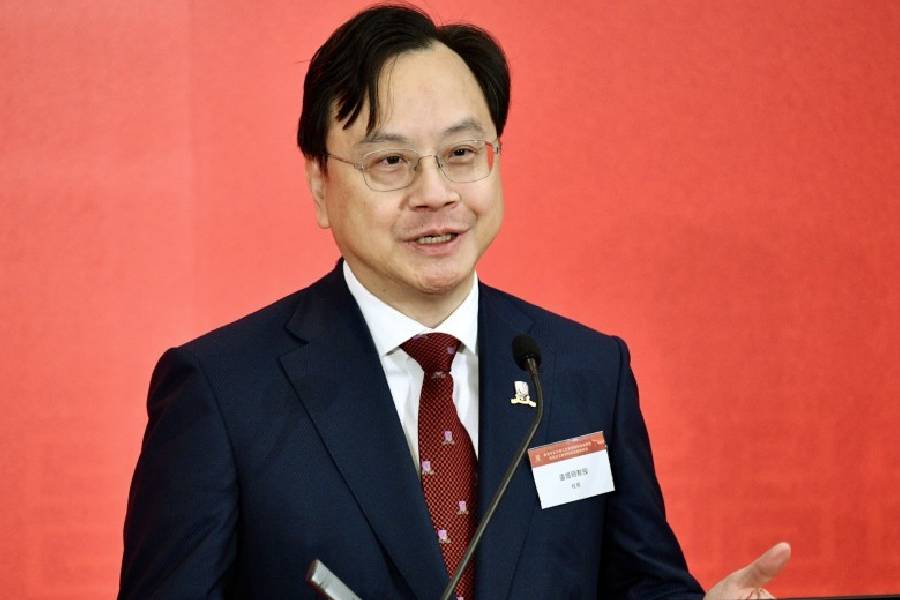
"The successful in-orbit satellite is not only another breakthrough for CUHK in aerospace technology, but also marks a new milestone in intelligent remote sensing and spatial information applications," said Dennis Lo Yuk-ming, the ninth Vice-Chancellor and President of CUHK.
"CUHK will actively respond to the 15th Five-Year Plan, continue to promote the deep integration of artificial intelligence and aerospace technology, nurture more young talents in space science, and deepen international research collaboration,” Lo added.
Professor and Director of Institute of Space and Earth Information Science Kwan Mei-po described the successful launch as the result of multi-party collaboration.
"The satellite will continuously provide valuable high-resolution, multi-spectral Earth observation data to support key technological research and application demonstrations," Kwan said.
She further stressed the university’s commitment to advance cutting-edge innovation and its international influence in earth science and aerospace remote sensing.
Satellite on an educational mission
Chief Engineer of the CUHK Satellite Project and Vice-Chancellor Assistant Professor, Ma Peifeng, shared the challenges for the team to lightweight and restructure the DeepSeek model to operate under limited onboard computing power and high stability in orbit.
“We now can conduct recognition and extraction from multi-spectral data directly on the satellite — shifting from “data acquisition” to “information acquisition ", “ said Ma.

With a focus on interdisciplinary training for young technological talents and aerospace science education, CUHK and The Chinese University of Hong Kong (Shenzhen) (CUHK(SZ)) has launched a comprehensive Aerospace Science and Earth Informatics & X Double Major Programme.
The programme integrates academic resources and professional guidance from the Department of Geography and Resource Management.
One undergraduate student, Wang, said he was delighted to be part of the satellite development, noting that the programme and experience had offered his clearer insights into his future career direction.
Following the successful entry into orbit, the satellite will provide high-precision geographic information services for environmental monitoring, smart transportation, and disaster response in key cities across the Greater Bay Area and globally.
It is also expected to support the establishment of an international satellite data centre in Hong Kong, actively contributing to urban sustainability and the nation's aspirations of becoming a leading aerospace power.