
Read More
Researchers at Hong Kong Baptist University (HKBU) have developed revolutionary multifunctional nanorobots capable of precisely degrading pollutants while eliminating harmful bacteria.
ADVERTISEMENT
SCROLL TO CONTINUE WITH CONTENT
These microscopic machines, steered by magnetic fields, could transform wastewater treatment and biomedical applications.
The innovation tackles two critical global challenges: industrial chemical pollution and antibiotic-resistant bacteria, offering more targeted solutions than traditional methods.
Smart design for complex challenges
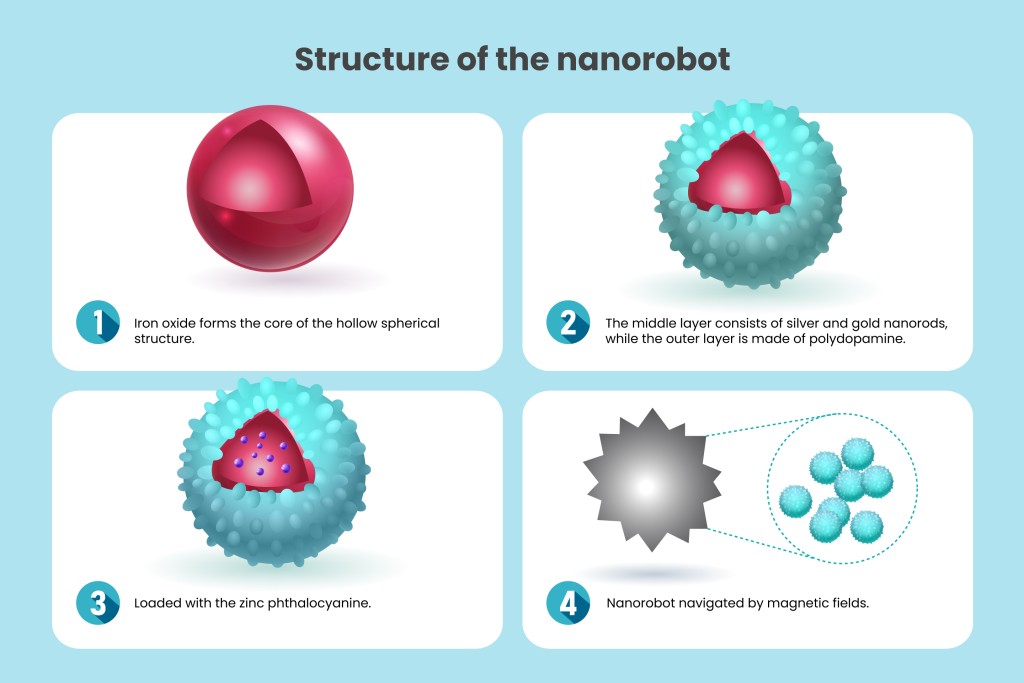
The HKBU-led team, collaborating with mainland Chinese researchers, engineered nanorobots with a sophisticated hollow spherical structure. An iron oxide core provides magnetic control for precise navigation, while silver-gold nanorods in the middle layer simultaneously break down pollutants and attack bacteria.
A biocompatible polydopamine coating ensures stability, and an internal cavity allows for potential drug delivery.
In lab tests, the magnetically guided nanorobots rapidly reduced industrial pollutants like 4-nitrophenol and methylene blue in simulated wastewater. Against dangerous bacteria, including E. coli and Staphylococcus aureus, the devices achieved 99.99 percent inhibition when combined with light activation.
The technology also effectively disrupted stubborn bacterial biofilms, showing particular promise for medical applications like treating implant-related infections.
From lab to real-world solutions
Professor Ken Leung Cham-fai from HKBU emphasized the nanorobot's unique combination of precision, effectiveness and control.
Published in Advanced Healthcare Materials, this research marks significant progress in nanotechnology applications.
With further development, these multifunctional nanorobots could soon address pressing environmental and medical challenges.