





Read More








Amber rainstorm warning issued at 11am
17 hours ago





Iran demands transit fees in yuan, stablecoins for Strait of Hormuz passage
03-04-2026 02:45 HKT


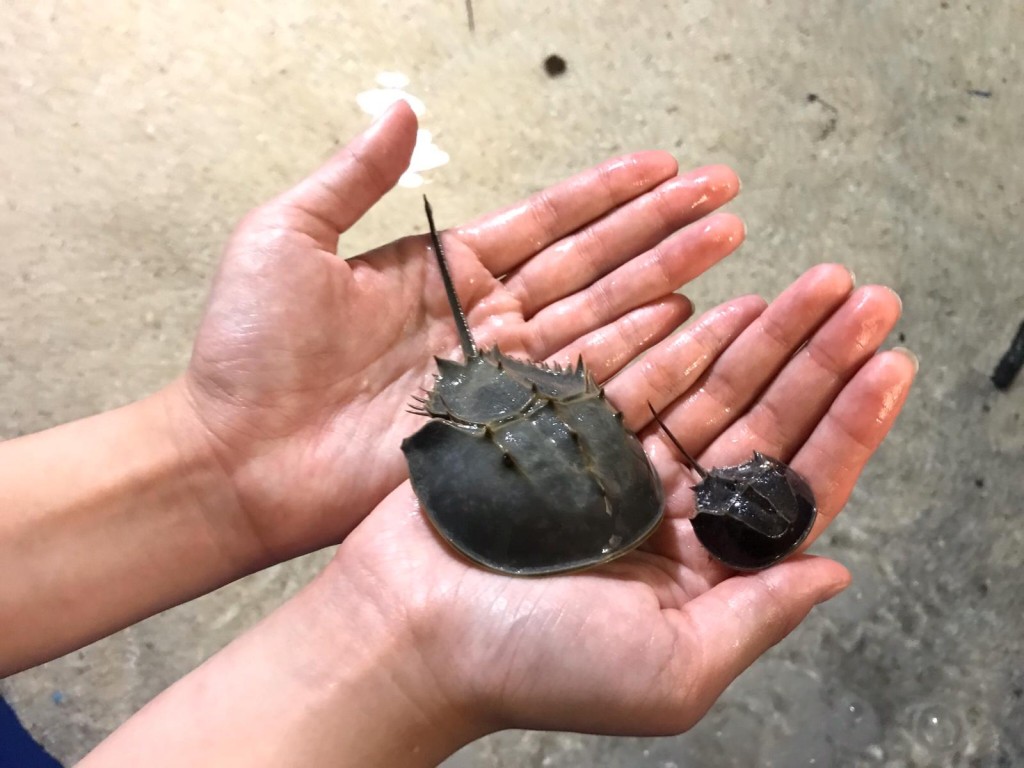
Autonomous drone systems and artificial intelligence technology have achieved over 90 percent accuracy in surveying Hong Kong’s horseshoe crab population, according to the Ocean Park Conservation Foundation (OPCF).
This Friday marks the International Horseshoe Crab Day, celebrating the ancient “living fossil” species that has existed for over 400 million years. Of the four global species, two can be found in the city.
Since last year, the OPCF, in collaboration with the Chinese University of Hong Kong and City University of Hong Kong, has been conducting a two-year pilot survey at Ha Pak Nai mudflat in Yuen Long using autonomous unmanned aerial systems (UASs) and AI to improve conservation efforts.
This morning, the research team surveyed Ha Pak Nai and plans to expand the system to other habitats, including Shui Hau Wan on Lantau Island.
Chen Xi, Research Assistant Professor from CUHK’s Department of Mechanical and Automation Engineering, explained that the team developed a specialized data annotation process tailored to the crabs’ subtle behaviors and morphological features.
The AI algorithm was trained to analyze images captured by UASs, enhancing detection accuracy.
Using image segmentation models, the system refines classifications based on traits like crawling patterns, width, and continuity while filtering out environmental interference. This has boosted identification accuracy to over 90 percent.
Previously, surveying Ha Pak Nai mudflat, an area of 150 meters by 1,000 meters, required a team of at least four researchers, taking one to two hours per session.
With UASs and AI, a single operator can now complete real-time data collection in about 30 minutes, including hard-to-reach areas like coastal mangroves — providing critical data on local horseshoe crab distribution.
(Cheng Wong)
