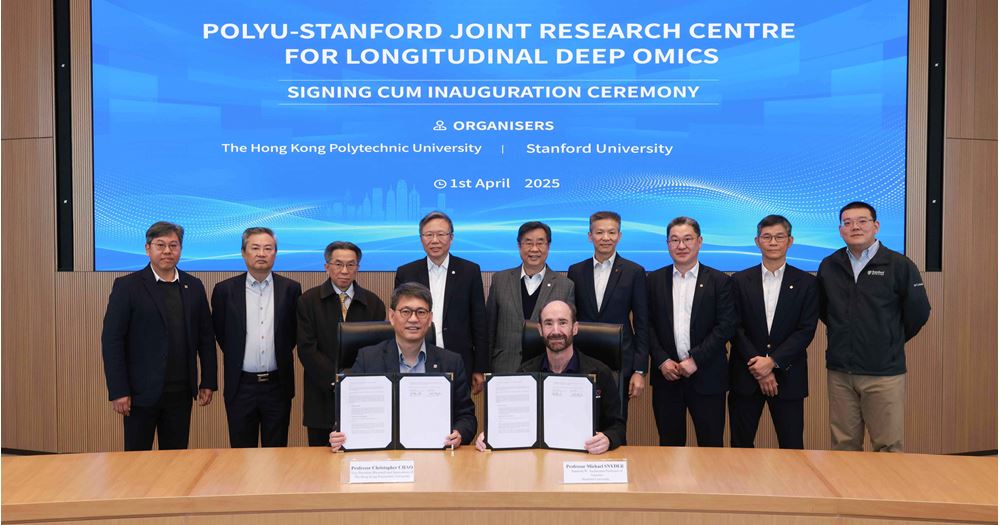
The Hong Kong Polytechnic University (PolyU) and Stanford Medicine have established a partnership by setting up a PolyU-Stanford Joint Collaboratory for Longitudinal Deep Omics (LDO).
The two leading universities plan to combine their expertise in fields including biomedical engineering and genetics to create a standardized multi-omics aging cohort.
This initiative aims to explore the biological mechanisms of healthy and pathological aging, identify personalized biomarkers, predict aging-related diseases, and enhance precision medicine, the PolyU said.
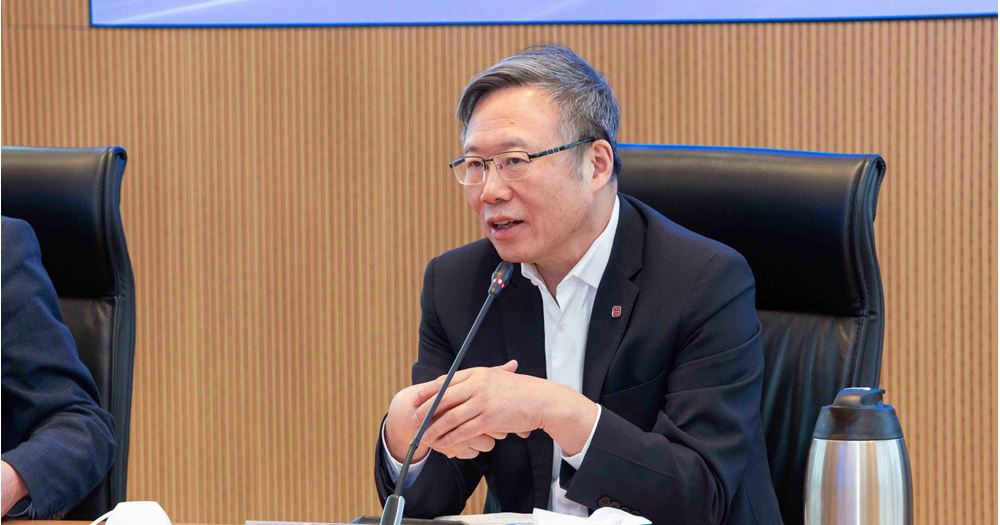
PolyU President Teng Jinguang emphasized the university’s strong commitment to advancing medical innovation and developing talent for improved health outcomes.
He also noted that it has submitted a comprehensive proposal to the SAR government to establish the city’s third medical school.
“Our aim is to cultivate the next generation of medical professionals and leaders who can excel in the future AI-driven healthcare landscape by leveraging our strong foundation of excellence in health sciences, engineering, and AI. The establishment of LDO will further develop and reinforce our strengths in the fields of healthcare and AI,” he remarked.
This partnership will facilitate joint research on deep omics and related fields, specifically targeting the Asian population. The focus will be on integrative analyses of aging mechanisms and individual variability.
The research center will conduct longitudinal multi-omics analyses of existing cohorts, encompassing genomic, proteomic, metabolomic, and lipidomic profiling, alongside retinal imaging and electronic health records.
Additionally, the collaboration will develop a real-time health monitoring platform, predictive algorithms for age-related diseases, and promote institutional exchanges for PhD students and postdoctoral fellows.
PolyU stated it owns a robust team of over 1,300 healthcare-related teaching and research staff and supported by more than 90 specialized laboratories and research facilities.
By leveraging its expertise in medicine-engineering integration and collaborating with global and mainland universities and hospitals, PolyU noted it is actively preparing to establish the third medical school, aiming to meet the medical needs of Hong Kong and the Greater Bay Area.
Cheng Wong