Does Switzerland actually have its own indigenous grapes?
With the advancement of DNA testing, the analysis of the parentage of grape varieties sometimes leads to surprising discoveries of their birthplace. For example, Koshu is Japan's emblematic grape variety, with over a thousand years of history in the country.
However, at the turn of the century, several DNA studies concluded that Koshu was in fact a natural hybrid with over 70 percent of its genetic ancestry from the European species of vitis vinifera. Researchers later traced its path and believed that the grape had traveled through the Silk Road to Asia. The case of Koshu has demonstrated that the popularity of a grape variety in a region does not always provide a definite answer to its origin.
A similar situation had happened to "Cornalin" in Switzerland. Traditionally, the black variety was called Rouge du Pays and was thought to be a local cultivar of Valais in western Switzerland since the early 14th century. Due to its unreliable yield, the grape almost became extinct until its revival in 1970s by a group of enthusiastic producers.
The change of name around that time led to its confusion with Cornalin of Aosta Valley in Italy. To make things even more complicated, Cornalin of Aosta Valley was later confirmed by DNA testing to be an offspring of Rouge du Pays, whose parents were in fact both native varieties of Aosta Valley. All these intertwining relationships suggested that Rouge du Pays was probably native to Italy, not Switzerland, even though it is now almost grown exclusively in the latter.
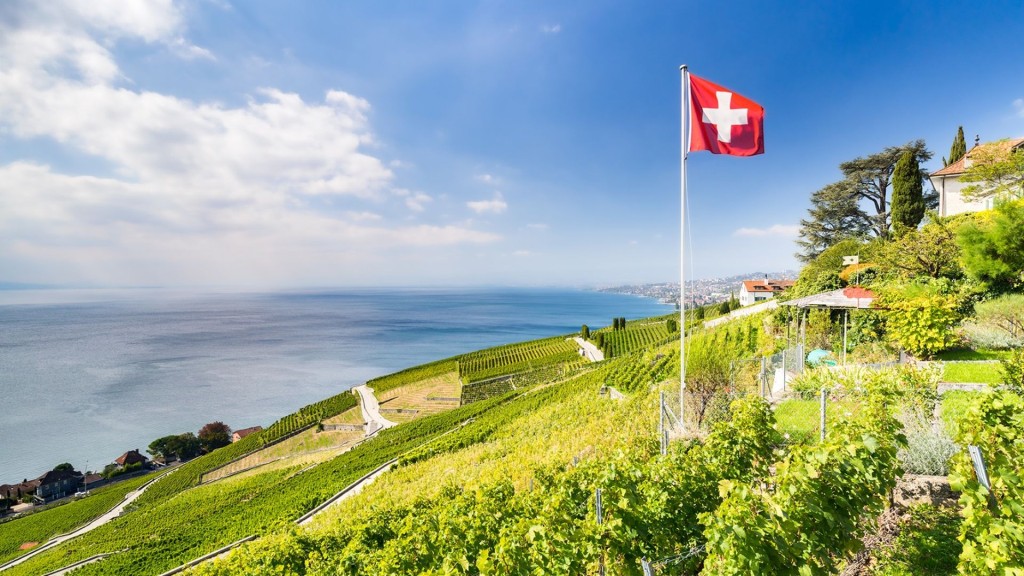
On the other hand, Chasselas' recognition as a Swiss variety almost went the opposite direction. Though long considered an important grape of Switzerland, Chasselas was originally believed to be a foreign variety. Some thought the grape came from Constantinople, while others linked it to the village of Chasselas in France. The origin was not known until a DNA study in 2009 proved its origin was Lake Geneva of Vaud, where it exhibited the highest genetic diversity. Today, Chasselas is undoubtedly the image of Swiss viticulture and the most planted white grape variety of the country.
Also known as Fendant in Valais, Chasselas has all the characters that made it a noble variety. Its wines often show elegant aromas of acacia, citrus, orchard fruits, and alpine herbs. With its naturally high levels of acidity, wines from Chasselas can age well and display notes of beeswax and nuttiness. Thanks to its acidity, Chasselas can cut through the grease of pan-fried potato cakes and also stand up against the creaminess of cheese. A perfect complement to Rosti and raclette – can you get any more Swiss than that?
Alice Wong is a certified wine educator based in Hong Kong