Read More


Hong Kong stocks close lower on Wednesday
12 hours ago



Hong Kong a conduit for mainland, French firms
26-05-2026 06:00 HKT
The government is keen to tap into the so-called "panda economy" that's said to be globally worth nearly US$7 billion ( HK$54.6 billion) a year, but by how much can these cute, cuddly giants pump up the city's tourism and retail coffers?
Experts believe the bears per se may not be enough of a money spinner and the city needs its very own panda brand to succeed.
Since the beloved bears are an instantly recognizable species, Chong says the city needs to market the pandas and merchandise as a "unique Hong Kong brand with Hong Kong-style designs" to set itself apart.
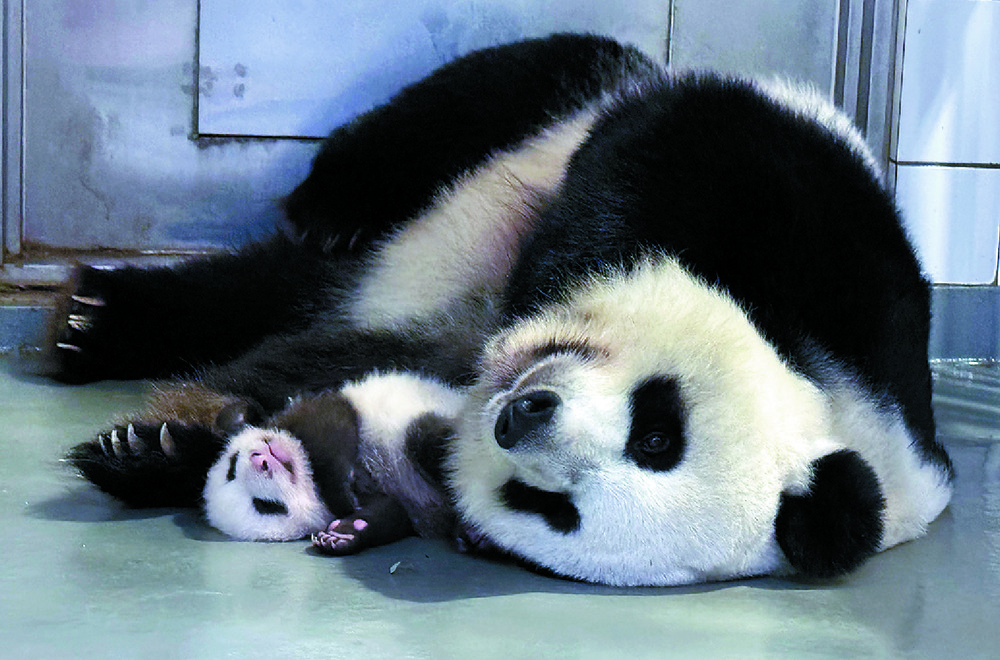
Ocean Park currently has six giant pandas, following the arrival of the Beijing-gifted pair in September and the birth of twins in August.Excitement in the city is reaching fever pitch with the two new five-year-old bears - currently known as An An and Ke Ke - set to make their public debut on December 7, with their new names revealed.
A naming competition for the new bears received more than 22,600 submissions.And the cubs born to Ying Ying and Le Le - the giant pandas that arrived in 2007 - are expected to meet the public around the Lunar New Year.
Ocean Park has extensively promoted the twins - who turned 100 days old last month - on social media, attracting over 100,000 followers.THEMED EVENTS
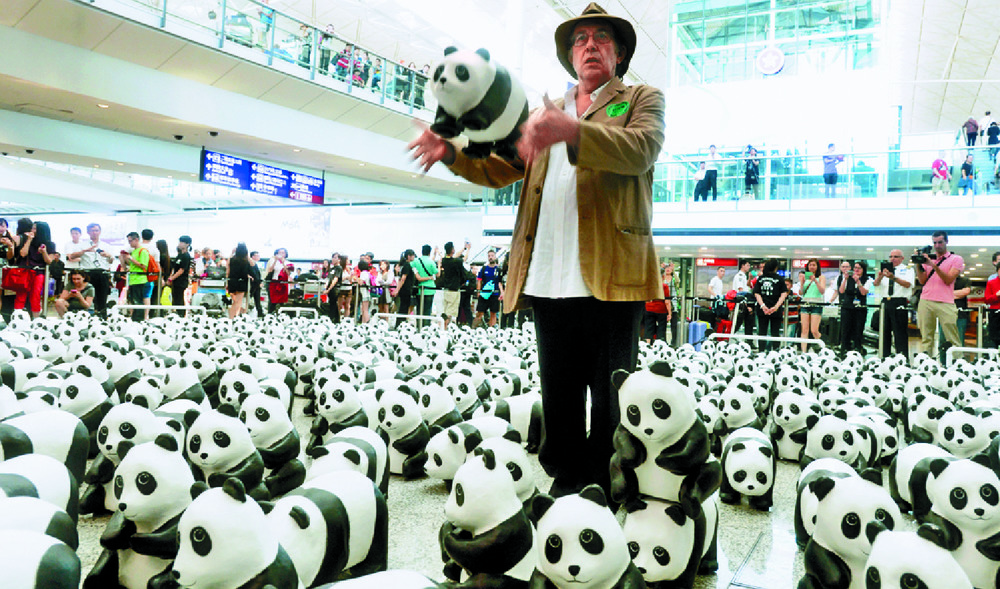
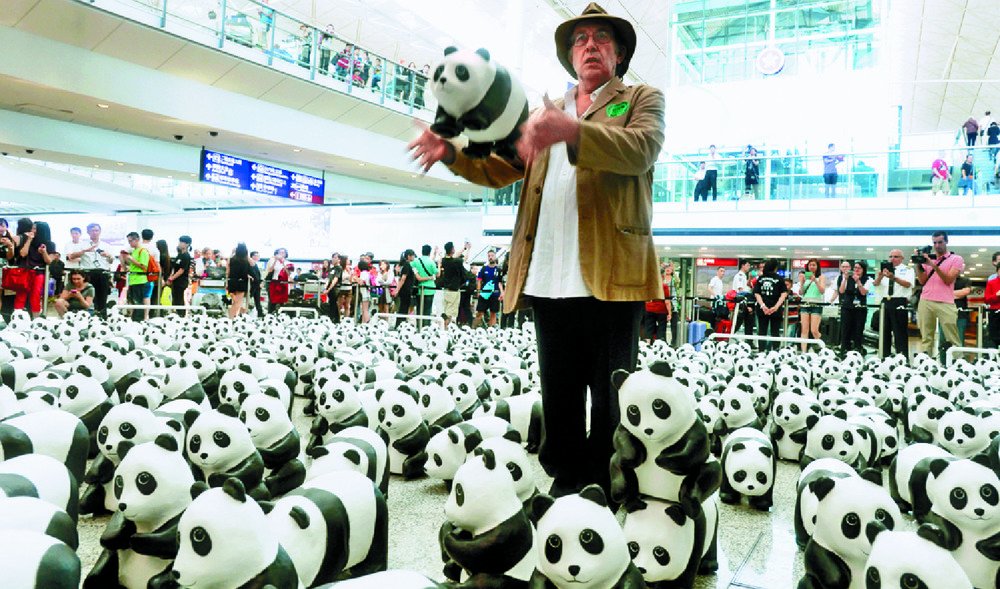
Secretary for Culture, Sports and Tourism Kevin Yeung Yun-hung says the six pandas will be promoted through products and campaigns with distinctive Hong Kong features to attract global tourists.Meanwhile, 2,500 panda sculptures go on display at tourist spots this month in an event backed by the Culture, Sports and Tourism Bureau and Hong Kong Tourism Board.
Following a welcome today at the airport, the Panda Go! Fest HK will be held over the four weekends starting December 7 at the Avenue of Stars, Ngong Ping 360, Ocean Park and Sun Yat Sen Memorial Park respectively.Also, 80 giant panda sculptures will go up at the Kwun Tong Centre this Friday.
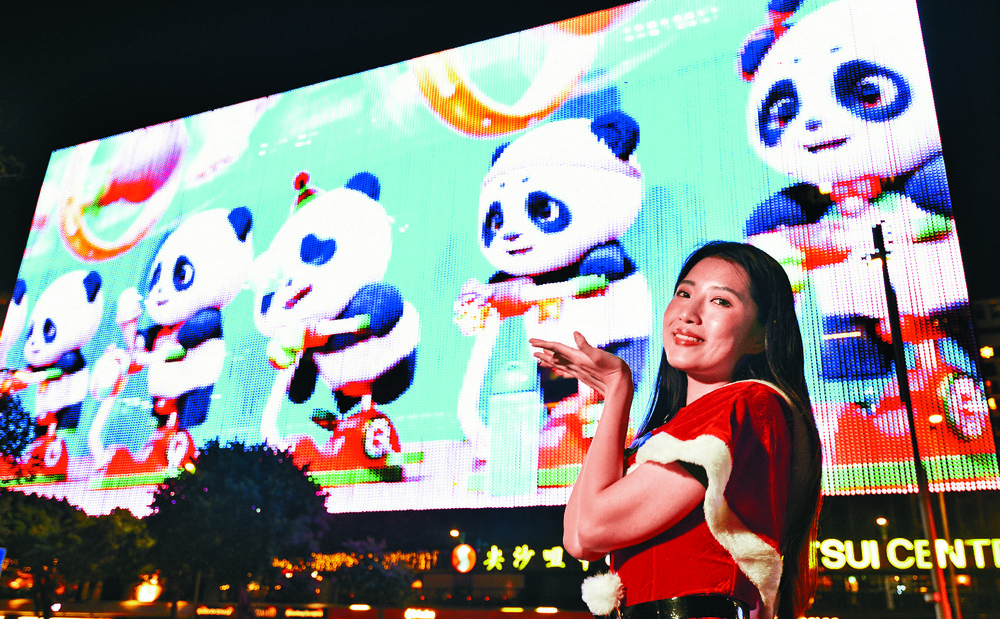
A Hello Pandas Carnival will be held from December 11 to 21 at the Hong Kong Cultural Centre Piazza. The free event will feature art, performances and a photography exhibition.The CSTB and the HKTB will promote a television video of a giant panda family and its friends touring the city, and images of the pandas will be displayed in MTR stations, the Central Pier, the Mid-Levels escalators and downtown.
Also, intellectual property characters are in the works for the six pandas from creative brand AllRightsReserved.SICHUAN'S SUCCESS
When developing panda-themed tourism, Hong Kong could take a leaf out of the book of China's famed panda breeding center in the capital of Sichuan Province and one of the giant panda's habitats.As many as 264,000 visitors flocked to the The Chengdu Research Base of Giant Panda Breeding during the May Day holiday, while Chengdu and earned tourism revenue of 15 billion yuan (HK$16.5 billion), making it the second most popular domestic destination after Beijing.
Chengdu also held its annual panda festival with 28,900 businesses hosting more than 1,500 events over October and November. However, it's worth noting that consumption vouchers worth 100 million yuan were dished out support the event.Businesses have also jumped on the bandwagon. Panda Factory, which makes stuffed toys replicas of popular mainland pandas Hua Hua and Meng Lan, recorded sales exceeding 6 million yuan in the first quarter of 2024, while some businesses also manufacture paper products made from panda poop and leftover bamboo debris, with 1 million packs a year sold on e-commerce platform JD.com (9618).
In Japan, the Japanese-born panda Xiang Xiang generated over 60 billion yen (HK$3.1 billion) in economic impact over six years before returning to China last year, according to Kansai University economics professor emeritus Katsuhiro Miyamoto.HUGE UPKEEP COSTS
But others have struggled to make money through China's panda diplomacy, under which it has been leasing pairs of the bears to zoos for up to US$1 million a year since 1984.A zoo in Finland returned two giant pandas to China last month - eight years early - as it could no longer afford to keep the bears.
Pandas are voracious eaters, and can munch up to 12 kilograms of fresh bamboo a day.The Ahtari Zoo had invested over EUR8 million (HK$68.1 million) in facilities for the pandas and faced annual maintenance costs of EUR1.5 million.
Last month, Adelaide Zoo waved goodbye to giant pandas Wang Wang and Fu Ni, who returned to Chengdu after 15 years.In addition to the US$1 million rental fee funded by the government, the Australian zoo went into debt to build a panda enclosure at a cost of A$8 million (HK$40.5 million) in 2009.
The pandas were projected to contribute A$600 million to the South Australian economy over a decade but research shows they broughtin just A$28 million in their first year, when visitor numbers were high.They also failed to breed.
Now, two new pandas will arrive at the zoo under a new deal this month, and the zoo will be hoping they will have better luck at mating.Overall, it is estimated that panda diplomacy has cost countries nearly US$300 million over past three decades, according to a Nikkei Asia report.
However, Hong Kong lawmaker Brave Chan Yung has gone on record saying that the total economic impact of giant pandas globally exceeds US$6.9 billion a year, 27 times the cost of hosting them, based on 2021 data from the Ministry of Foreign Affairs.In September, the Hong Kong Jockey Club Charities revealed it would give more than HK$121 million for to upgrade the panda habitats at Ocean Park.
Now the beleaguered park - which reported a loss of over HK$71 million for the financial year ended June despite hitting five-year highs in visitor numbers and revenue - is hopeful that the six pandas will help boost its fortunes.While the pandas, events and attractions will no doubt pull in hordes of Instagram tourists and animal lovers, experts warn against getting carried away by the initial euphoria.
Simon Lee Siu-po, a senior lecturer at CUHK's business school, says there are panda attractions both in China and abroad, so having them in the city "isn't particularly unique."And Chong points out while the pandas have been in Hong Kong for more than 20 years, their economic impact has been limited, given their high costs and relatively low returns.
Ticket sales alone at the park may not even cover upkeep costs, he states.Not everyone in the city has been swept off their feet by the pandas. A CUHK student named Michael says there hasn't been a buzz on campus about the bears, with students more preoccupied about their studies. "It's marketing hype and not that important."