Read More





Nine days of rain ahead as temperatures dip, Observatory says
09-06-2026 17:35 HKT
As the world steps up its quest for clean energy and a carbon-free future, an eminent Chinese academician is on a mission to unlock the potential of biohydrogen - a "greener than green hydrogen" that's typically made from various forms of waste but mostly overlooked.
Hydrogen is hailed as the fuel of the future as it only emits water and heat when it burns and can thus play a vital role in the transition toward a world free of carbon emissions.
But creating it can be carbon intensive, depending on the production process.
Green hydrogen, made by electrolysis of water using electricity from renewable sources such as solar and wind, emits no greenhouse gases during its production.
But while green hydrogen's costs are prohibitive, biohydrogen - produced from biogases and biomass - is more affordable, says Ren Nanqi, a professor at the Harbin Institute of Technology in China.
Biohydrogen recycles waste, in line with the global trend toward a circular economy. And it goes one up on green hydrogen with net negative emissions, as it prevents the natural decomposition of waste that would otherwise release greenhouse gases.
Waste to wealth
For decades, Ren has been grasping at straws, if you'll pardon the pun, to successfully produce biohydrogen.
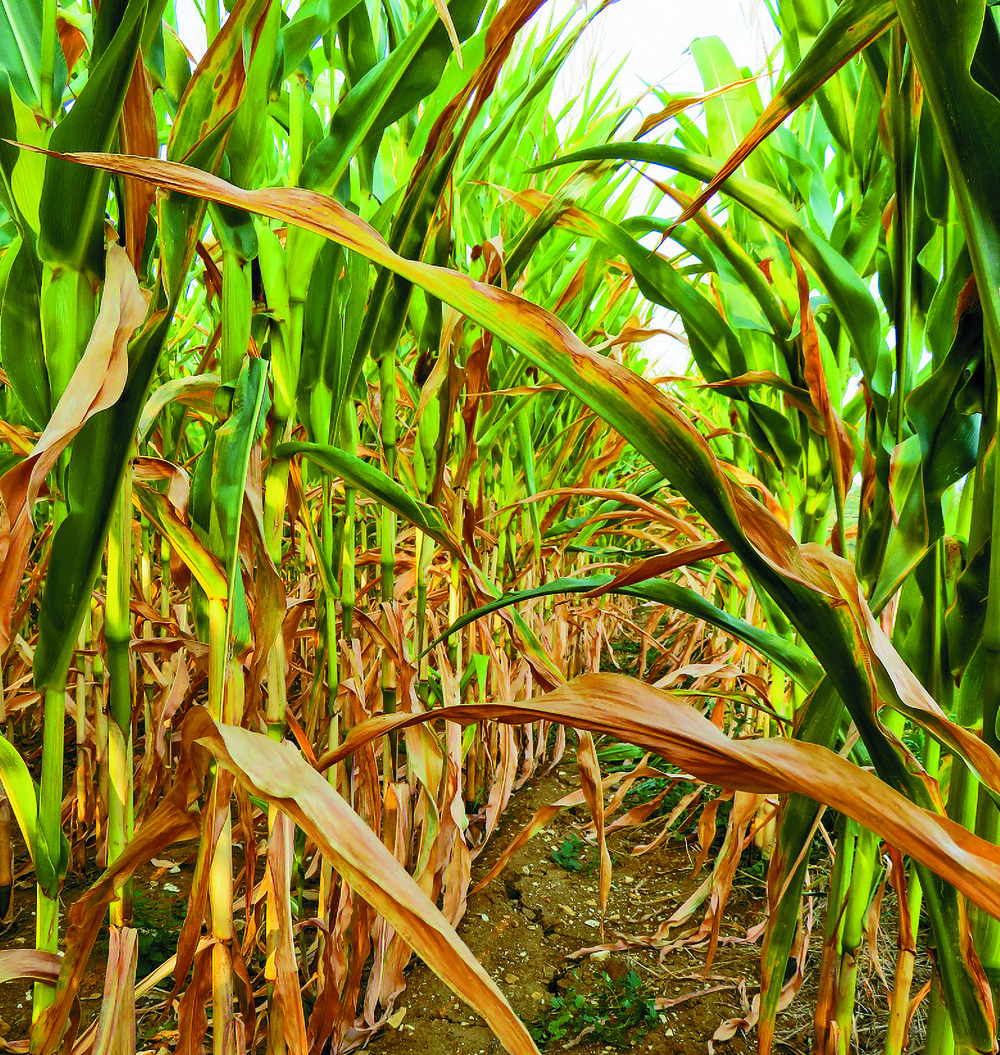
His waste of choice is corn straw, which is available in abundance in China.
Green hydrogen currently accounts for a mere 2 percent of global supply but while the world is focused on producing more of this clean fuel, the potential of biohydrogen is yet to be realized, he says.
Under a fermentation process, Ren uses corn straw, sugarcane bagasse, cassava residue, sawdust along with sewage sludge with a high concentration of carbohydrates to produce biohydrogen, which he describes as "super green."
Using this technique, he has successfully produced biohydrogen and biomethane since the 1990s in Harbin province.
There is no dearth of straw: China produces as much as 900 million tonnes of corn straw each year but 55 percent of it is burned by farmers, causing severe air pollution.
Currently, a mere 2.1 percent of straw in China is used for hydrogen production.
And though organic waste can also be used to generate landfill gas, Ren says his method yields more hydrogen.
Ren forecasts prices at 3.5 yuan (HK$3.78) to 5 yuan per normal cubic meter or nm3, or 38.94 yuan to 55.63 yuan per kilogram, and the cost of production between 80 fen and 1.2 yuan per nm3.
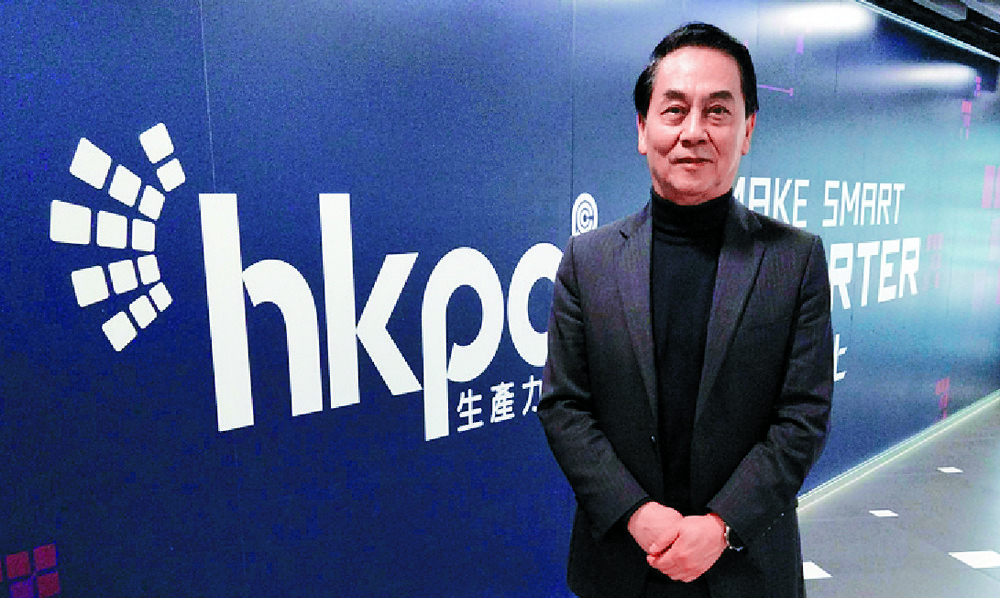
If 50 tonnes of corn straw is grown each month on three hectares of land, as much as 17 million nm3 can be produced with a value of 70 million yuan, yielding a profit of 40 million yuan, says Ren, who was part of a delegation from the institute that visited Hong Kong earlier this year to sign a pact with the Hong Kong Productivity Council on innovation and technology development.
The partnership aims to establish joint research laboratories or innovation centers for environmental engineering in both the city and the mainland.
What's in a color?
Hydrogen is the most abundant element in the universe but it is not easy to produce, store or transport and currently only accounts for less than 0.2 percent of all power generated globally.
In addition to green hydrogen, which is the most expensive, and biohydrogen, there is blue hydrogen, which is made mostly with natural gas and heated water but in a process that captures and stores carbon dioxide emissions.
Gray hydrogen uses the same process but does not capture CO2 emissions while brown hydrogen is made with coal in a process that is not only water intensive but also generates more methane and CO2.
Green hydrogen can cost between US$4 (HK$31.2) and US$7.5 per kg, blue hydrogen between US$1.5 and US$2.5, and fossil-fuel hydrogen around US$1.
There is also white or gold hydrogen, which is naturally found underground, and pink hydrogen, which is produced through electrolysis powered by nuclear energy.
China is the world's biggest producer and consumer of hydrogen but a fraction of the hydrogen it produces is from renewable sources of energy, according to the World Economic Forum.
It produced 34 million tonnes of hydrogen in 2021 but 80 percent of this was brown and gray, and less than 0.1 percent was green.
State-owned China Petroleum and Chemical Corporation (0386), also known as Sinopec, is the country's biggest hydrogen producer and as of 2022, there were 36 renewable hydrogen projects in the mainland.
China's hydrogen production is mainly consumed domestically and Shenzhen-based hydrogen and fuel-cell expert Hack Heyward says there is competition among hydrogen developers on the mainland.
Hydrogen is also being looked at as a fuel of choice for clean transport.
Shanghai's hydrogen refueling station can fuel up to 500 vehicles that can run 800 km on average, and closer to home, the city of Foshan operates a fleet of hydrogen buses.
However, hydrogen fuel cell technology is currently limited to commercial vehicles due to a dearth of refueling stations and cost constraints.
Hong Kong Push
The use of hydrogen in Hong Kong is still in its infancy, where a kilo of the clean fuel costs HK$100 - about three times more than in mainland China, where subsidies are offered.
The government reckons that hydrogen can facilitate green transport and is set to reveal a strategy to develop its use shortly, based on China's national hydrogen plan.
It will also amend laws on the production, storage, transportation and use of hydrogen next year.
Citybus launched its first hydrogen-powered double-decker and aims to have a full fleet of zero-emission buses before 2045, while rail operator MTRC (0066) will test a hydrogen-powered light rail train later this year.
Meanwhile, the Hong Kong and China Gas Company, also known as Towngas (0003), which already supplies a 50 percent hydrogen mix through its pipelines for households, can now supply almost pure hydrogen through the same pipelines to filling stations similar to petrol stations, for heavy vehicles.
Regional rival Singapore aims to have hydrogen provide half of its power by 2050 and also aims to become an Asean hydrogen hub.
A hydrogen-compatible power plant, which will use natural gas for the majority of production, will commence operations in Jurong Island in 2026.
In Europe, the European Union offers green hydrogen quotas for the industry and transport sectors to boost the use of low-carbon hydrogen, while the US, France and Denmark have subsidies and tax breaks for the production and use of low-carbon hydrogen.
Critics, however, say that biohydrogen's carbon negative advantage is not incentivized to the same extent green hydrogen is in the US, making it harder for such projects to reach commercialization.
The European Biogas Association, meanwhile, points out that biohydrogen costs in the continent range from EUR1.15 (HK$9.6) to EUR9.65 per kg, whilst the cost of green hydrogen from electrolysis fluctuates between EUR2.51 and EUR11.94 a kg.
The unique advantage of using biohydrogen technologies is the achievement of negative emissions as CO2 is being taken out of the atmosphere than added into it, the association says, pointing out that as biohydrogen technologies continue to evolve, "their transformative potential becomes more and more apparent, paving the way for a more sustainable and resilient energy future."