South Korean semiconductor shares rallied on Thursday after US memory chipmakerMicron Technology's quarterly results and forecast beat expectations, boosting optimism over sustained demand for AI-related chips.
Shares of SK Hynix 000660.KS and Samsung Electronics 005930.KS rose as much as 11.6 percent and 6.2 percent, respectively, in early trade, tracking a rally in US chip stocks after Micron's earnings and outlook reinforced confidence in the memory sector.
The rally also followed SK Hynix's announcement on Wednesday of plans to raise up to 45.45 trillion won (US$29.52 billion) through a secondary listing on Nasdaq, as it seeks to capitalize on strong investor appetite for AI stocks.
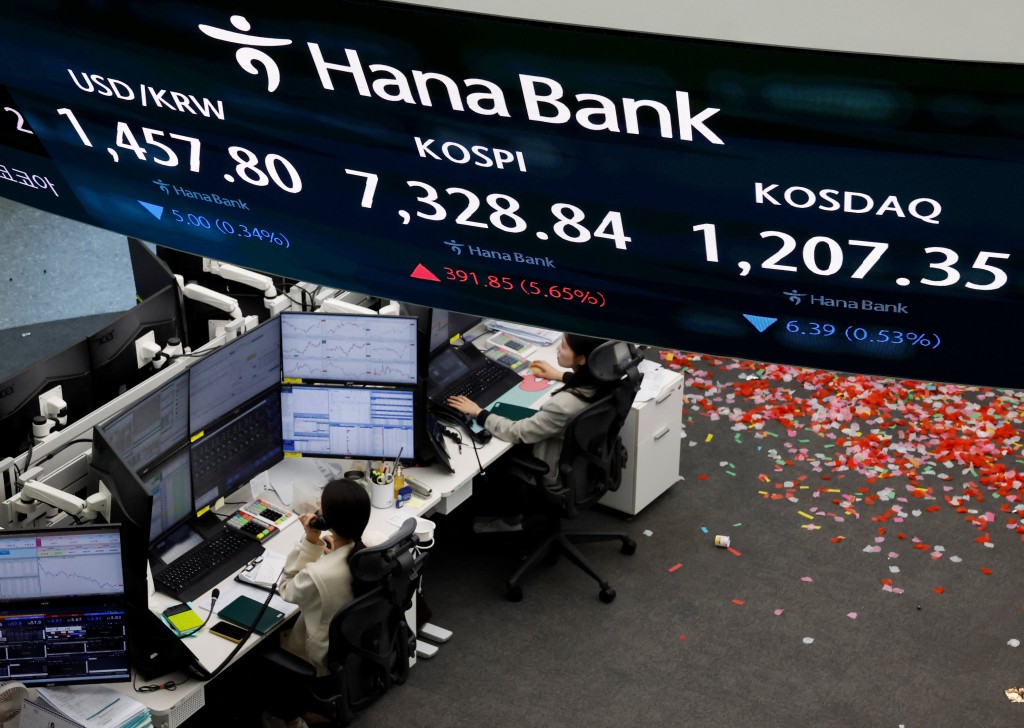
The benchmark KOSPI .KS11, in which Samsung Electronics and SK Hynix together account for more than 55 percent of market capitalization, was trading up 5.2 percent as of 0139 GMT.
Micron, a key supplier for Nvidia's NVDA.O AI processors alongside South Korean chip makers, forecast quarterly profit and revenue well above expectations on Wednesday and said its customers had committed US$22 billion to lock in supplies of memory chips, sending its shares surging 12 percent in after-hours trading.
The upbeat outlook reinforced expectations that AI-driven demand for memory chips will remain robust despite concerns over heavy spending on AI infrastructure.
JPMorgan continues to recommend investors "add on any dips" and maintain maximum exposure to South Korean equities, describing South Korea in a note as its preferred market in the region, while raising a 12-month KOSPI target to 12,500 points. The KOSPI was trading at 8,913.27 in morning trade.
Micron's upbeat outlook lifted shares of US-listed chipmakers late on Wednesday, with more than US$400 billion added in market value after the strong forecasts from Micron and Qualcomm QCOM.O breathed fresh life into Wall Street's recently waning AI stock rally.
"Memory shortages were triggered by the explosive need for AI factory infrastructure...and we believe the role of memory as a strategic asset in Artificial General Intelligence remains unchanged," JPMorgan analysts said in a separate note, adding they saw little sign of demand destruction or memory-content optimisation that would ease the supply-demand imbalance.
Micron's forecast - and third-quarter results that beat Wall Street estimates - underscore how AI-driven shortages are forcing its large-scale data center customers to fund capacity, reshaping the memory market.
Reuters