The low-altitude economy was elevated as a new economic driver at the end of the Central Economic Work Conference last December before it was formally included in Premier Li Qiang's government work report a few months later.
Ever since, low-altitude economy has become a synonym for new economy, making local governments formulate policies to turn the conceived new market into reality.
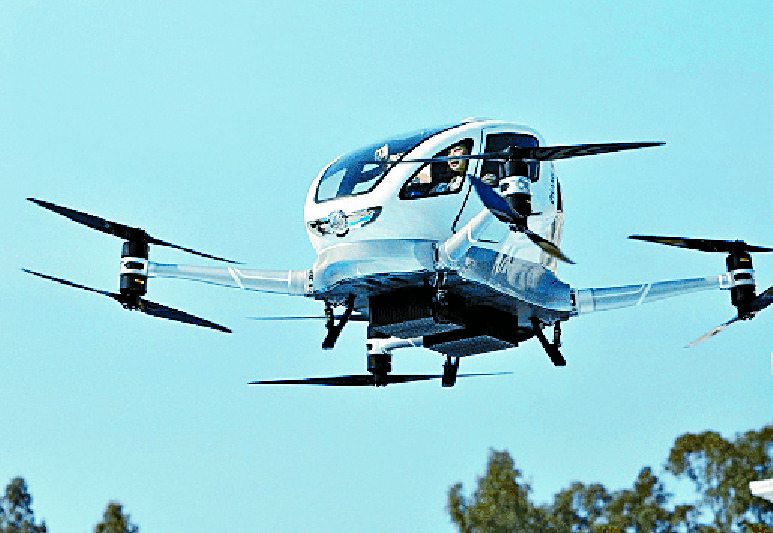
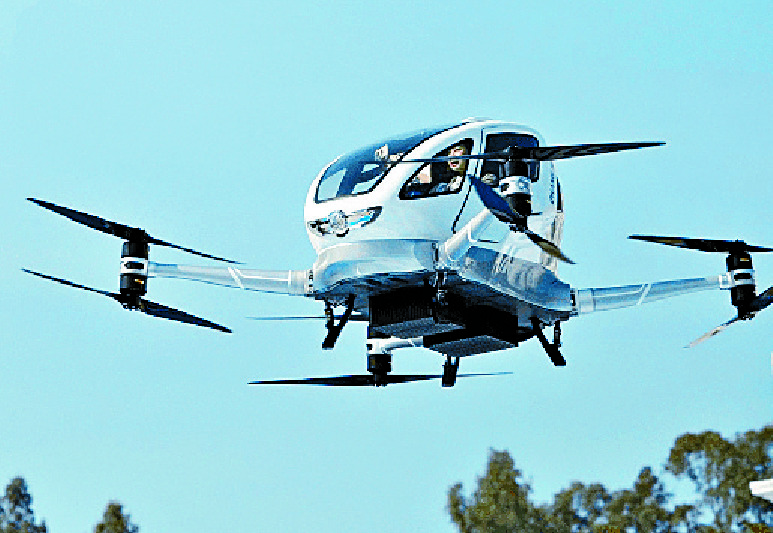
The SAR government is evidently trying to catch up after falling behind some mainland cities including Shenzhen, where air-taxi services are reportedly offering rides - including low-air flights - to as far as Hefei in Anhui province.
China is the world's top drone-making country and, wth the experience and technology that Chinese drone manufacturers have secured over the years, it is not surprising to see drone-production bases such as Shenzhen being way ahead of Hong Kong in this respect.
The SAR may have been falling behind but it is never too late to act quickly to catch up if it can identify for itself a niche that adds to the technology.
What exactly is the low-altitude economy?
Generally speaking, it refers to an economic model of integrated business activities built on the support of low-air manned or unmanned aviation within the airspace of up to 1,000 meters vertically.
If high-altitude commercial flights have become a successful industry raking in billions of dollars for airlines and other participants in the supply chains, so should low altitude. This should be valid, at least in principle.
While it is never too late to hear SAR officials talk assertively about the need to put forward pilot projects to trial drone-led low-air economy in the city, it is also necessary to review whether existing regulations can be upgraded or streamlined to clear the way for low-flying economic activities to take off.
With public safety in mind, regulations that may inhibit development will have to be updated to create a friendly playing field in which operators can participate with confidence, which is a basic requirement.
Nonetheless, a major piece is still missing - and Hong Kong is best positioned to provide this missing piece.
As of today, the low-altitude economy remains largely associated with non-industrial-scale deliveries of goods or passengers.
Chinese shopping platform Meituan is planning to trial flying unmanned drones for food deliveries in Hong Kong, which sounds encouraging as it can test the technology application in a real environment of high-population density.
In addition to the technology, it is also essential to produce a practical road map to turn the technology-backed ambition into an industry in the true sense.
An industry by definition is vast, involving a huge amount of daily activities, as well as employment opportunities, while generating meaningful revenues for participants and taxation.
The mainland already possesses the technology. What Hong Kong policy makers might add is the piece of a growth road map to complete the low-altitude puzzle, a strategy that can actually help the new economy drive growth.
It would be a major score if such a road map were to be found in the policy address.