Read More
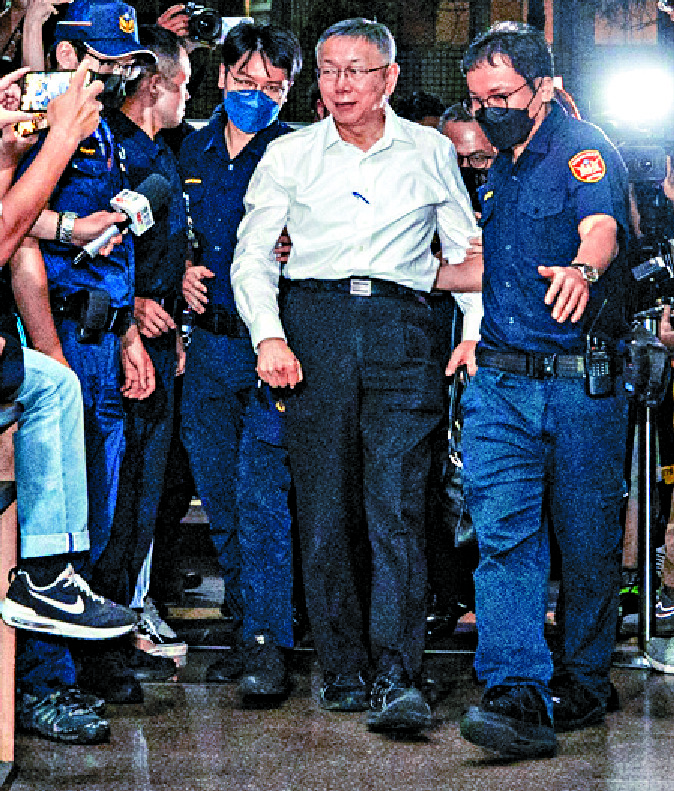
Former Taipei mayor and Taiwan People's Party chairman Ko Wen-je has been released by a court citing a lack of evidence against him.His release may be temporary as it is not unprecedented in Taiwan for politicians facing a corruption probe to be rearrested and brought back to court.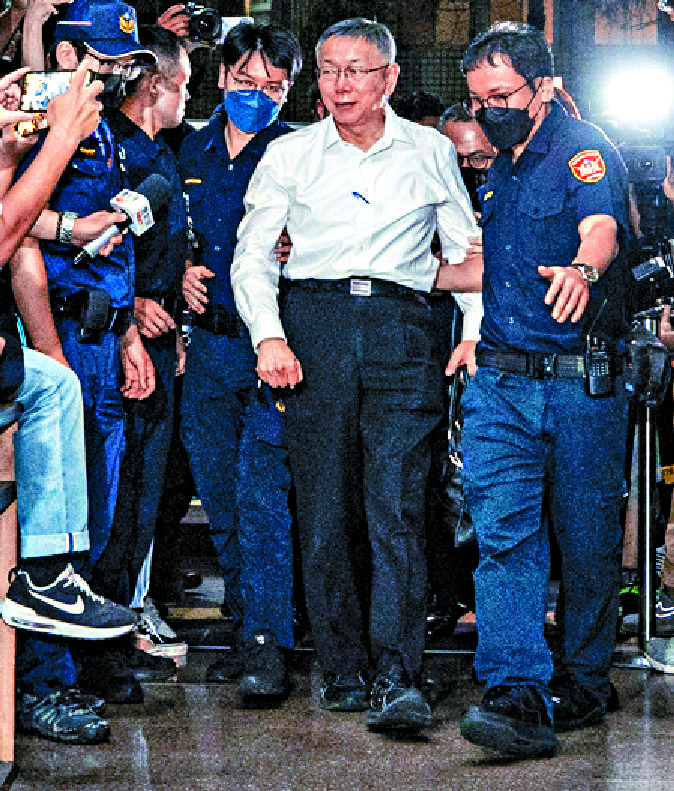
The case involved a major property development in which the plot ratio was inflated by 50 percent from 5.6 times to 8.4 times when Ko was still mayor.
ADVERTISEMENT
SCROLL TO CONTINUE WITH CONTENT
Former Taiwan president Chen Shui-bian is a case in point: before he was sentenced to life and fined for embezzlement, bribery and money laundering, he had also been released and rearrested to face the law.
The prosecution has pledged to file an appeal against Ko's release, so will he face a similar fate to Chen as the Core Pacific City scandal continues to unfold?
Ko's party and supporters insist that the ex-mayor - who won a quarter of the popular votes in Taiwan's presidential election - is innocent and that the investigation is politically motivated.
In a sense of deja vu, Chen's supporters also claimed the former president was a victim of politically motivated prosecution.In politics, it is not uncommon to hear of corruption accusations.
During the Taiwan presidential campaign, then-Democratic Progressive Party candidate William Lai Ching-te faced an accusation involving an old family house that his political opponents alleged was an illegal structure.It was later clarified by the authority that the property had existed before the relevant laws came into effect.
What matters is that the system provides for a course of justice that is fair, open and proper. It is hoped that, as the prosecution continues to pursue the case against Ko over the enlargement of the plot ratio, the former mayor will have fair and adequate opportunities to prove his innocence.It is far too early to say whether or not the Core Pacific City incident will spell an end to Ko's political life as the case continues to crawl through the judicial system.
Nonetheless, people getting involved in politics are well aware that smearing is part of their political life and, while some may manage to escape unscathed, others could end up in jail.A number of South Korean presidents have been jailed after leaving office, again as a result of corruption charges.
However, Ko's own confession in a separate fiasco in which donations supporting his presidential campaign were under-reported by over NT$18 million (HK$4.43 million) shocked many of his young supporters, damaging his clean image.Although his campaign office blamed its accountant for the mistakes, the question persists: where did the money go?
An opinion poll released after Ko's confession about the under-reporting scandal but before his arrest in connection to the plot ratio scandal showed that his support dropped drastically by 17.7 percentage points to 22.1 percent among voters aged 20 to 24 and 11.7 percentage points to 30.7 percent among those aged 25 to 29.Innocent or not, Ko is paying the price - allowing Lai and probably some in the opposition Kuomintang party to smile.