Read More
Lawmaker Ambrose Lam San-keung led a rather fierce attack against the local stock exchange and regulator in a Legislative Council debate on his call for a review of the listing of small and medium enterprises on the Hong Kong exchange.
ADVERTISEMENT
SCROLL TO CONTINUE WITH CONTENT
Lam was echoed by a number of his colleagues.
The debate and passage of the motion was timely.
Once among the top three exchanges in the world, the Hong Kong stock exchange has now been elbowed out of the top five to rank seventh after Shenzhen in terms of market capitalization.
The city's IPO ranking has also fallen to eighth position following a record low third quarter despite an anticipated inflow of Chinese companies switching listing from the US to Hong Kong.
What a shame!
The lawmakers - most likely with the help of diligent personal assistants - were able to cite a full range of damning statistics as they acted in concert to hold market officials responsible for the situation that the local stock market faces today.
If numbers published elsewhere are not necessarily credible all the time, official statistics available from open sources in Hong Kong are still reliable.
As the lawmakers were trying to impress, the financial market could be really sick.
It is sick not only in terms of the falling numbers of new companies listing in Hong Kong and the shrinking amount of capital thus raised, but also the double standards that are loathed by local firms - especially small- and medium-size ones.
The listing process has been steeply tilted in favor of the big and huge companies from the mainland at the expense of local firms.
If a major function of a stock exchange is to enable companies to raise capital by issuing shares in order to grow large, it may have ceased to be a meaningful way for local firms to benefit from the mechanism, even though this had been the case in the distant past that led to the growth of a number of today's local blue chips.
Listing can be a precarious process for the SMEs as they could be readily summoned to be reprimanded by listing officials should they fail to exercise enough caution to avoid making remarks about their listing applications.
However, has this ever occurred to a giant, even if it had committed the same type of behavior?
For example, Alibaba has not been shy about telling the public of its plan to list logistic unit Cainiao on the Hong Kong stock exchange.
Has anyone from the concerned parties been rebuked in respect of that?
This is the perception that many local market players have in respect of differentiated treatment being accorded to the VIPs and the small potatoes.
Perhaps that is also what Lam had in mind when he cited a common Cantonese expression that "big chickens do not eat fine rice" - which would mean the SMEs are too small to be considered by the exchange.
Warren Buffett made a good point when he said "only when the tide goes out do you discover who has been swimming naked."
This obviously applies to those listed here too.
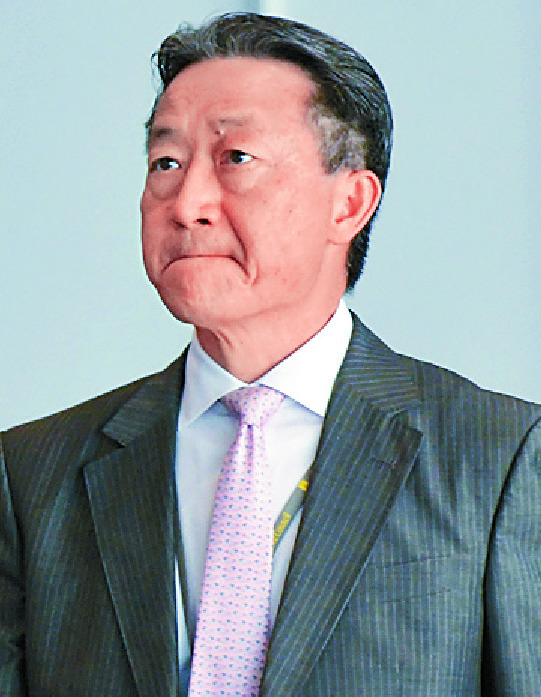
Ambrose Lam