Read More









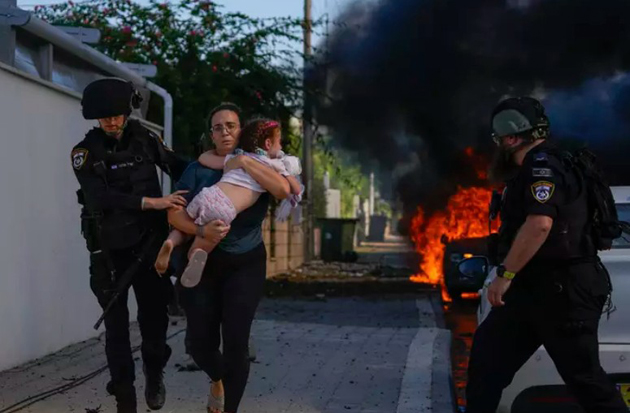
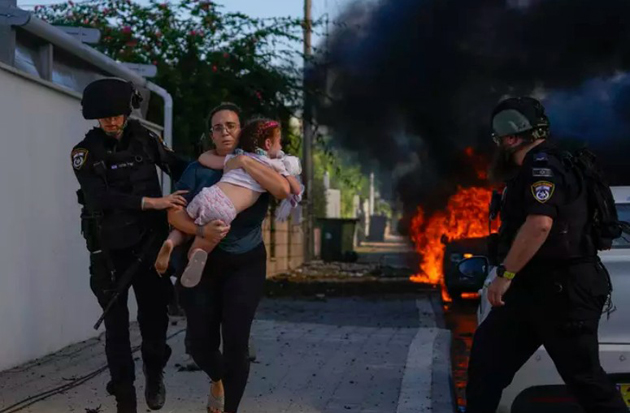
In the worst Israel-Palestine conflict in recent memory, Palestinian militant group Hamas faces the real prospect that its presence in the Gaza Strip could be eradicated as it is enclosed by Israeli forces on both land and sea.
But Tel Aviv cannot claim victory even after flattening the militant group's base.
Hamas, which has a long history of receiving support from Iran, is probably a useful but dispensable pawn in the geopolitics enveloping West Asia and the Middle East.
Israel-Palestine conflicts go far back into memory but there has been an increase in incidents since 2020 . Perpetual conflict has become a way of life for the citizens of both sides, with the prospect of peaceful co-existence now more remote than ever.
It made no sense for Hamas to escalate the already hugely tense situation into a full-scale war as it must know that Israel will retaliate strongly.
Perhaps Hamas is prepared for this eventuality and is planning to turn a significant number of hostages kidnapped from Israel into human shields.
The surprise attack was launched a day after the 50th anniversary of the 1973 war that saw the Arab world attack Israel on multiple fronts.
Before the latest attack, Israelis had lowered their guard to observe the start of Yom Kippur, the Day of Atonement - one of the holiest days on the Jewish calendar.
The motivation for the weekend attack may have been to restart a war last fought 50 years ago.
Yet it also came at a time when the leader of the Arab world, Saudi Arabia, was reportedly close to normalizing relations with Israel in a US-brokered deal that is also expected to give Saudi access to nuclear energy and US defense technology.
In the weeks before the Hamas attack, the White House had disclosed to the media that the basic framework for a deal was in place.
Saudi Crown Prince Mohammed bin Salman also remarked for the first time in a Fox News interview that talk of normalization was "real."
MBS, as the Saudi crown prince is often called, also expressed a desire to ease the life of Palestinians, but he stopped short of mentioning a future Palestinian state with East Jerusalem as the capital.
Following the attack, Saudi Arabia was quick to renew a demand for a two-state solution, while also calling for de-escalation.
If Saudi Arabia and Israel do normalize their relationship, it could break up the long-standing geopolitical understanding that sees the Arab Muslim world rallying against the Jewish state of Israel.
Then, Hamas would also risk fading into irrelevance in the Arab world and Iran - a Shiite Muslim revolutionary regime - would see a nuclear-capable Saudi Arabia leading the rival Sunni Islamic sector of the Muslim world.
Tehran has voiced support for the Hamas attack but denied being directly involved in it.
Surrounded by Israeli armed forces on land and sea, Hamas militants have no escape routes.
If Israeli Prime Minister Benjamin Netanyahu is true to his words and pushes deep into Gaza to destroy Hamas, will this stoke up anti-Israel fires in Saudi Arabia and other Arab countries?
If so, the price of giving up the pawn would be worth paying in the eyes of Iran.