Read More






Teenager arrested at Hong Kong airport for luggage theft
02-10-2026 14:00 HKT

HK raises minimum wage for foreign domestic helpers to $5,220
02-10-2026 18:06 HKT
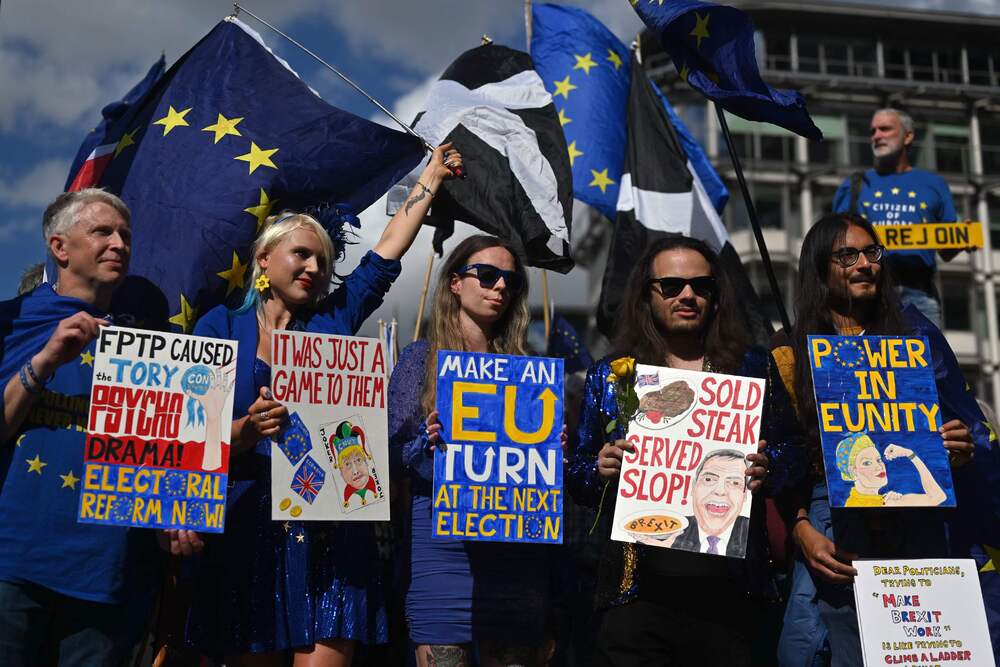
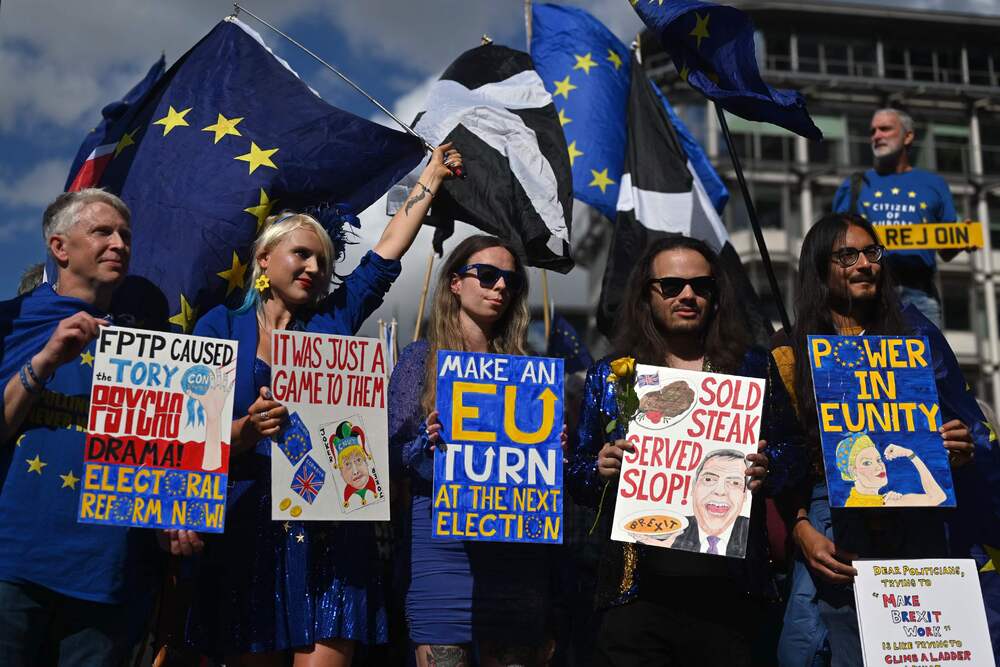
Thousands of people tuned out for a march in central London to call for the UK to rejoin the European Union.
Although the next general election is scheduled no later than January 2025, Prime Minister Rishi Sunak is free to go to the polls during the period.
The general expectation is that Sunak will call a general election in 2024.
The march from Park Lane to Parliament Square was the second annual protest on the issue.
It is apparent that Remainers have stepped up their efforts to pitch for the Brexit issue to be seriously included on the political agenda.
It is curious that Sunak has opted for another subject that is no less controversial than Brexit - the net zero emissions target - to weaponize.
He probably thought that postponing the deadline to achieve net zero emissions could win him more votes.
Perhaps, but he will soon discover that he will have to face the Brexit question - directly or indirectly.
His opponent, Labour's Keir Starmer, is less bound. Although the party also declared it was committed to upholding the 2016 referendum outcome, the Independent newspaper recently reported that Starmer had a secret meeting with France's Emmanuel Macron on Brexit.
Starmer explained he would seek to improve the Brexit deal, but rejoin the EU.
As I pointed out in this column earlier this year, the British public will have to answer the question again eventually.
Could the general election expected next year become an occasion for British voters to pass their verdict after making a comparison between the pre- and post-Brexit UK, eight years after the referendum was won by the Leave camp with a razor-thin margin?
While sentiments for rejoining the EU have never subsided since the referendum, the same has not been observed among Brexiteers.
High inflation as a result of Russia's invasion of Ukraine has added fuel to the Remain sentiments and caused a number of those who voted for Brexit to wonder if they should have voted otherwise.
Voters' top concerns are the economy and cost of living. According to the latest Brexit tracker poll by UK In A Changing Europe, less than one in five voters chose Brexit when asked what was the most pressing issue facing the country.
As a general election looms, it will be inevitable for the Brexit issue to be brought up in public debates.
The Conservative and Labour parties cannot avoid engaging with the issue after voters discover that Brexit, the economy and the cost of living are tied to each other.
Slowly but steadily, voters have started realizing the causal relationship.
The leadership of both the Conservative and Labour parties are already coming under pressure to get around their open commitment to upholding Brexit.
In 2016, Brexiteers and Remainers were largely on equal footing despite the former's victory by a razor-thin margin. Eight years on, a number of Brexit supporters have given up on the Tories to become undecided in recent local elections.
Both parties will have to reach out to the undecided, knowing they will have to face Brexit one way or another.