Highlighting the city's ambition to become a premier international philanthropic center, Chief Secretary for Administration Eric Chan Kwok-ki outlined a vital pillar of Hong Kong's social architecture: the territory now hosts over 11,000 tax-exempt charitable bodies, with approved annual donations exceeding US$1.5 billion (HK$11.7 billion) and more than 400 new philanthropic organizations established in the past year alone.
This surge in civic giving coincides with Hong Kong cementing its status as Asia's leading billionaire enclave and the world's second-largest billionaire city, home to over 100 billionaires wielding a collective net worth surpassing US$300 billion. As private fortunes accumulate alongside more than 2,700 single family offices, Hong Kong faces a defining question: can extraordinary wealth concentration be harnessed to foster a more equitable society, or will it succumb to the social fracturing witnessed across the West?
The Western warning
The trajectory of advanced Western economies offers a stark cautionary tale. Across the United States and Western Europe, accelerating wealth inequality has ignited widespread populist resentment against the ultra-rich. The perceived detachment of billionaire elites from broader societal wellbeing has fueled political instability, eroded social trust, and triggered contentious calls for punitive wealth levies and aggressive capital gains taxation. Yet, as recent fiscal dilemmas in jurisdictions like the United Kingdom demonstrate, punitive taxation often backfires – incentivizing capital flight, draining high-end revenues, and doing little to resolve structural deprivation.
Rather than fostering social solidarity, the adversarial dynamic between the state and private capital has entrenched polarization. For Hong Kong, avoiding this trap requires an alternative paradigm: rather than treating private wealth as an object of confiscation, the city must mobilize it as an engine of systemic social investment.
Philanthropy as civic contract
This collaborative compact is being actively institutionalized through public-private architecture. As showcased at the government's flagship Wealth for Good in Hong Kong Summit, the administration has moved beyond passive facilitation. Through the Hong Kong Academy for Wealth Legacy, the government established "Impact Link" – a curated platform connecting family offices and philanthropists directly with vetted, scalable charitable projects.
By establishing an online depository and a peer-led nomination network, iLink equips global asset owners with the institutional infrastructure to deploy capital toward measurable social outcomes, from poverty alleviation to healthcare innovation.
In a city grappling with long-standing Gini coefficient pressures and wealth disparity, institutionalized philanthropy functions as a crucial social equalizer. Unlike rigid state welfare allocations, private philanthropic capital operates with venture-like agility. Hong Kong's billionaires and family trusts are uniquely positioned to target grassroots community interventions: funding cutting-edge biomedical research at local universities, underwriting educational access, and incubating social enterprises that expand upward mobility for underprivileged youth.
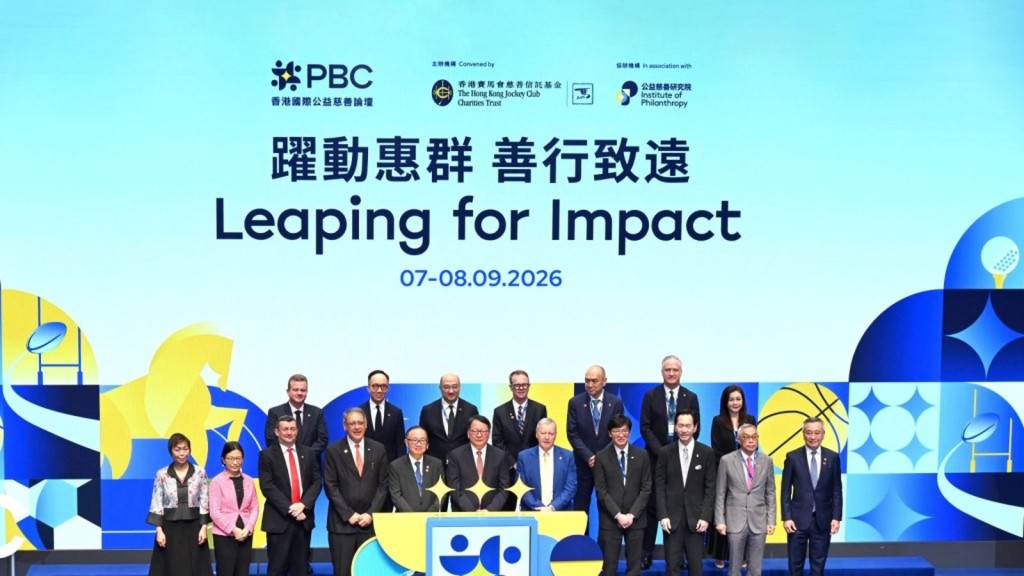
The Hong Kong Jockey Club Philanthropy for Better Cities Forum 2026 brings together global leaders in Hong Kong to explore how sport can drive social impact.
By pairing a transparent, low-tax environment with robust deduction incentives, Hong Kong illustrates that wealth creation and social equity need not exist in zero-sum opposition. Transforming billionaire fortunes into enduring public dividends is not just an act of charity; it is the ultimate safeguard of social cohesion. In channeling private affluence toward collective resilience, Hong Kong can neutralize the toxic politics of envy and build a more inclusive civic future.