






Read More

Beyond the boardroom: showcasing Hong Kong’s unique charm to the world
21-10-2026 05:30 HKT




Kyle Kennedy, granddaughter of Robert F. Kennedy, dies at 42
22-10-2026 04:11 HKT


A recent breakthrough in advanced battery technology developed by Hong Kong researchers underscores a vital structural reality: despite its compact territorial footprint, the city is consistently engineering scalable solutions to planetary challenges.
By formulating advanced non-flammable electrolyte systems that eliminate thermal runaway risks and suppress dangerous dendrite growth without sacrificing energy density, local scientists have targeted the primary safety bottleneck hindering grid-scale renewable storage and electric mobility. Far from functioning merely as an international financial conduit, Hong Kong has emerged as a high-velocity incubator resolving critical bottlenecks across decarbonization, climate resilience, and public health.
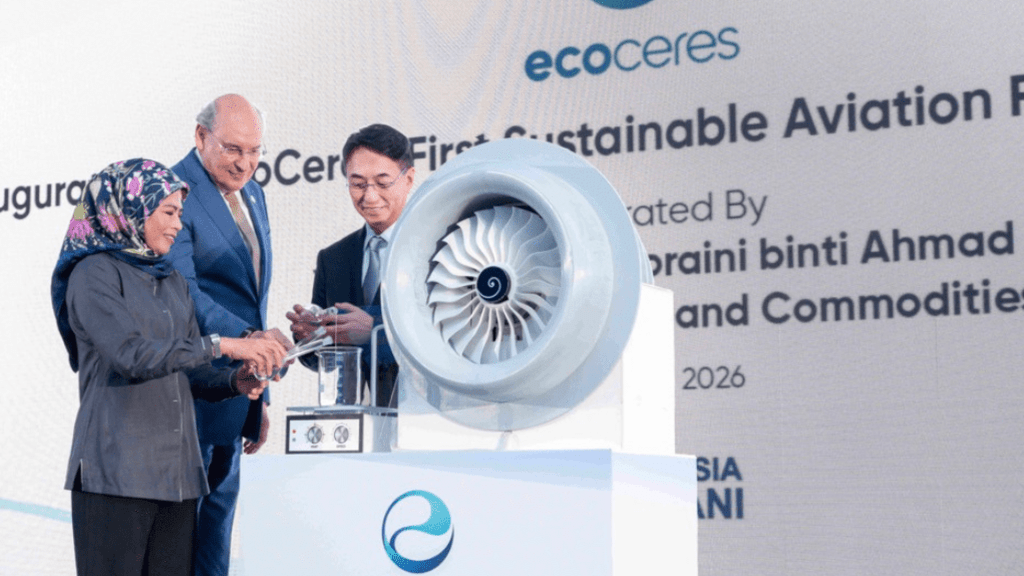
This battery milestone reflects an expanding pipeline of contemporary deep-tech ventures transforming legacy industries worldwide. In heavy transport decarbonization, homegrown bio-refining pioneer EcoCeres is converting waste cooking oils and agricultural residues into commercial-scale Sustainable Aviation Fuel and hydrotreated vegetable oil.
Delivering lifecycle greenhouse gas reductions exceeding 80 percent compared to conventional jet fuel, its proprietary conversion processes are already fueling commercial international carriers across Europe and Asia.
Simultaneously, local spin-offs are tackling accelerating urban heat stress. Born out of materials research at the City University, electricity-free passive radiative cooling technology commercialized by i2Cool reflects over 95 percent of solar radiation while radiating heat directly into deep space via infrared wavelengths.
Deployed across architecture, logistics hubs, and solar installations across Southeast Asia, the Middle East, and Europe, this zero-energy coating drastically lowers surface temperatures and slashes cooling electricity consumption.
In healthcare, researchers at the University of Science and Technology recently engineered an ultra-sensitive, non-invasive blood test capable of detecting Alzheimer's disease with over 96 percent accuracy years before clinical symptoms manifest, fundamentally transforming the economics and accessibility of early neurodegenerative screening.
Yet, world-class upstream research does not automatically secure industrial leadership. Historically, Hong Kong's primary friction has been navigating the "valley of death" between laboratory proof-of-concept and commercial viability.
Constrained by limited industrial land and the absence of domestic mass production facilities, homegrown discoveries often struggled to transition from the "0 to 1" invention phase into the "1 to N" volume of commercial deployment.
Sustaining this innovation edge requires completing the technology lifecycle through structured regional integration. The decisive catalyst is deep institutional synergy with the Guangdong-Hong Kong-Macao Greater Bay Area. By combining Hong Kong's five world-top-100 universities, common-law intellectual property safeguards, and specialized InnoHK clusters with the unmatched prototyping speed, precision engineering, and industrial supply chains of Shenzhen and Dongguan, the region forms an integrated translational corridor.
Supported by public capital interventions – such as the Research, Academic and Industry Sectors One-plus Scheme and strategic co-investment funds that provide patient capital to de-risk commercialization – Hong Kong is bridging the gap between university lab benches and international supply chains. In an era where enduring global relevance is earned through technological capability, the city proves that influence is determined not by physical acreage but by the magnitude of the global problems it helps resolve.