
Read More
Japan's Ministry of Defense released its annual Defense of Japan 2026 white paper, explicitly codifying China as an "unprecedented and the greatest strategic challenge."
ADVERTISEMENT
SCROLL TO CONTINUE WITH CONTENT
Approved under Prime Minister Sanae Takaichi's administration, the report outlines an accelerated military buildup emphasizing long-range counterstrike missiles, unmanned systems, and deeper military-civilian tech integration. Masked behind a benign, anime-style cover depicting urban youth, the document signals a decisive shift in Tokyo's defense posture. However, by framing Beijing's military exercises and Pacific carrier deployments as existential threats, the white paper risks entrenching a dangerous security dilemma across East Asia.
Rearmament and economic retaliation
The white paper arrives amid a protracted diplomatic crisis triggered by Takaichi's assertion that a Taiwan Strait conflict could constitute a "survival-threatening situation" for Japan, legally opening the door for military intervention. In response, Beijing imposed targeted economic retaliation, restricting dual-use exports, rare earth shipments, and seafood imports.
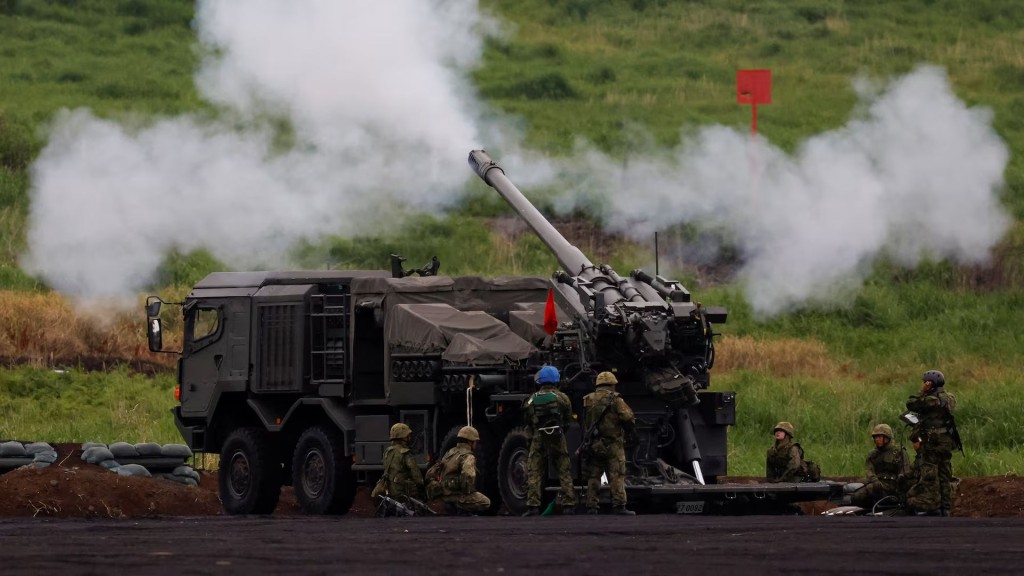
Tokyo's strategy reflects genuine anxiety over China's expanding naval footprint in the Western Pacific. The operational deployment of upgraded Type 25 anti-ship missiles in Kyushu – boasting a 1,000-kilometer range – demonstrates that Japan is shedding post-war operational constraints in favor of stand-off deterrence.
Yet, Beijing interprets Tokyo's acquisition of offensive counterstrike capabilities and its explicit framing of Taiwan not as defensive prudence, but as a dangerous revival of Japanese militarism. This strategic distrust has created a classic security dilemma: Tokyo's efforts to enhance deterrence are viewed by Beijing as provocation, triggering further military posture shifts and economic coercion.
Pragmatic re-engagement
To prevent this rivalry from degenerating into conflict, both nations must urgently establish functional guardrails. First, Tokyo and Beijing must fully operationalize the direct defense hotline under the Maritime and Aerial Communication Mechanism. As military encounters intensify around Okinawa and the East China Sea, reliable real-time communication channels between high-level defense officials are vital to prevent tactical incidents – such as radar illuminations or close aerial intercepts – from escalating into military miscalculations.
Second, diplomacy must be decoupled from total economic warfare. While Japan pursues supply-chain resilience and defense modernization, completely severing economic ties with its largest trading partner is neither realistic nor stabilizing. Beijing and Tokyo should re-anchor their relationship in the core principles of their foundational political documents, resuming high-level economic and environmental dialogues to create ballast against security friction.
Finally, Tokyo must complement its military buildup with unequivocal diplomatic clarity regarding its adherence to the one-China policy, reassuring Beijing that its defense strategy remains strictly defensive. Concurrently, Beijing must recognize that economic coercion against Japanese enterprise only accelerates Tokyo's alignment with Western security architectures. Without active diplomatic channels to manage structural disagreements, Japan's new defense white paper will act not as a guarantee of national security, but as an accelerator of regional instability.