Read More




Defying the demographic cliff: restoring hope
06-10-2026 04:56 HKT
HK unlikely to be hit as Typhoon Champi gathers strength
15-10-2026 17:54 HKT
Elon Musk unveils Tesla's 'flying' car
10 hours ago


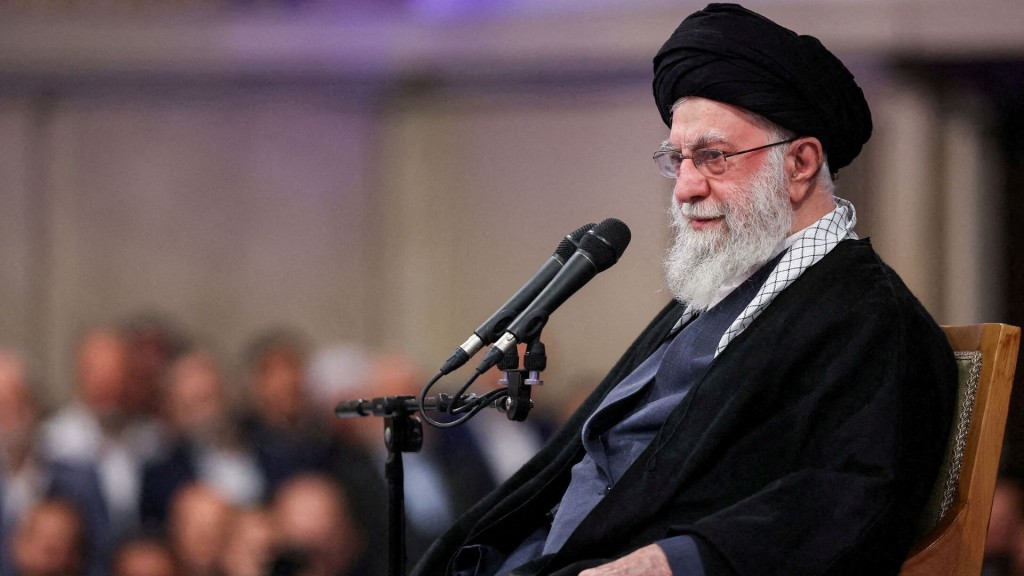
The death of Iran Supreme Leader Ayatollah Ali Khamenei in a joint US-Israeli strike has plunged the Middle East into its most dangerous crisis in decades – and the economic aftershocks will be felt across every global market.
Just 48 hours after the third round of indirect US-Iran talks concluded in Geneva with what mediators described as a “breakthrough,” American and Israeli warheads were hitting Tehran. For market watchers who have followed President Donald Trump’s long-stated desire to overthrow the Islamic Republic’s leadership, the attack was not the surprise. The surprise was the diplomacy that preceded it – revealed as a tactical pause to buy time for troop positioning and intelligence gathering.
What fundamentally distinguishes this escalation from last year’s attack is the geographical scope. This time, the entire Gulf region is a battlefield.
Iran’s retaliation systematically hit US military assets across the Middle East, including Qatar’s Al Udeid Air Base (headquarters of US Central Command), Bahrain’s Fifth Fleet headquarters, and military installations in Kuwait and the UAE. The United Arab Emirates – long considered a safe commercial hub – saw shrapnel rain on Abu Dhabi and missiles strike near Dubai’s Burj Al Arab. These strikes transform what might have been a bilateral conflict into a regional war implicating every Gulf monarchy.
The confirmed death of Ayatollah Ali Khamenei, who led Iran for 47 years, removes the central pillar of the Islamic Republic. While hardcore loyalists mourn, reports from Tehran suggest pockets of celebration – a reminder of domestic discontent simmering beneath the theocracy’s surface.
His sudden removal does not guarantee the regime’s collapse, but it guarantees something more dangerous: chaos in the decision-making process of a nuclear-armed state.
Furthermore, Iran’s decision to bomb Sunni-majority Gulf states deepens sectarian fault lines. By drawing the UAE, Kuwait, and Qatar into the crossfire, Tehran frames this as a Shiite power striking back at Sunni Arab cooperation with the West.
For global markets, the most terrifying development is the closure of the Strait of Hormuz. The Revolutionary Guard has declared the waterway unsafe, shutting approximately 20 million barrels of crude oil daily – roughly 20 percent of global consumption. Insurance premiums for any vessel daring to transit the Gulf will skyrocket, and analysts predict triple-digit oil prices.
The Middle East is not merely an oil exporter; it is the central transit hub for goods and people moving between continents. With regional airspace severely restricted, global aviation faces immediate disruption.
Market watchers ignoring the great-power dimension do so at their peril. China is the largest investor in Iran’s energy sector, with approximately US$400 billion (HK$3.13 trillion) committed over 25 years. With the Strait closed and Iranian oil facilities in the crosshairs, Beijing’s strategic patience will be tested. The United States has effectively attacked the energy security of its primary geopolitical rival’s key supplier.
This is a black swan event – unexpected by most, yet carrying consequences that will ripple through every asset class. Unlike the grinding Ukraine war, which markets gradually priced in, this conflict involves the world’s most critical energy artery.
A one-week shutdown of the Strait of Hormuz could do more damage to the global economy than a year of fighting in the Donbas. Investors who dismiss this as “more of the same” Middle East turmoil ignore the unprecedented nature of this escalation. The region’s order has been fundamentally upset, and the economic consequences are only beginning to materialize.