The unilateralist policies of the Trump administration are inadvertently accelerating a historic realignment, bridging the gap between the Global South, such as between the Brics nations and the middle powers of the West.
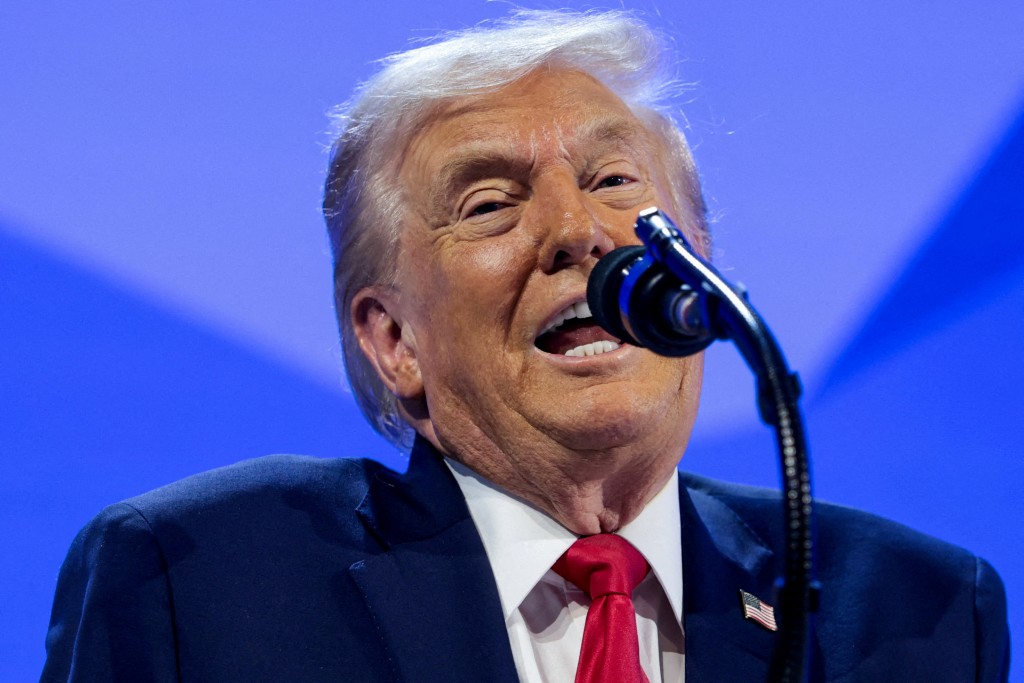
In an age of geopolitical turbulence, irony often takes the wheel. Just a few years into the second term of President Donald Trump, his aggressive “America First” doctrine – characterized by tariff threats, transactional alliances, and skepticism of multilateralism – was intended to secure US dominance. Instead, it has catalyzed exactly what it feared most: a multi-polar world where the Global North and South are not drifting apart, but are being pushed closer together.
This month has read like a prologue to a new world order. German Chancellor Friedrich Merz is in Beijing for a high-stakes visit, leading a “massive business delegation” that reads like a who’s who of German industry. Simultaneously, after visiting China, Canadian Prime Minister Mark Carney has launched a “middle powers” world tour, landing first in India to diversify trade away from the United States. These are not isolated diplomatic niceties; they are the building blocks of a new economic architecture that increasingly revolves around the expanded Brics bloc.
The German pivot: from climate critic to commerce partner
Germany’s overture to Beijing is perhaps the most telling indicator of the shifting tectonic plates. Berlin has long worn the crown of Europe’s greenest economy and has not shied away from criticizing China’s status as the world’s biggest emitter. Furthermore, the rise of Chinese electric vehicle brands has sent shockwaves through the German automotive industry, threatening the century-old dominance of Mercedes-Benz, Porsche, and BMW.
So, why is Merz now seeking deeper collaboration?
The answer lies in Washington’s unpredictability. Facing Trump’s repeated threats of tariffs, Germany is acting out of economic necessity. According to German media, Chancellor Merz is adopting a strategy of joining the “open dialogue friends club,” recognizing that while the US wavers, China offers consistency.
Despite the competitive pressure on its automakers, Germany understands that decoupling from China is impossible, as data shows China overtaking the US as Germany’s top trading partner.
Canada’s middle power diplomacy: a bridge to the East
While Germany courts Beijing, Canada is building a parallel track. Prime Minister Carney, who has boldly called for middle powers to unite and reduce reliance on the US, has chosen India as the first stop on his world tour. His visit to Mumbai and New Delhi aims to reignite trade talks and attract investment in technology and AI.
This is a strategic hedge of monumental proportions. Carney’s goal to double non-US exports within a decade is a direct response to Trump’s taunts of annexation and tariff wars. By strengthening ties with India, Australia, and Japan, Ottawa is constructing a safety net.
Herein lies the nexus with Brics. While Canada remains a member of the G7, its “Middle Power” agenda aligns perfectly with the Brics Plus ethos of multipolarity. It is a tacit admission that the future of trade lies not across the Atlantic, but across the Indo-Pacific.
Brics Plus: the expanding umbrella
The Brics coalition is no longer just an acronym for five disparate major economies. The expansion into “Brics Plus” – now including Egypt, Ethiopia, Iran, Indonesia, Saudi Arabia, and the UAE – has transformed it into a formidable platform for the Global South.
Trump’s tariff threats have only accelerated this cohesion. By threatening allies and adversaries alike with economic coercion, he has validated the Brics narrative that a counterweight to Western financial dominance is necessary.
A convergence forged by pressure
The dialogue between Brics and the middle powers is no longer theoretical. It is happening in real-time, driven by the transactional nature of the current US administration.
Merz’s Germany, squeezed between American tariffs and Chinese competition, is choosing engagement over confrontation. Carney’s Canada, seeking to escape the shadow of the “51st state” rhetoric, is looking toward New Delhi. These nations are not necessarily abandoning the West, but they are diversifying their portfolios.
Thanks to Donald Trump, the global north and south are indeed getting closer. The paradox is complete: a president elected to make America great has inadvertently made the rest of the world more interconnected. By weaponizing tariffs and treating allies as subordinates, the US has spurred Germany, Canada, and others to seek shelter under a wider tent.
The collaboration between the established middle powers and the burgeoning Brics economies is not just possible; it is already underway. It is a collaboration born of necessity, nurtured by shared economic interests, and accelerated by the realization that in a world of “America First,” everyone else must learn to stand together.
The dialogue has started, and it is reshaping the global order into one that is more balanced, more diverse, and far less dependent on the whims of any single superpower.