Read More
By weaponizing tariffs against global partners over a domestic court ruling, US President Donald Trump is ignoring economic data, isolating the United States, and paving the way for “MCGA,” or Making China Great Again.
ADVERTISEMENT
SCROLL TO CONTINUE WITH CONTENT
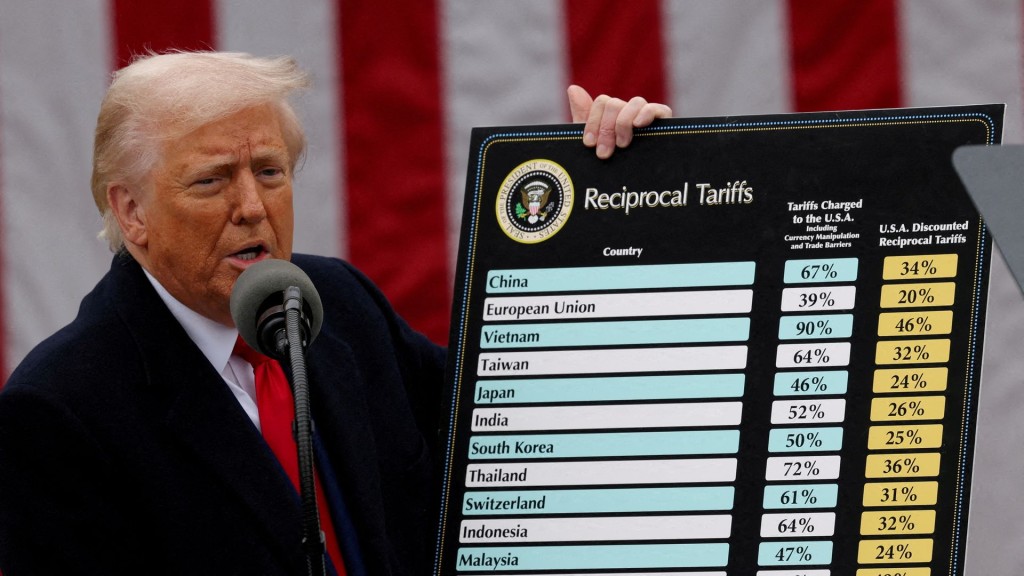
In a move that defies both economic logic and diplomatic protocol, Trump has once again escalated global trade tensions, this time imposing an additional 15 percent tariff in the wake of a US Supreme Court ruling. While the ruling was a domestic judicial matter, the retaliation was aimed at international trading partners – a decision that confirms tariffs remain the bluntest, and apparently the only tool in his economic arsenal.
However, if the goal of this strategy was to “Make America Great Again,” the data tells a story of abject failure.
The US$1.24 trillion reality check
Despite the implementation of what was believed to be US$175 billion (HK$1.37 trillion) in tariffs, the anticipated “American Renaissance” has failed to materialize. Instead of bringing manufacturing back to US shores, these policies have coincided with a ballooning trade deficit. In 2025, the US goods deficit surged to a staggering record of US$1.24 trillion. While the overall trade deficit (including services) narrowed slightly to US$901.5 billion – a mere 0.22 percent drop from 2024 – it offers little solace to American manufacturers being squeezed by rising input costs and retaliatory measures.
Furthermore, the macroeconomic picture is far from “great.” US GDP growth slowed to 2.2 percent in 2025, down from 2.8 percent the previous year. This deceleration comes amid a toxic mix of government dysfunction, a sharp drop in international tourism, and the chilling effect of ongoing trade uncertainty.
The legal and diplomatic blowback
Trump’s reaction to the Supreme Court ruling has opened a new front in the trade war: the legal battlefield. Prior to this escalation, domestic and foreign companies were already demanding refunds on tariffs they viewed as unjust. Now, following the latest 15 percent hike, those demands have intensified into a chorus. Businesses are arguing that if the foundational logic of the tariffs is tied to a domestic legal dispute, the levies themselves are illegitimate. This legal uncertainty is making it increasingly difficult for US companies to source materials and plan inventory, further destabilizing supply chains.
The rise of MCGA – Making China Great Again
Perhaps the most glaring indictment of the MAGA trade policy is the undeniable rise of the very competitor it sought to contain: China.
While the US isolates itself with punitive measures, China has adeptly pivoted its exports to non-US markets. In 2025, Chinese exports surged by 5.5 percent to a record US$3.77 trillion. This boom propelled China’s trade surplus to an unprecedented US$1.19 trillion. The irony is stark: the “Liberation Day” tariffs of April 2, 2025 – touted as a broad package to free the US from foreign dependence – have instead driven US allies and other nations into deeper trade relationships with Beijing.
Trump’s failure to hold back his compulsion to complicate matters further by linking unrelated domestic rulings to international trade is accelerating the global decoupling from the US. Every additional tariff is a signal for other nations to diversify away from the US market, leaving American consumers and businesses to foot the bill.
Ultimately, the data, the legal challenges, and the geopolitical shifts all point to a single conclusion: the tariff strategy is not delivering MAGA. It is accelerating MCGA – Making China Great Again – while leaving the US with slower growth, record deficits, and diplomatic chaos.