Read More
Hong Kong’s cultural landscape is undeniably rising, with global icons like M+ and the Hong Kong Palace Museum drawing crowds. As Secretary for Culture, Sports and Tourism Rosanna Law Shuk-pui has emphasized, elevating public connoisseurship – a deep, knowledgeable appreciation of art – is crucial. While major museums spark initial interest, Hong Kong’s university museums are the unsung heroes in this mission, uniquely equipped to foster a sophisticated understanding of art’s historical and cultural context.
ADVERTISEMENT
SCROLL TO CONTINUE WITH CONTENT
University museums: the deep research engine
Unlike public museums focused on broad exhibition, university museums integrate world-class collections with academic rigor. They don’t just display treasures; they investigate them, “digging out” layered stories that raise curiosity and intellectual engagement. This transforms art viewing from passive observation to an active discovery of history, society, and cross-border cultural dialogues.
Treasures in academia: from textbooks to public outreach
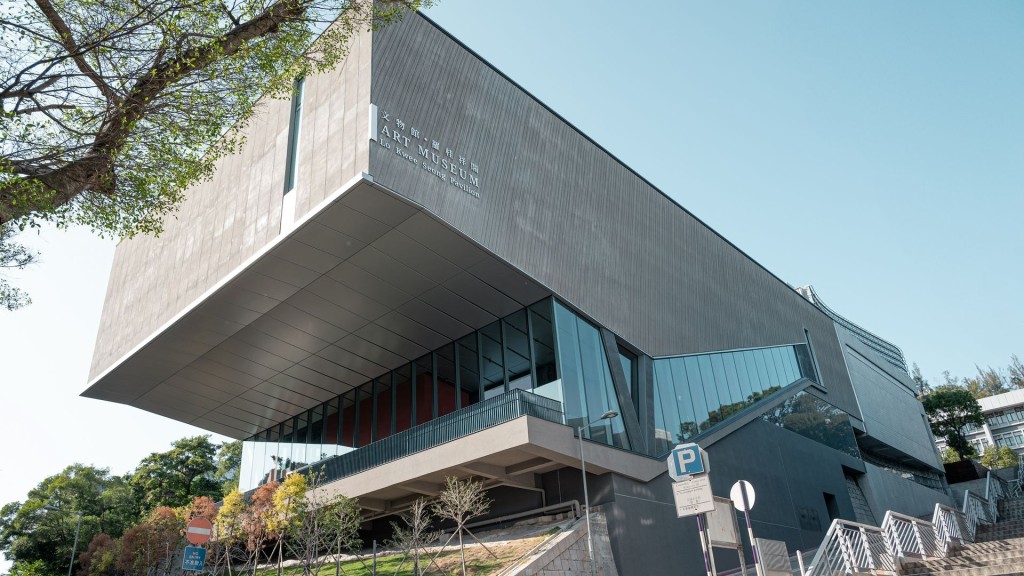
The Art Museum of The Chinese University of Hong Kong, founded in 1971 and designed by renowned architects Szeto Wai and I.M. Pei, is a prime example. Boasting over 16,000 Chinese art pieces from painting and bronze to furniture – thanks to donors like Lee Jung Sen of Bei Shan Tang – its collection is a veritable “textbook” of art history. It features seminal works by masters such as Ni Zan, Shitao, and Gao Jianfu, spanning centuries.
Founded in 1953, the University Museum and Art Gallery of The University of Hong Kong also has a diverse collection of works from the Neolithic period to the Qing dynasty and is known for its biggest collection of Nestorian crosses in the world.
Similarly, Lingnan University’s Chamber of Young Snow Art Exhibition Hall has emerged as a significant venue for exploring Chinese art. These institutions have started reaching out to the public proactively, a commendable and essential step.
Beyond artist training: the critical role of art history
Developing technical artists is not enough. A thriving art ecosystem requires connoisseurs – informed collectors, critics, and citizens. Art history education is foundational, showing how art acts as a cultural palimpsest, where layers of history, society, and exchange are recorded. This knowledge helps people understand their roots and Hong Kong’s historic role as a cultural nexus, evidenced by decades of art trading on Hollywood Road and today’s vibrant art market.
The path forward: democratizing deep knowledge
While CUHK and HKU offer excellent art history programs, their potential for public impact is vast. Universities must expand outreach through more public lectures, curated community tours, online content, and collaborative exhibitions that leverage their research. By making academic insights accessible, they can transform Hong Kong’s innate art market vibrancy into deep, widespread connoisseurship. Such relies on a dual strategy: the spectacle of major museums and the substantive depth of university collections. By unlocking their research-driven work to the public, university museums can cultivate informed, culturally grounded citizens a true world-class art hub requires.