Read More
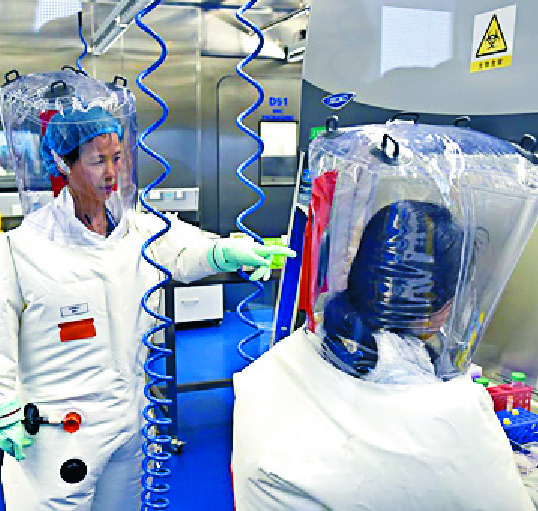
With a third of US President Joe Biden's 90-day deadline having already passed for his intelligence staff to report on Covid's origins, it can be anticipated that the question of whether or not the coronavirus leaked from a Wuhan laboratory will become explosive.At this sensitive juncture, an Australian virologist who had worked at the Wuhan lab up to November 2019 broke her silence in an interview with Bloomberg.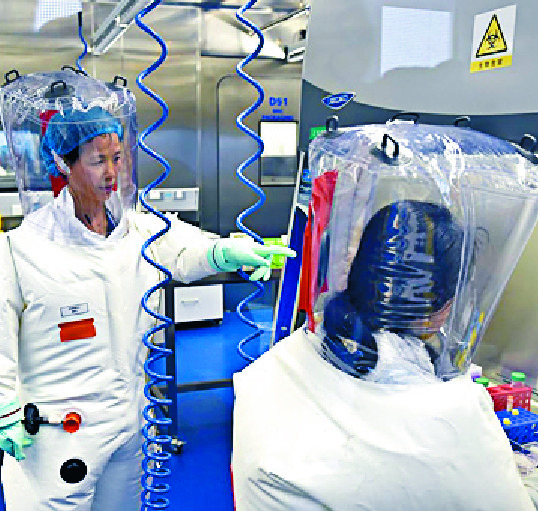
It's impossible to predict what will happen two months from now.
ADVERTISEMENT
SCROLL TO CONTINUE WITH CONTENT
Danielle Anderson said the lab was large and she did not know what everyone was working on at the end of 2019.
But she could tell from her personal observation and through normal socialization with colleagues that there was nothing strange going on.
She insisted the lab had strict safety protocols. Also, she was unaware of anyone there falling ill towards the end of 2019 as reported by the Wall Street Journal - although the newspaper was specific in its report that "three researchers" were hospitalized with flu-like symptoms in November 2019.
Since the Covid crisis broke out, two contentious theories have emerged - one purporting that the virus had jumped from animal to human in nature, and the other purporting that the virus had leaked from a lab in Wuhan where the virus was first discovered.Nevertheless, the leak theory failed to gain traction. Soon after local outbreaks escalated into a pandemic, a team of scientists published a paper claiming there was evidence of artificial tempering in the virus.
Within days, they withdrew the paper.Except for a handful of scientists, many in the science world are of the view that the disease is a natural occurrence. Anderson, the foreign virologist who had worked in Wuhan, shares this view, saying the chance of a lab leak was exceedingly slim.
It's unfortunate that the lab has since been surrounded in secrecy, but Anderson's personal account offers outsiders a limited peek into the facility.In her opinion, the lab was no different from other bio-safety labs - and her Chinese colleagues were as normally gossipy as any of others in the science world. When they met in Singapore later for a gathering on the Nipah virus, there was no gossip of illness sweeping the lab.
On the other side of the globe at the medical journal The Lancet, something curious also occurred.During the pandemic, the journal was reported to have rejected research papers purporting the lab leak theory.
Until recently, British scientist Peter Daszak had been a member of the United Nations-backed Lancet commission looking at the origins of Covid.The commission website recently showed that Daszak was "recused" from the commission work on the pandemic, with no explanation given.
But this happened after members of the commission were asked to declare their interests for a second time amid reports that Daszak - president of the New York-based EcoHealth Alliance that passed funding from US epidemiologist Anthony Fauci's institute to the Wuhan lab - organized a letter signed by peers and published it in The Lancet to condemn the lab leak theory.Is the Covid matter being politicized? There is no question about it.