This week I want to explore how the application of lithium-ion batteries, aside from use in electric vehicles, has the potential to help us build a more sustainable future, as well as highlight some challenges.
The key innovation in Li-ion batteries is its high energy density. They provide a greater electric range per volume than most other rechargeable batteries.
Thus, they can power mobile devices and EVs without taking up much space.
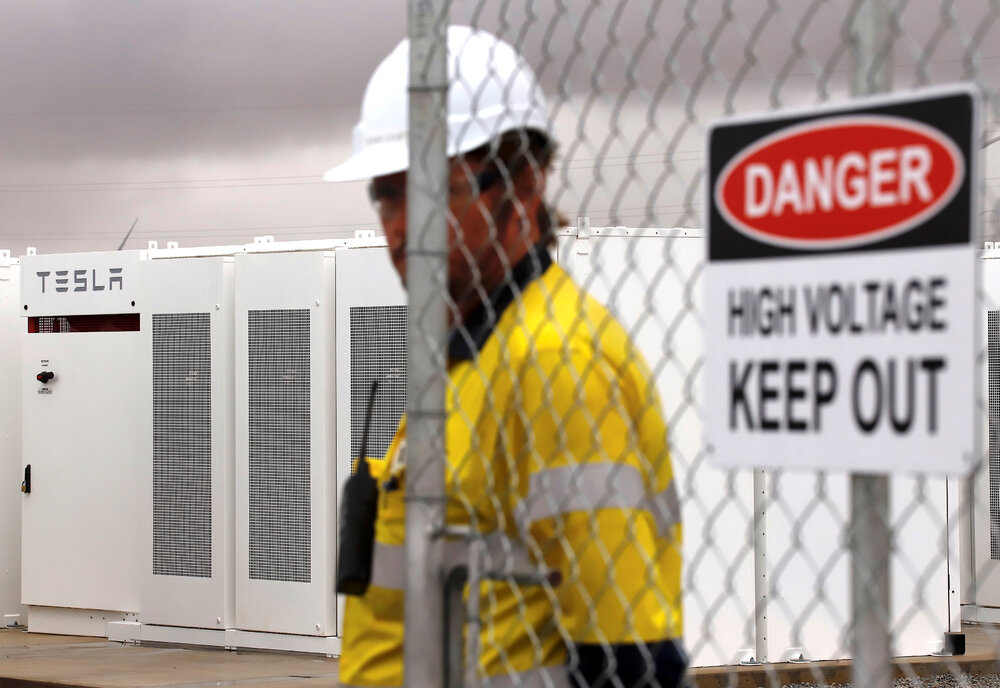
But Li-ion batteries can also be used in energy storage systems.
Such systems are an important part of the electricity grid. They store excess power that is not transported to households.
They are called upon when power generators do not produce enough electricity, thus ensuring the "lights are on" at all times.
This ensures reliable electricity supplies, making us fortunate to have one of the most stable and quality electricity supply networks in the world.
The supply rating of our two power companies has been maintained at 99.999 percent availability - equivalent to a downtime of 5.26 minutes per year - a record that exceeds most other cities in the world.
The challenge for Hong Kong and elsewhere is whether we can maintain this high level of reliability as we transition to renewable energy.
For example, the scheme of control agreement governing our two electric companies requires them to progressively retire coal plants and explore alternative generation sources, including renewable energy.
Obviously, this is a good step forward.
Fossil-fuel-free energy generation will mean less CO2 emissions and we will not exacerbate the effects of climate change.
But transitioning into renewable energy poses significant challenges in keeping electricity supply reliable.
First, renewable energy alone, as currently conceived, is unlikely to be able to supply all the needs of densely populated metropolitan cities like Hong Kong, Tokyo, London and New York.
Second, renewable energy, like solar and wind, is highly dependent on the weather. Thus, there are likely to be more "gaps" in electricity supply, and we will have to draw on energy storage systems more frequently. On the other hand, since generating fossil-fuel energy is so easy, we rarely have to call upon energy storage systems to supplement electricity supply.
The effect of needing to draw on storage systems more often is that we need to have a higher reserve of energy storage.
Thus, we can readily draw upon them if we cannot generate enough electricity from solar and wind sources.
Li-ion batteries are suited for this role as they can store more energy than most other batteries. Thus, there is no need to dramatically increase the number of storage facilities.
However, building a storage system based on Li-ion batteries faces a huge challenge: cost. Such batteries are expensive and thus not, as of now, commercially viable.
There is some hope they will be viable in the future, and one way we can get around the cost problem is by reusing old batteries, such as when EVs are retired.
Around 15 percent of these batteries will have deteriorated too much, but they will generate tonnes of valuable metals.
But the others with residual capacity can be repurposed as energy storage batteries, in a process called "vehicle-to-grid."
A recent Massachusetts Institute of Technology study concluded it was promising to repurpose swapped-out battery packs as solar grid storage.
In some countries, stationary batteries are already being used in households to store cheap off-peak electricity.
Of course it will take time for this solution to be used in large-scale operations.
Hong Kong has an added challenge with space. V2G will only be cost effective if barriers related to customer behavior and battery degradation are overcome.
The promise of Battery Day may come soon, but not too soon.
Dr Jolly Wong is a policy fellow at the Centre for Science and Policy, University of Cambridge
The Hornsdale Power Reserve in south Australia is the world's largest lithium-ion battery system in the world at 185 MWh. reuters